
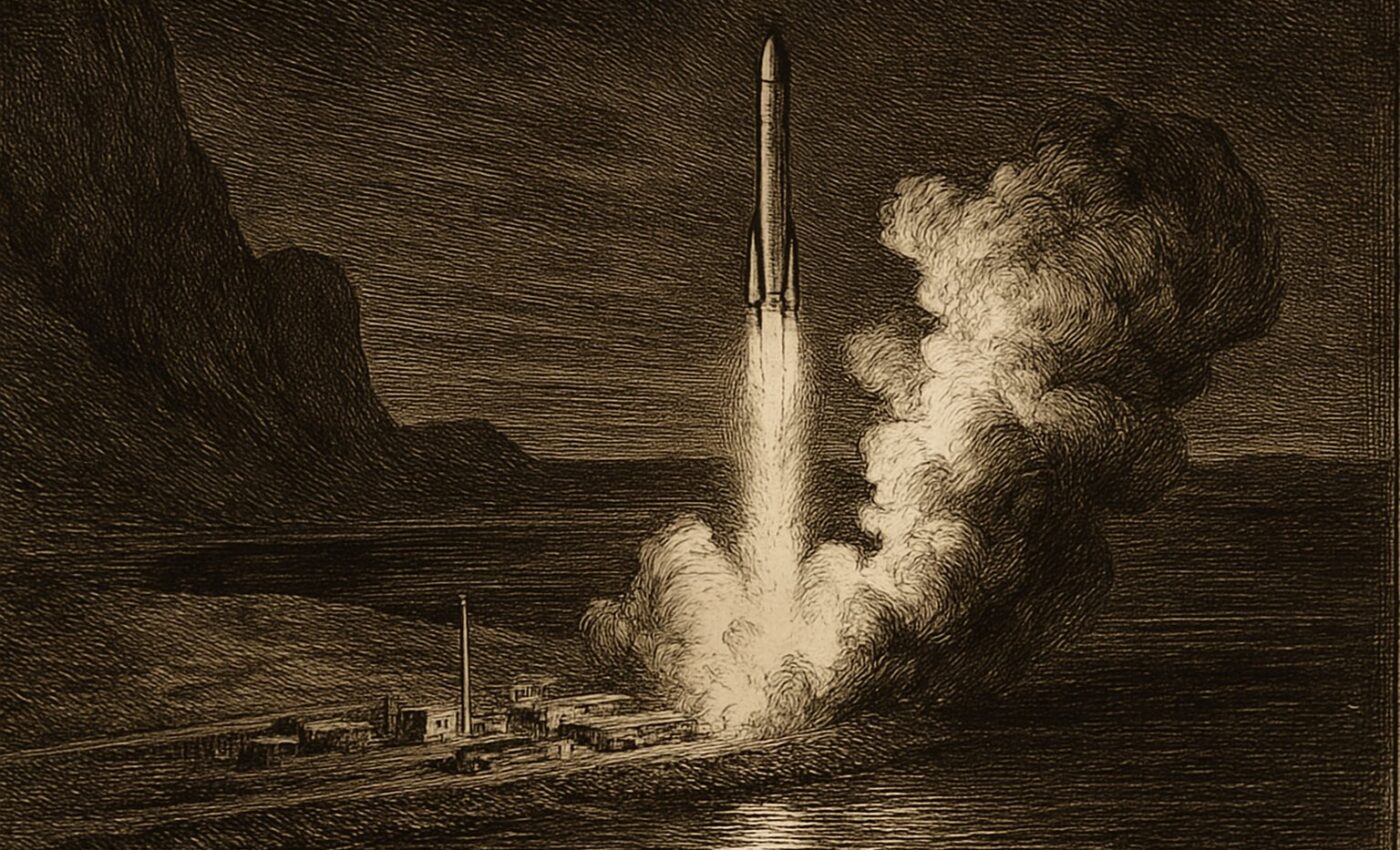
Out of a cold Norwegian evening, above the Arctic Circle, a slender device of German making rose against the dying blue of a summer sky and, in seven minutes, made history. Isar Aerospace, a company scarcely seven years upon this earth, has become the first in all Europe to send a fully commercial orbital rocket into the heavens — no small triumph for an endeavour begun by three young men and their delight in taking rocket parts apart and putting them together again.
Spectrum Takes Flight
The rocket, named Spectrum, stands some 92 feet — 28 meters, if the reader prefers the foreign measure — and lifted off Saturday at 4:12 in the afternoon by American clocks, or 20:12 UTC, from the Andøya Spaceport in northern Norway. There, at that hour, it was 10:12 at night by the local clock, the last traces of blue light departing the sky as the machine rose higher still. Within seven minutes it had reached orbit, a wonder no rocket made by private hands in Europe had before accomplished.
A Difficulty Overcome
Daniel Metzler, Isar’s founder and CEO, did not conceal his satisfaction. “Today, Isar Aerospace opened space from Europe’s own soil,” he declared in a statement given to the press, calling the launch industry’s want of capacity the “greatest difficulty for the space industry throughout the world” — a difficulty now, he insists, broken by “a true alternative for commercial and public customers.”
Years Compressed into What Once Took Ages
Metzler spared no pride in the telling. “We did within a few years what had taken the European space industry ages before,” he said, adding that “Europe now has command of its own passage to space” and that Isar had “entered into a new chapter for the science of rockets in Europe.” He spoke, too, of his team, and of a “success story from Europe” he seemed scarcely able to credit even as he described it.
Three Students and a River’s Name
The tale’s true origin lies not upon any spaceport but within a workshop at the Technical University of Munich, where in 2018 Metzler joined two fellow students, Josef Fleischmann and Markus Brandl, in a caprice that began as mere trifling. They named their venture Isar, for the river that threads through the Bavarian capital — a modest tribute that now attaches itself to a considerable achievement.
What Comes Next
Metzler has already turned his attention forward. He speaks of enlarging production, of an order pipeline awaiting fulfillment, of a demand from every quarter of the earth that Isar means to meet.
Whether the company can keep such a pace remains a matter for time to settle.
A Trade Long Idle
Europe’s launch trade has for years been described, not without cause, as idle and wanting — dependent upon a small company of established providers. Isar’s success marks it as the clear leader among several European launch enterprises now seeking that same custom, though the race is far from run.
What Isar Aerospace has shown, above all, is that ambition nursed in a university workshop may, given seven years and sufficient resolve, be sent quite truly into the heavens — and that command of the science of rockets in Europe need no longer be borrowed from abroad.
Get the Notebook.
The day's best stories and every fresh verdict, in plain English, in your inbox by seven. One email a day, no more.