
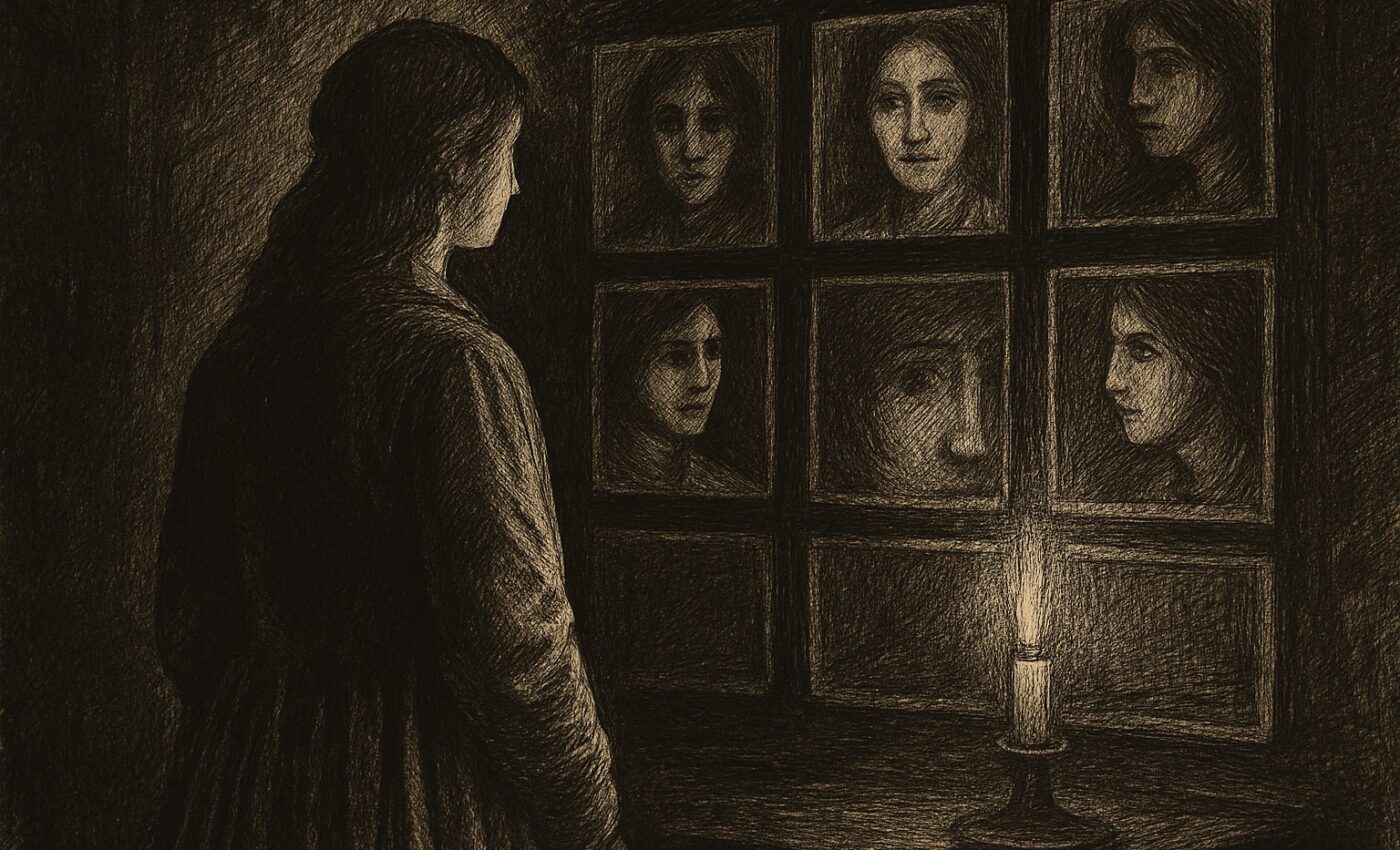
No herald was sounded, no proclamation raised to prepare the public mind for what was coming. Yet upon a Sunday at the Telluride Film Festival, there did appear a picture concerning Elizabeth Holmes — the fallen founder of Theranos — bearing the curious title You Can See Everything, and behind it stood Fielder, that most peculiar of chroniclers, whose method of endeavour has ever been to make the ordinary dreadful and the dreadful strangely intimate.
The account, as its own description tells it, is this: Thirty-four days before her surrender to federal confinement, Holmes bade attend upon her a doubting company of observers, to record her every motion — to witness what she would call an honest portrait and what the world may yet call something far more melancholy. What began as such a portrait became, across three years, a journey into the abyss, a descent that bends the mind toward doubt of what is true and what is merely performed.
The Silicon Valley Ruin
Holmes requires little introduction to those who have followed the ruin of Theranos, that enterprise once so praised, which promised to make the drawing of blood a thing of wonder and delivered instead a monument to falsehood. She raised, by the official accounting, very nearly $1,000,000,000 in capital from investors who trusted in her singular vision. The judgment came in the form of a finding of guilt for the robbing of those same investors, and in 2022 she was sentenced to more than 11 years in federal confinement.
That a figure of such notoriety should now call a camera into her final free days carries its own dreadful irony. A woman who raised an empire upon the concealing of truth resolved, in her last hours of liberty, to fling open every door — or so she wished it to appear. Whether the resulting record speaks well of her or damns her further is precisely the question Fielder’s method seems designed to leave unanswered.
Fielder and Oppenheim, Joined in the Work
The direction of this singular work was shared between Fielder and Lance Oppenheim, a partnership that promises no ordinary chronicle. Oppenheim is himself no stranger to the recording of American oddity; he presently directs Primetime, a forthcoming thriller from A24 concerning Dateline’s own Chris Hansen, a figure whose labors upon television have long dwelt upon exposure and the running down of the guilty.
That two such minds should meet upon the figure of Holmes suggests the film will not content itself with simple biography. Fielder’s own history bears this out. His prior endeavour, season two of HBO’s The Rehearsal, showed an appetite for mixing together the constructed and the real until the viewer can no longer say with certainty which is which — a talent most suited to a subject like Holmes, whose entire ruin was itself a matter of mistaking invention for fact.
The Telluride Appearance
The premiere itself was conducted as calm as a private matter rather than with any proclamation one might expect for a picture of such notoriety. A24, the studio behind the picture, gave virtually no advance notice before it appeared at the Telluride Film Festival this past Sunday. Only afterward did the wider public receive its first glimpses — a teaser and an accompanying poster, made available online, as if the calm of the premiere were itself part of the design.
Such calm is not without its own curious logic.
A film concerning a woman found guilty of grand falsehood, brought to the world through an act of secret purpose, carries a correspondence too neat to be accidental. One suspects Fielder intended precisely this effect.
What Waits in October
You Can See Everything is set to come before audiences at large in October, at which point those beyond the privileged few at Telluride will finally have occasion to judge for themselves whether the picture casts light upon its subject or merely makes the shadow deeper. Given the character of its makers, one looks for neither simple blame nor simple excuse, but something more disturbing — a record that draws the viewer into guilt as much as its subject.
For Fielder, the appearance marks a return of sorts, his first work since The Rehearsal’s second season concluded its run upon HBO. Whether he intends this film as a companion to that prior work, or as a wholly separate inquiry into American falsehood, remains to be seen.
Little else is known.
The public shall have three years pressed into a single sitting, a fraud reduced to a spectacle, and a guilty woman’s own testimony offered up for judgment once more — this time not before a court, but before an audience armed only with its own suspicion. If Fielder’s prior endeavours are any guide, the experience will disturb more than it resolves. That, perhaps, is precisely the point: to see everything, and to trust none of it.
Get the Notebook.
The day's best stories and every fresh verdict, in plain English, in your inbox by seven. One email a day, no more.