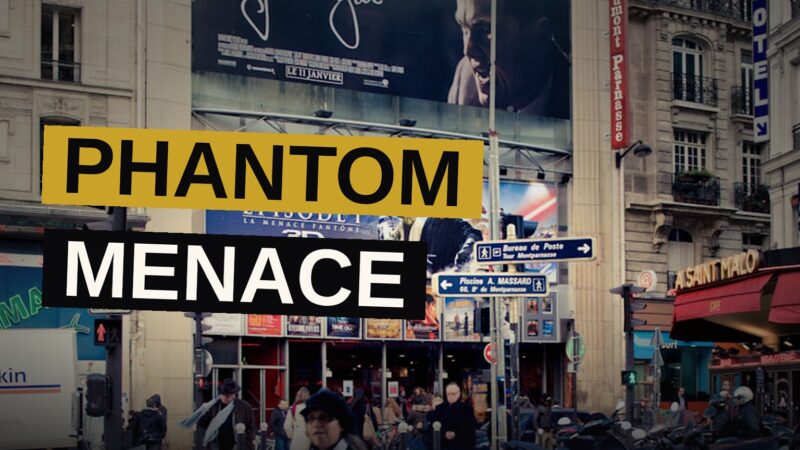
Midnight in Paris is a love letter to the past, wrapped in a comedy about a man who finds himself transported back to 1920s Paris. Woody Allen directs and stars as Gil, a struggling Hollywood screenwriter who travels to the French capital with his fiancée Inez (Rachel McAdams) and her family. The film is a warm, witty time-travel fantasy that uses the city’s literary history as its playground.
Gil is a romantic who dreams of escaping the present. He sees the modern world as hollow and commercial, and he fixates on the idea of a golden age of literature. When he stumbles into the past, he meets figures like Ernest Hemingway, Gertrude Stein, and Salvador Dalí, who welcome him into their circle. The film’s central joke is that Gil wants to escape his own life, and the past offers him exactly what he thinks he wants: fame, recognition, and the company of geniuses.
Trailer, via Sony Pictures Classics.
The Time Travel Device
The premise is simple. Gil walks through a narrow street at midnight and finds himself in 1920s Paris. He can return to the present by walking back through the same spot, but he is increasingly drawn to staying. The film never explains the mechanism. It simply presents it as a magical fact, and that suspension of disbelief works.
What makes the device effective is how it functions as a metaphor for nostalgia. Gil’s desire to live in the past is not really about the 1920s. It is about escaping his current problems: a fiancée who does not share his passion, a career he dislikes, and a sense that he has lost touch with his creative self. The past is a refuge, and the film treats that refuge with genuine warmth.
“You know what I want? I want to be a part of what happened here.”
The Ensemble
The film’s strength lies in its cast. Allen plays Gil as a neurotic, charming everyman. His performance is low-key and funny, and he carries the film’s emotional weight. Rachel McAdams plays Inez with a sharp wit and a growing desperation. She is the voice of the present, the person who cannot understand why Gil is so attached to a period she cannot see.
Owen Wilson plays Paul, Gil’s best friend, who also gets pulled into the past. Adrien Brody plays Adrienne, a painter who falls for Gil. Mimi Rogers plays Adrienne’s wife, Caroline. Kathy Bates plays Gertrude Stein, who runs a salon filled with writers and artists. Tom Hiddleston plays Hemingway, who is gruff and charismatic. And Marion Cotillard plays the young Picasso, who is the object of Gil’s romantic fixation.
Each actor brings something distinct to their role. Hiddleston’s Hemingway is a loud, confident presence, while Brody’s Adrienne is quiet and melancholic. The chemistry between Allen and Cotillard is tender, and the scenes between them are some of the film’s best. The ensemble is large, but the film manages to give each character a moment to shine.
The City of the Past
The film’s depiction of 1920s Paris is lush and romantic. The streets are lit by gas lamps, the cafes are crowded with patrons, and the buildings have a patina of age. The cinematography is beautiful, and the film captures the sense of a city that feels both alive and timeless.
The film also shows the darker side of the past. Gil encounters poverty, disease, and war. He realizes that the golden age he imagined was not a utopia. It had its own problems, and the people he admires were flawed. This is a subtle point, but it is a crucial one. The film is not saying the past was better. It is saying that the past is a construct, and that we project our desires onto it.
The Romantic Thread
The film’s central romance is between Gil and the young Picasso. Their relationship is complicated. Gil is infatuated with Picasso, but he also knows that he cannot change history. He cannot marry Picasso and stay in the past. The film explores this tension through a series of meetings and misunderstandings.
The romantic plot is not the main focus, but it adds depth to Gil’s journey. It forces him to confront what he really wants. Does he want to be a part of the past, or does he want to be with the woman he loves? The film does not answer this question directly. It lets the characters wander through the streets, talk about art, and make choices that feel authentic.
The Comedy
The film is a comedy, and it works on multiple levels. There is physical humor, verbal humor, and situational humor. The jokes are often visual, and they rely on the contrast between the modern and the historical. A scene where Gil tries to explain a cell phone to Hemingway is a highlight.
The film also has a gentle irony. It mocks the idea of the golden age while also celebrating it. It is a comedy that respects its subject, and that balance is rare. The film is funny without being cruel, and it is smart without being pretentious.
Comparing the Ages
| Age | Setting | Tone |
|---|---|---|
| Modern | Present-day Paris | Practical, anxious |
| 1920s | 1920s Paris | Romantic, idealized |
| Past | Various eras | Mythical, distant |
The table above shows the three ages the film moves through. Each age has a different tone, and the film uses these tones to comment on Gil’s perspective. The modern age is practical and anxious, the 1920s age is romantic and idealized, and the past age is mythical and distant. The film jumps between these ages, and the effect is disorienting in a pleasant way.
The Ending
The film ends with Gil making a choice. He returns to the present, but he does so with a new perspective. He has learned that the past is not a refuge. It is a memory, and memories are not real. The film’s final image is Gil walking down a Parisian street, looking at the buildings and the people, and finding them beautiful. He has found peace in the present, even though it is imperfect.
The ending is optimistic, but it is not naive. The film acknowledges that the past is a trap. It is a trap of nostalgia, and it is a trap of comparison. The film argues that the present is the only time we have, and that we should embrace it. That message is delivered with warmth and intelligence.
Midnight in Paris is a small film with a big heart. It is a comedy, a romance, and a meditation on time. It is not perfect. Some of the supporting characters are underdeveloped, and the pacing drags in the middle. But the film is consistently engaging, and it is filled with memorable moments.
The film’s best quality is its sincerity. Allen is not mocking the past. He is not making fun of Gil. He is exploring the human need to belong, and he does so with empathy and humor. The result is a film that is both escapist and thoughtful.
The film is a reminder that we should look at the past, but we should not live in it. We should look at the past to understand the present, and we should live in the present to shape the future. That is a message that is easy to forget, and it is one that Midnight in Paris delivers with grace.
Get the Notebook.
The day's best stories and every fresh verdict, in plain English, in your inbox by seven. One email a day, no more.