
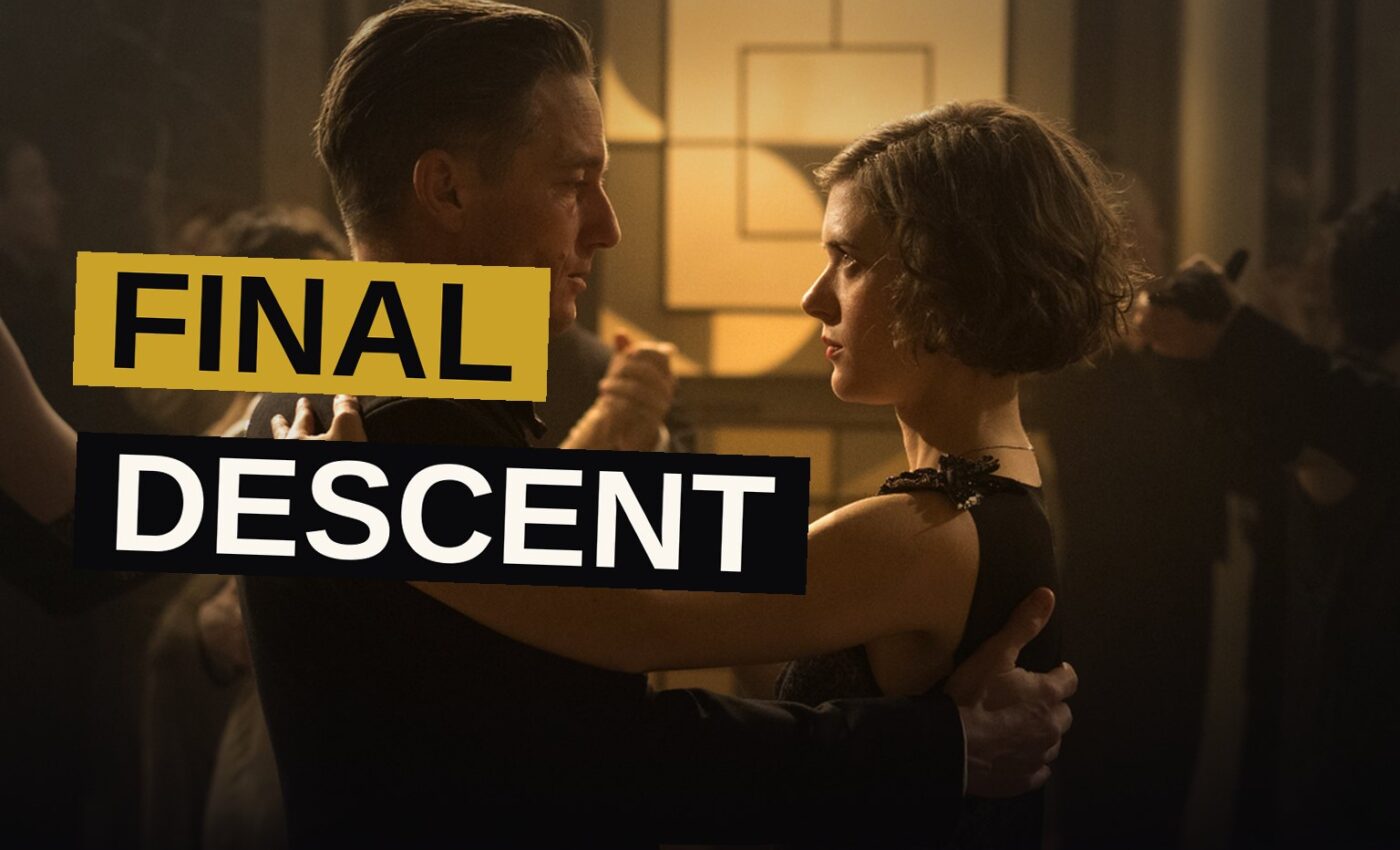
The creators of “Babylon Berlin” always knew their story would end in darkness. They just did not expect how quickly it would arrive.
Following Hitler’s appointment as Chancellor on Jan. 30, 1933, the fifth and final season of the German series blends history and fiction one last time. Its characters witness the rise of the Nazi Party and its violence, up to Hitler’s full ascension to power after the elections of March 5. That five-week window changed everything.
It also closes a 13-year creative journey for writer-directors Henk Handlogten, Achim von Borries and Tom Tykwer. The final season brings back leads Volker Bruch and Liv Lisa Fries (“Freud’s Last Season”) for one last investigation. Ahead of the German release, Tykwer and von Borries spoke about the ending, the process and how the past keeps showing up in the present.
The Five Weeks That Mattered
The original plan for “Babylon Berlin” did not reach March 1933. The show was supposed to stop on Jan. 30.
“It’s incredible to realize it took so little time to change the system completely,” said von Borries. “When we started developing the series, we thought our story would end on Jan. 30. But as we took a closer look at this period of time, it became clear that the few weeks following were as important to this major shift.”
That shift is the core of the final season. The show does not treat the Nazi rise as a settled fact. The characters do not know what is coming.
“We always wanted to tell the story from the perspective of our protagonists, and not as a doomed thing that we know happens,” von Borries said. “We strongly believe that there were alternatives also. In every moment of time, there are alternatives.”
Tykwer compared the approach to the tragedy of the Titanic.
“But because we stay so intensely with characters that are fighting for something else to happen, it somehow transforms the entire situation,” Tykwer said. “Which is amazing about, of course, fictionalized historical events. You can enter the zone again from while it was happening with a different whole knowledge, and make visible what it means for people nowadays living in this kind of circumstances.”
“We strongly believe that there were alternatives also. In every moment of time, there are alternatives.”
A Show That Learned From Its Own Era
The writers did not build the final season in a vacuum. Europe’s political landscape changed completely while the show was in development. That shift shaped the writing.
“During the making of the show, it became more and more apparent that these topics were also relevant for the people watching it, because it resonated with their political realities and our feelings of growing insecurity,” Tykwer said.
The connection went deeper than the creators expected. Viewers started asking hard questions about their own place in history.
“As viewers, people started asking themselves: ‘Where am I? Where were these people? How did they experience it?’” Tykwer said. “And that also infused our writing over the years. We hope that this touches basic universal subjects, yet we had no idea how the political world would change. And this was constantly on our minds.”
The result is a season that feels close to our own time, even though it is set nearly a century ago. The creators did not plan that. It arrived on its own.
Three Voices, One Editing Room
The show was never a solo project. Tykwer and von Borries emphasized that the five-season journey was a true trio effort. Three different voices worked in the writing room, equally important and very different.
After separate shootings, those voices met again in the editing room. That is where the show’s final shape was made.
“This whole show became such a massive collaborative effort. Not something that was designed as strategically perfect, but something built out of our collective instincts and influence on one another,” Tykwer said. “I’m telling you, they always say writing is re-writing. But editing is definitely re-editing as well, and we kept moving part of episodes again and again!”
The process was organic and somewhat unplanned. But the ending was never flexible.
“There was no chance of postponing our ending,” von Borries said. “And we had this big frame always on the back of our minds, from the end of the First World War to the rise to power of the Nazi Party. What did happen during this journey is that we learned to understand our characters better.”
The Weight of 48 Hours
The series ran for five seasons and 48 hours of narrative.
“It’s not just about where the series is going,” Tykwer said. “It’s about characters that grow throughout 48 hours of narrative, and take us with them along the way.”
That growth is central to how the final season lands. The audience has spent years with these people. Their choices in 1933 carry weight because viewers know where they started.
The show also carried a massive audience with it. In its first four seasons, “Babylon Berlin” sold to more than 140 territories. It was watched more than 94 million times on Germany’s ARD online platform alone.
The End of a Long Road
The show wraps this September. For von Borries, the end is deeply personal.
“Honestly, it’s a super emotional moment,” he said. “For us, it’s the end of a 13-year process and collaboration. Last week, we had a German screening with the crew, and I have to say I was crying during this whole thing because it was so intense. Hundreds of people have worked on this over the course of 10 years, it’s just incredible. I think it’s the biggest thing I’ve made in my life.”
The final season arrives on Sept. 10. All episodes will be released simultaneously on ARD’s Mediathek online platform.
U.S. viewers will have to wait. MhZ Choice, which secured exclusive U.S. rights in early 2024, will stream the last season in 2027.
What the Numbers Say
The show’s reach is not just critical. Its distribution numbers are large.
- More than 140 territories bought the first four seasons.
- The ARD online platform logged more than 94 million views in Germany alone.
- The show collected multiple awards across the globe.
- All episodes of the final season release together on Sept. 10.
- The full series spans 48 hours of narrative across five seasons.
- The production involved hundreds of crew members over 10 years.
- The creative partnership between Handlogten, von Borries and Tykwer lasted 13 years.
Those numbers explain why the ending feels so significant to its creators. The show was never small.
A Final Frame
The final season of “Babylon Berlin” is a conclusion the creators designed from the start. It ends where history turned. It shows characters who did not know what was coming.
The show’s ending was never in doubt. The journey to get there changed everything.
For the people who made it, the end is a release. After 13 years and hundreds of collaborators, the work is done. The tears have already started.
“Babylon Berlin” wraps with its fifth and final season on Sept. 10. The last episodes will be available on ARD’s Mediathek. U.S. audiences will see them in 2027 through MhZ Choice.
The creators built a story about a world changing in weeks. They spent 13 years telling it. Now it is finished.
Source: variety.com
Get the Notebook.
The day's best stories and every fresh verdict, in plain English, in your inbox by seven. One email a day, no more.