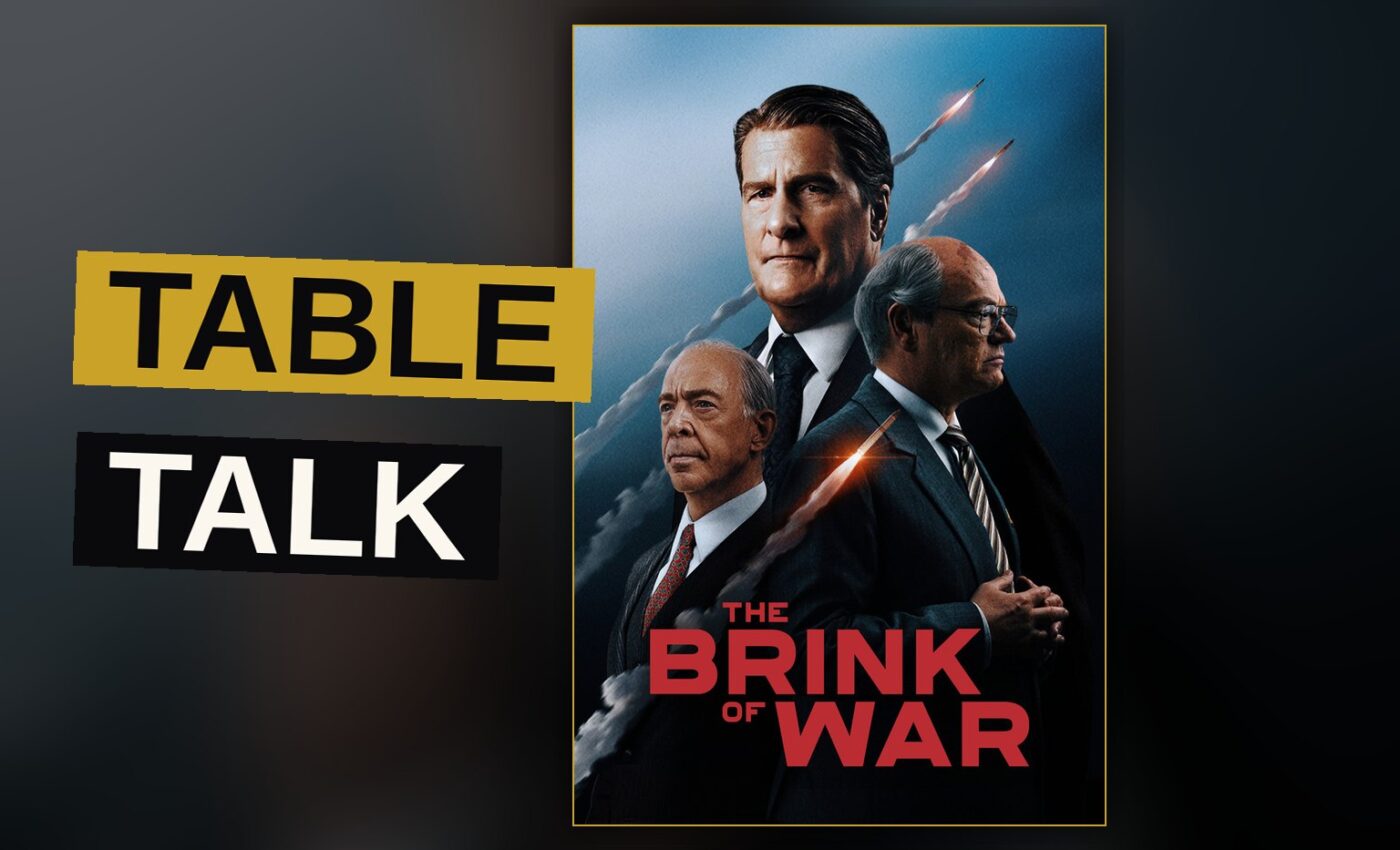
“The Brink of War” is a film about words, not weapons, and that choice pays off more often than it doesn’t. Michael Russell Gunn builds his entire picture around rooms full of men and women arguing over the fate of nuclear weapons, and he trusts that a sentence can carry as much weight as an explosion. Mostly, he’s right.
Trailer, via Angel.
Reagan and Gorbachev, Face to Face
Jeff Daniels plays Ronald Reagan, and he gives the president a stubborn, relaxed calm that never tips into parody. Jared Harris, as Mikhail Gorbachev, matches him beat for beat, playing a man who wants a deal badly enough to risk his own standing to get it. The story promises a race to take apart nuclear weapons before pressure from all sides starts a disaster, and the two leads sell that rising pressure scene by scene.
Their scenes together are the center of the movie. Gunn, who also wrote the script, keeps the talks specific rather than vague, and he lets both men be smart without letting either one win too easily.
Shultz, Nancy and Raisa
J.K. Simmons plays George Shultz with the weary precision of a man who has watched a hundred deals fall apart and still shows up to try again. Hope Davis, as Nancy Reagan, and Branka Katić, as Raisa Gorbachev, don’t get the same screen time as their husbands, but both actors find small, human moments inside the space they’re given. Aya Cash rounds out the cast as Cleo.
Here’s what works best about the group:
- Daniels and Harris carry genuine chemistry across the table, even when the material asks them to simply talk.
- Simmons gives Shultz a lived-in weariness that grounds the film’s political moves.
- Davis and Katić use limited screen time to suggest full lives outside the summit room.
- Cash’s Cleo is a named part of a cast that stays tight throughout the film.
A Line That Sells the Movie Short
The film’s marketing line, “Not all battles are fought with bullets,” is a little flat for a story this gripping. The movie itself is better than its own promotion suggests.
At 119 minutes, “The Brink of War” doesn’t waste time. Gunn keeps the pressure on without losing pace, and the film’s age rating never feels like it’s softening the stakes. This is a history lesson that plays like a thriller, even when nothing more dramatic than a phrase or a signature is on the line.
The film’s weakest moments come when it slows to explain background that the audience can likely work out on its own. A few scenes linger on process detail when the film would be stronger trusting Daniels and Harris to carry the scene through suggestion alone. It’s a small complaint in a film that otherwise respects its audience’s intelligence.
Early Word on the Ground
This is early.
The film has only just reached cinemas, and there’s no wide critical response yet to point to. What we have is an early audience score of 7.1 out of 10 from 19 votes on a film-rating website, a small group but a promising one. It suggests viewers are reacting to the same thing we did: a film that makes talks feel like a genuine contest, with real winners and real losers.
Gunn’s script never pretends the result is in doubt the way an invented thriller might, since history has already told us how the Reagan-Gorbachev talks played out. Instead, the film finds its pull in how close the deal comes to falling apart, and in the human cost of holding two strong personalities and two vast collections of weapons in balance. That’s a harder needle to thread than a plain political thriller, and Gunn threads it well.
Key Facts
– Title: The Brink of War
– Made and written by Michael Russell Gunn
– First shown: 2026-08-13
– Length: 119 minutes
– Age rating: PG
– Audience score: 7.1/10 from 19 votes
The film asks its actors to do more with fewer tools than most awards-season dramas allow — no battlefield, no chase, no violence beyond the shadow of disaster hanging over every scene. Daniels and Harris deliver on that ask. Simmons deepens it. Davis, Katić and Cash fill in the corners.
“The Brink of War” isn’t a perfect film, but it’s a confident one, and it knows exactly what story it wants to tell. It trusts its actors, trusts its history, and mostly trusts its audience. That trust is well placed.
We’re calling it early, but we’re calling it: this is one of the more assured history dramas of the year so far, carried by two leads who understand exactly what’s at stake in every quiet exchange across that table.