
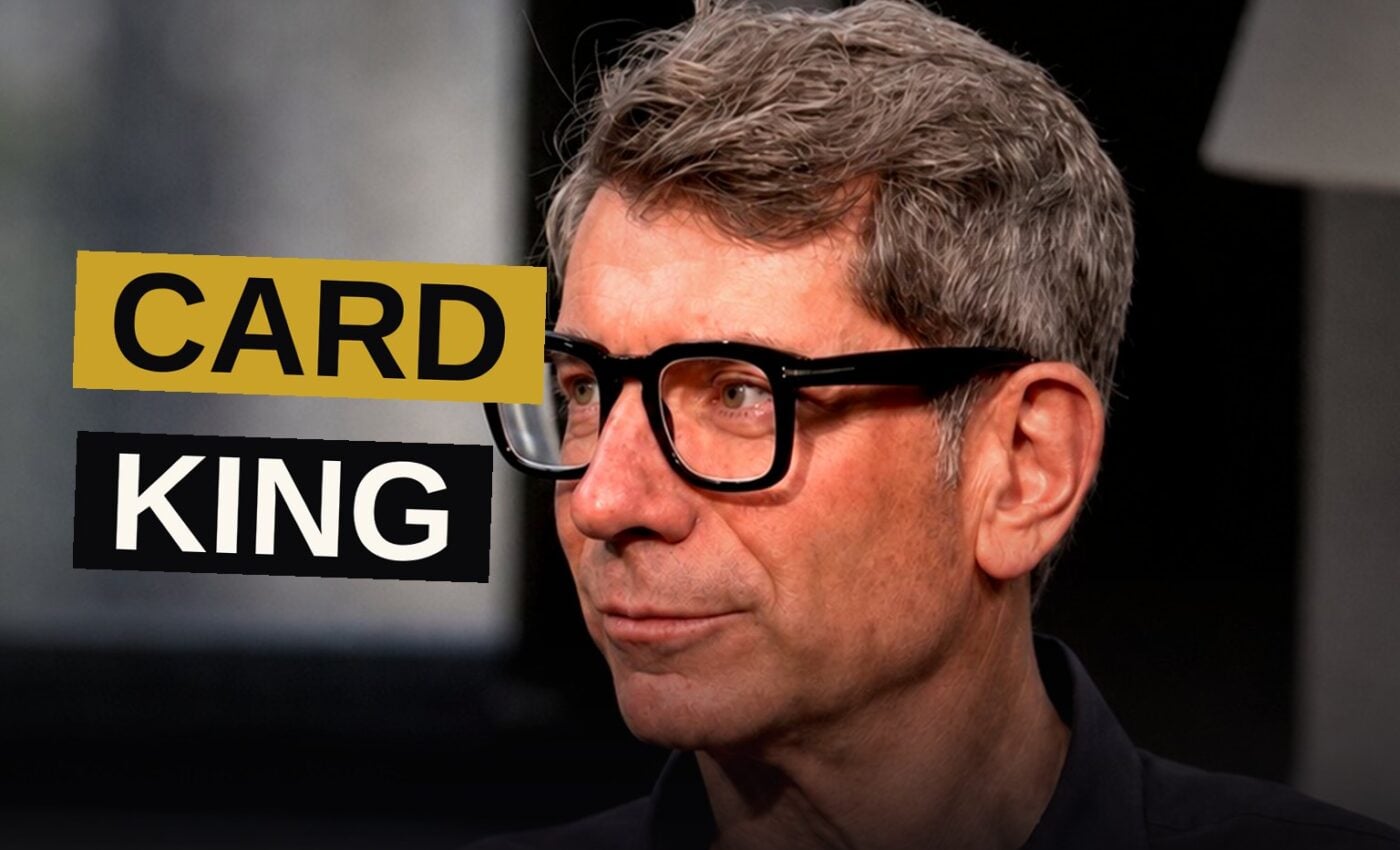
Peter Levin owns more than half a million trading cards. He started buying baseball cards from the ice cream truck as a kid in Los Angeles. Now he is a venture capital founder, an MMA league chairman, and a man who believes Pokémon cards could become currency after an apocalypse.
Levin is a founder and managing director of Griffin Gaming Partners, a Santa Monica-based firm focused on gaming and related fields. He is also co-founder and chairman of the board of Scott Coker’s new global MMA league. Coker previously ran Bellator and founded Strikeforce. Levin was also CEO and co-founder of Nerdist Industries, which sold to Legendary in 2012.
From Ice Cream Truck to Half a Million Cards
Levin’s collecting habit started early and never stopped. “I have every card I have ever owned since the age of four, but I really started collecting at the age of seven and eight,” he told The Hollywood Reporter.
He was a Yankees fan first, then switched to the Dodgers after moving to Los Angeles. While other kids bought snow cones from the ice cream truck, Levin spent his allowance on packs of cards. “I amassed, at a young age, a tremendous amount of baseball cards,” he said. Later he collected basketball cards “very rigorously.”
His career gave him a front-row seat to the industry. During his early days at CAA, the agency represented Topps, then the largest company in the trading card space by a wide margin. That gave him access to their product and their executive team. Then Upper Deck entered the market and became a new dominant player.
Bubble, Bust and the Long Recovery
The trading card market has not always been healthy. Levin acknowledged a “material dip” caused by oversaturation of product. There were scandals in the ’90s around overproduction of some brands, documented in Pete Williams’s book Card Sharks.
But the industry recovered. “To the credit of the industry, they really learned from their mistakes,” Levin said. “And slowly but surely, the trading card hobby built its way back.”
Levin bought through the downturns. “I bought through the dips in the market and have tried to avoid the hyperbolic cycles,” he said. “If you have the collector gene, you’ve got the collector gene.”
Grading Services and the Secondary Market
Grading services have reshaped the hobby over the last two decades. Companies like PSA, CGC and TAG evaluate cards and comic books on a scale of one to 10. TAG uses “machine learning,” or “AI,” in its approach.
Once graded, cards go into plastic slabs that offer UV protection. Levin warned against putting cards in direct sunlight. The grading system created a secondary market with a clear mark-to-market value for collectors.
Gaming Crossovers and Hollywood Deals
The intersection of video games and trading cards is busy. Hasbro’s Magic: The Gathering has crossed over with Final Fantasy, God of War, Fallout and Tomb Raider. At Gamescom in Cologne in August, attendees streamed to booths handing out special cards, including Upper Deck cards for Tencent’s Honor of Kings.
Pokémon, the world’s top card game, recently unveiled Pokémon: Wild Card as the World Championships wrapped in San Francisco. The main character is a Pokémon trading-card game player “battling and striving to be a champion.”
Hasbro and Upper Deck have a multiyear global licensing partnership to produce trading cards and tabletop games for franchises like Transformers and G.I. Joe. The first offering is a Transformers 40th anniversary set, launching exclusively at Target in mid-September.
Disney is also playing its cards. The company has deals with Topps for Disney, Marvel and Star Wars products, with Hasbro for Marvel and Spider-Man versions of Magic: The Gathering, and with Ravensburger for the Disney Lorcana card game. At D23, Disney unveiled a Disney Lorcana digital game, coming to PCs and mobile platforms in 2027.
The Market by the Numbers
The market’s growth is hard to ignore. The Wall Street Journal called Pokémon cards a “hot investment with a 3,000 percent return” a year ago, as their value gains beat the S&P 500. A Cyberpunk trading card game raised $28 million on Kickstarter earlier this year, becoming the most-funded game and the No. 4 most successful campaign ever on the platform.
Some analysts estimate the trading card market is worth $50 billion annually, with further growth ahead.
| Card Segment | Notable Players | Recent Developments |
|---|---|---|
| Sports cards | Topps, Upper Deck, PSA, CGC | Baseball and basketball cards drove Levin’s early collecting; grading services have become a big part of the ecosystem |
| Gaming crossovers | Hasbro, Magic: The Gathering, Tencent, Cyberpunk | Crossovers with Final Fantasy, God of War, Fallout, Tomb Raider; Cyberpunk set a Kickstarter record |
| Hollywood and franchise cards | Disney, Topps, Hasbro, Ravensburger | Marvel, Star Wars, Spider-Man and Transformers sets; Disney Lorcana going digital in 2027 |
Why Levin Stays Bullish
Levin remains enthusiastic about cards from both a collector’s and an investor’s perspective. He has weathered the industry’s ups and downs, buying through dips and avoiding “hyperbolic cycles.”
The market has learned from its past mistakes, he said, and the hobby has built itself back. Whether cards will truly become post-apocalyptic currency remains to be seen. But Levin is holding onto his half-million-plus cards either way.
Source: hollywoodreporter.com
Get the Notebook.
The day's best stories and every fresh verdict, in plain English, in your inbox by seven. One email a day, no more.