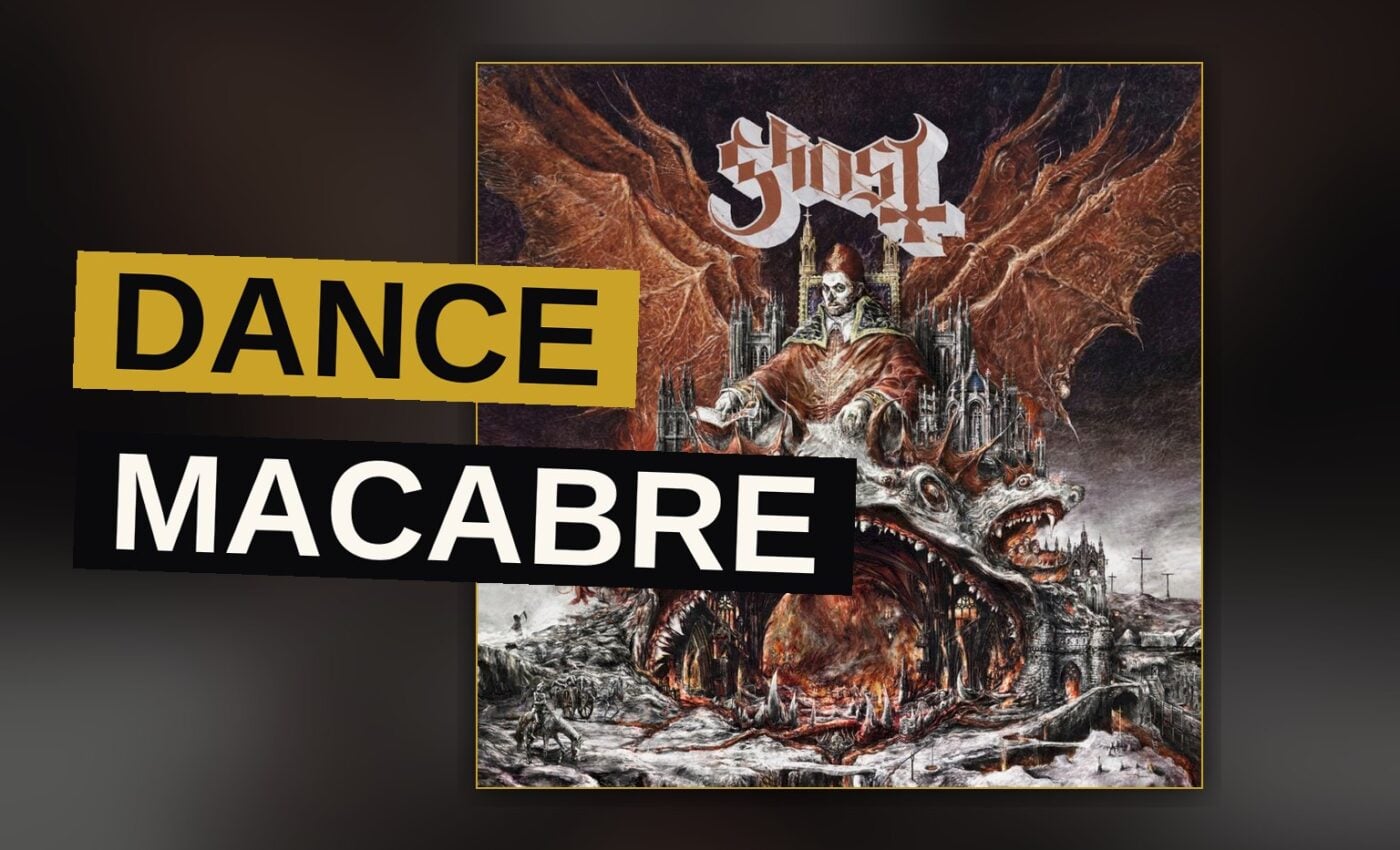
Prequelle is the fourth album by the rock band Ghost, and it marks a clear shift in the group’s identity. The band had spent the previous decade performing under the persona of Papa Emeritus, but by 2018, that era was giving way to a new chapter. What remains is a sleek, theatrical, and surprisingly catchy album that grafts a medieval plague narrative onto the glossy chassis of 1970s and 1980s arena rock. It is not a heavy metal record in the traditional sense. It is a pop record with a Satanic liturgy and a killer chorus.
The concept is simple. The Black Death is sweeping across Europe, and humanity’s response is to panic, pray, and party. Ghost leans into that contradiction hard. The songs swing between apocalyptic dread and outright disco, and the band manages to make both feel like the same impulse. It is clever, it is funny, and it is often genuinely moving. Prequelle is the sound of a band that knows exactly what it is doing, and it is their most accomplished work to date.
Ashes and Rats
The album opens with “Ashes,” a one-minute instrumental that works like a church bell and a cough. It is a cold open, a plague-ridden prelude that sets the scene with a choir and a grim spoken-word passage.
It does not overstay its welcome, and it gives way to “Rats,” the lead single and the album’s mission statement. The track is a mid-tempo stomper with a massive, singalong chorus that compares the spread of pestilence to a swarm of vermin. It is the most immediately catchy thing Ghost has ever written, and the guitar solo is pure 1980s MTV cheese, delivered without a hint of irony.
“Faith” follows, and it is the heaviest track on the record. The riff is chunky and direct, and the vocal is a sneer. The song is a rejection of religious comfort in the face of suffering, and it lands with a blunt force that the rest of the album mostly avoids. It is a reminder that Ghost can still be a metal band when it wants to be, and it sets up the album’s middle stretch with real momentum.
See the Light and Miasma
“See the Light” is the first real shift. It is a ballad-adjacent track with a soft verse and a big, anthemic chorus. It is not the album’s strongest moment, but it functions as a breather, a moment of reflection before the record’s centerpiece. The lyrics are direct and a little on the nose, but the melody carries it.
Then comes “Miasma,” a five-minute instrumental that is the album’s strangest and most delightful detour. It is a synth-heavy prog-rock workout that builds to a saxophone solo, of all things. It should not work. It absolutely works. The track is a pure adrenaline shot, and it shows a band confident enough to take a risk in the middle of its own record.
Dance Macabre
“Dance Macabre” is the album’s peak. It is a four-minute pop song dressed in leather and corpse paint, built on a bassline that would not sound out of place on a new wave record. The chorus is enormous, the hook is undeniable, and the whole thing is a celebration of the idea that if the world is ending, you might as well dance.
It is the song that proves the album’s central thesis: that the plague and the party are the same event. The song is a love story set during the apocalypse, and that tension is the entire point. It is the best song Ghost has ever recorded, and it is worth the price of admission alone.
Pro Memoria and Witch Image
“Pro Memoria” is a slow-burning ballad that leans heavily on a piano line and a theatrical vocal. The song is about the inevitability of death, and the chorus is a blunt reminder of mortality. It is not as immediate as the tracks around it, but it has a weight that grows with each listen. The pacing here is deliberate, and it gives the album a chance to breathe before the final stretch.
“Witch Image” is the sleeper hit. It is a mid-tempo rocker with a sinister groove and a chorus that sneaks up on you. The verses are quiet and tense, and the release is a soaring, melodic hook that feels like a classic rock radio staple from a past that never quite existed. It is one of the album’s most understated tracks, and it rewards repeat listens more than almost anything else here.
Helvetesfönster and Life Eternal
“Helvetesfönster” is the second instrumental, and it is a different beast from “Miasma.” It is darker, more atmospheric, and it leans on a churning guitar riff that builds slowly over nearly six minutes. It is the album’s longest track, and it is the one moment where the pacing genuinely drags. The piece is well-constructed, but it could lose a minute without losing anything essential.
The album closes with “Life Eternal,” a piano ballad that turns the record’s entire concept on its head. The plague is over, the party is over, and what remains is a quiet, sincere meditation on love and memory. It is a gorgeous, graceful ending, and it reframes everything that came before it. The album that started with rats and panic ends with a whisper, and it feels earned.
The Verdict
Prequelle is not perfect. The middle section sags in places, and a few tracks are more functional than essential. But the highs are so high that the flaws barely register. This is a record that understands its own absurdity and embraces it fully. It is theatrical without being pretentious, catchy without being shallow, and heavy without being exhausting. It is the sound of a band at the peak of its powers, making exactly the record it wants to make.
“Underneath the catchy melodies and snazzy artwork, Forge and his band have created one of the cleverest heavy metal records in recent memory.”
That is the right read. Prequelle is clever, and it is memorable, and it is a hell of a lot of fun. It is a record that rewards both casual listening and deep attention, and it holds up eight years later. Ghost took a risk by leaning into pop, and it paid off. This is an 8.1 out of 10.
Get the Notebook.
The day's best stories and every fresh verdict, in plain English, in your inbox by seven. One email a day, no more.
- Ashes1:21
- Rats4:22
- Faith4:30
- See the Light4:05
- Miasma5:18
- Dance Macabre3:40
- Pro Memoria5:39
- Witch Image3:30
- Helvetesfönster5:56
- Life Eternal3:27