
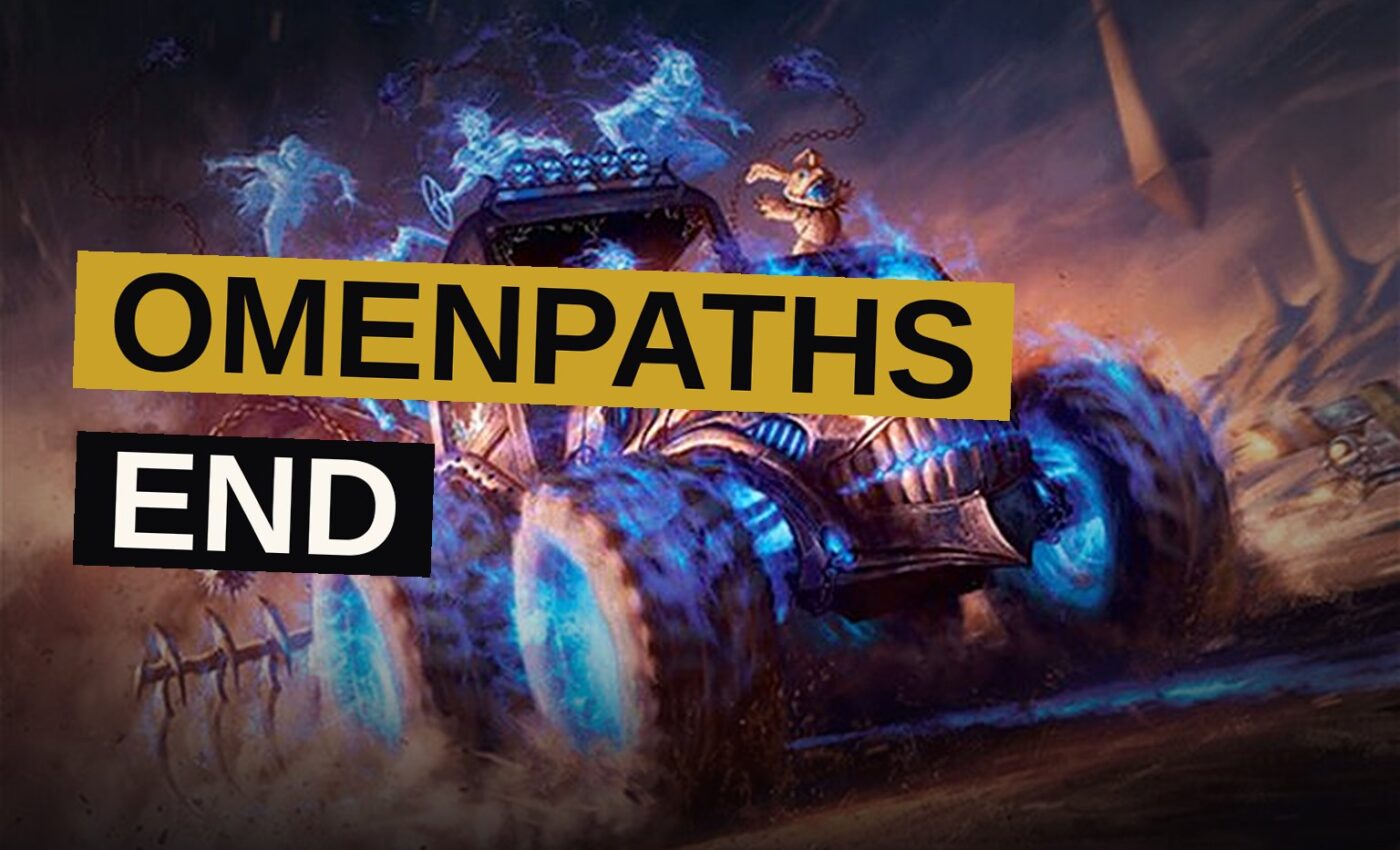
Magic: The Gathering has spent three years crossing the Multiverse through Omenpaths, and the Metronome story arc is about to end. The final set, Reality Fracture, arrives later this year, with more details promised at Magiccon Amsterdam. Before that, it is worth looking back at every plane the game visited along the way.
A Mixed Beginning
The arc started with a stumble. Wilds of Eldraine and Lost Caverns of Ixalan were return sets, showing planes recovering from Phyrexian invasions. These relatively medium sets succeeded on the back of beautiful worlds full of established flavor.
Murders at Karlov Manor and Outlaws of Thunder Junction did not land. Fans brought back the “hat set” moniker — strange genre experiments where familiar characters wore fedoras or Stetsons for reasons that were never clear.
Genre Lessons
Karlov Manor and Thunder Junction were early tests of what Wizards could do with genre concepts. Magic has a long history of top-down design, where a card starts with a name or idea and mechanics follow. Innistrad, built on horror tropes, remains the classic example.
The problem is that these sets were design-driven rather than creative-driven. They communicated a surface-level idea but never tried anything ambitious. Both were flop-ish in execution, but they served as learning experiences for sets further down the pipeline.
Three Disconnected Sets
Bloomburrow, Duskmourn: House of Horror and Aetherdrift followed each other, and they could not have been more different. They are perhaps the three most aesthetically disconnected Magic sets to ever follow each other in Magic history.
Bloomburrow’s Risk
Bloomburrow was the most traditional of the bunch. It was a Redwall-inspired world of sentient forest creatures. Aside from the entire lack of humanoids, it played close to the chest with very traditional high fantasy aesthetics — warriors, knights, wizards and rogues.
That lack of humanoids was still a decent risk. The only time it had happened before was Lorwyn, a decision that tested so poorly that Wizards abandoned the concept for nearly a decade.
Duskmourn’s Horror
Duskmourn introduced a plane that is a pocket dimension inside an evil house. It also massively expanded the scope of technology seen in a traditional Magic set, including a haunted television.
Aetherdrift’s Race
Aetherdrift presented a multi-plane race with an intriguing prize: the Spark of a Planeswalker. The irony is that the Omenpaths already let anyone walk between planes, reducing the utility of that prize.
The set was a jumbled mess of a concept, wasting short returns to several planes.
Sets So Far
Here is how the sets of the Metronome arc so far break down by world and genre:
- Wilds of Eldraine — a return to Eldraine, recovering from invasion
- Lost Caverns of Ixalan — a return to Ixalan, recovering from invasion
- Murders at Karlov Manor — murder mystery genre, flop-ish execution
- Outlaws of Thunder Junction — western genre, flop-ish execution
- Bloomburrow — Redwall-inspired fantasy, traditional aside from no humanoids
- Duskmourn: House of Horror — horror tropes, bold technological scope
- Aetherdrift — multi-plane race, jumbled concept
Set Comparison
| Set | World | Genre | Source’s Take |
|---|---|---|---|
| Wilds of Eldraine | Eldraine | Return set | Relatively medium |
| Lost Caverns of Ixalan | Ixalan | Return set | Relatively medium |
| Karlov Manor | Karlov Manor | Murder mystery | Flop-ish |
| Outlaws of Thunder Junction | Thunder Junction | Western | Flop-ish |
| Bloomburrow | Bloomburrow | High fantasy | Decent risk |
| Duskmourn | Duskmourn | Horror | Weird, divergent |
| Aetherdrift | Multiple planes | Racing | Jumbled mess |
The Finale
The arc ends with Reality Fracture. Details on the set will come at Magiccon Amsterdam.
Much ink has been spilled on the run so far, and the final chapter is still to come.
Source: hipstersofthecoast.com
Get the Notebook.
The day's best stories and every fresh verdict, in plain English, in your inbox by seven. One email a day, no more.