
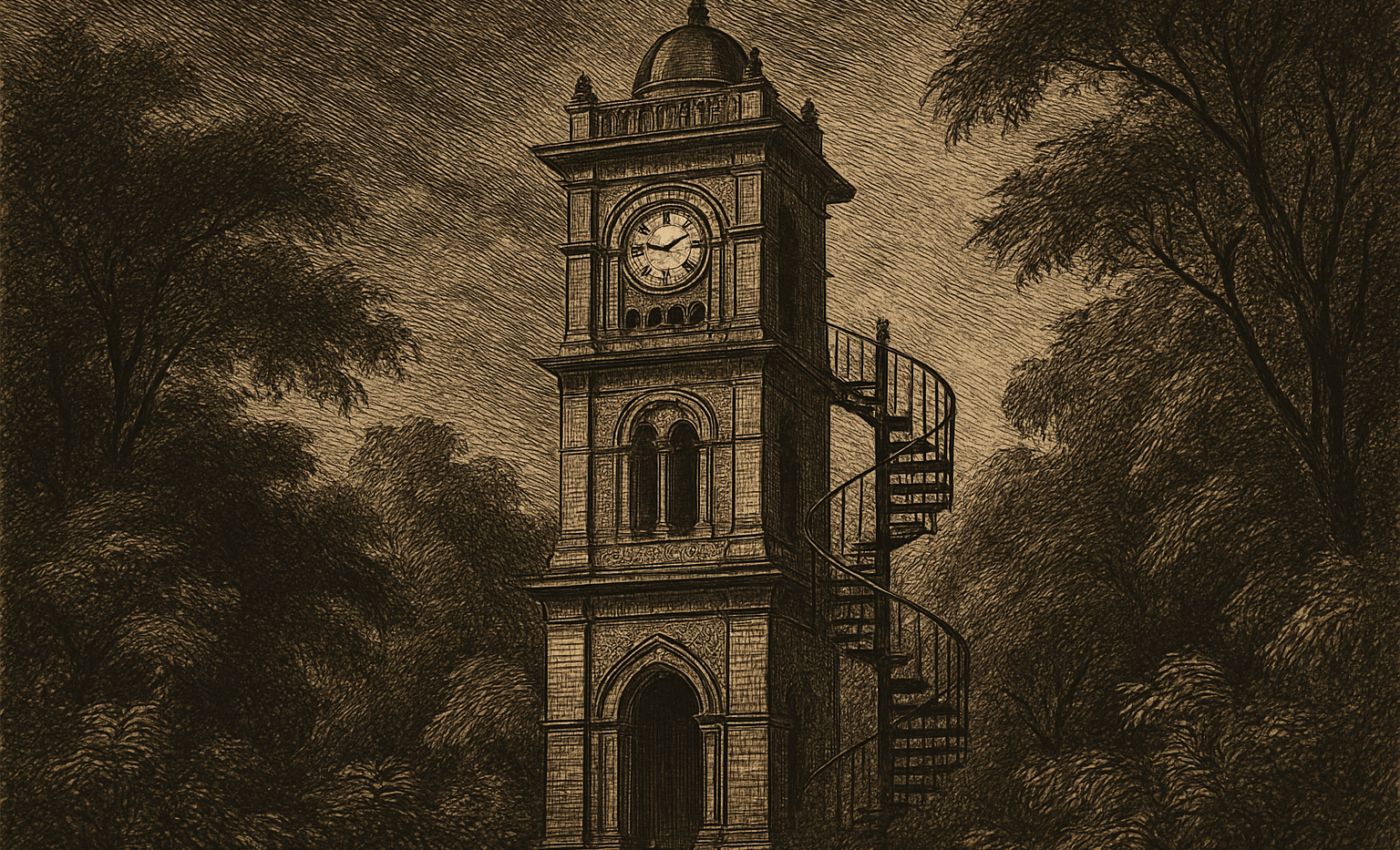
Mumbai’s oldest public garden hides a clock tower that has stood since the 1860s, and it remains one of the city’s quiet architectural treasures.
The David Sassoon Clock Tower rises at the entrance of Veermata Jijabai Bhosale Udyan in Byculla, a garden and zoo formerly known as Victoria Gardens. Built in 1864, the tower is a rare example of Palladian architecture in Mumbai. In fact, it is said to be the only structure in the city built in that style.
The Man Behind the Tower
David Sassoon was a prominent merchant and philanthropist of his era. He funded the majority of the tower’s construction cost, which is why the structure carries his name. The tower was dedicated to him in recognition of that contribution.
The clock tower stands as one of the more visible reminders of his legacy in the city.
Stone, Tiles and Iron
It is said that the main body of the tower was built from locally sourced Porbandar stone.
Parts of the tower are decorated with ornamental tiles. On one side, there is also an artistic, wrought iron staircase.
“It is a beautiful piece of history and is reminiscent of a bygone era.”
A Garden Landmark
The clock tower rises through the trees at the garden’s entrance. During the day, people rest in the shade cast by the tower and the surrounding foliage while children play in the garden grounds.
The garden itself has a long history. It was established as Victoria Gardens and later renamed Veermata Jijabai Bhosale Udyan. The zoo within the garden is one of the city’s oldest attractions.
The tower marks the threshold between the busy streets of Byculla and the calm green space beyond.
Why It Matters
The David Sassoon Clock Tower holds a distinct place in the city’s architectural record.
Its Palladian style sets it apart. The use of Porbandar stone connects it to regional building traditions. And its dedication to Sassoon ties it to his work as a merchant and philanthropist.
The tower has survived the city’s rapid growth and the general wear of more than a century and a half. It remains standing above a garden that has changed names but kept its purpose.
For those who pass through Byculla, the tower offers a moment of pause. It is a reminder that even in a city defined by constant change, some structures hold their ground.
The garden still offers shade. And the tower, named for a merchant who funded its construction, still watches over both.
Source: atlasobscura.com
Get the Notebook.
The day's best stories and every fresh verdict, in plain English, in your inbox by seven. One email a day, no more.