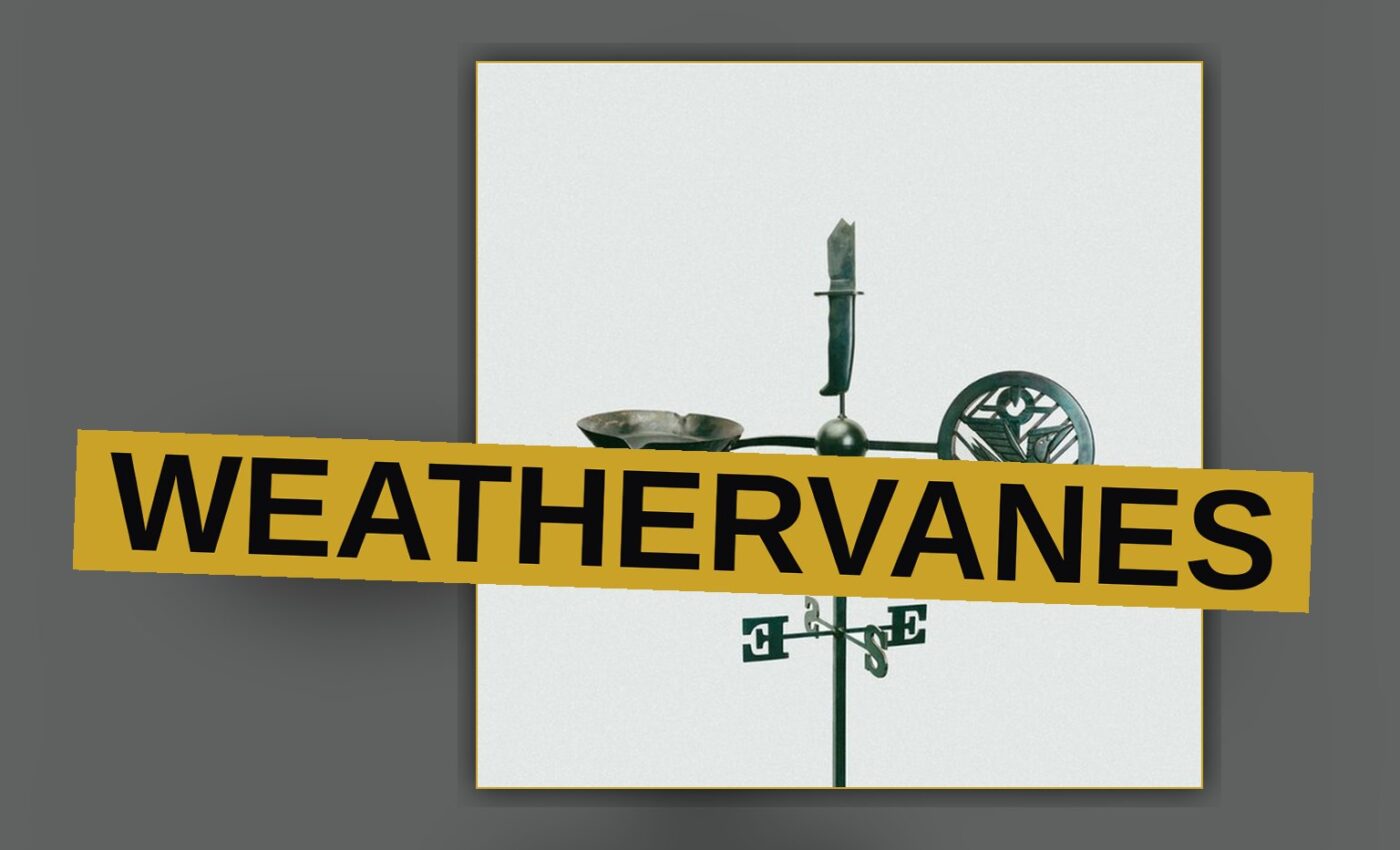
Jason Isbell has spent the last decade building a reputation as one of American roots rock’s most reliable songwriters. Weathervanes, his first album with the 400 Unit since 2020’s Reunions, finds him looking outward more than he ever has before.
Where his solo records often turned inward toward his own recovery and marriage, these 13 songs are populated with addicts, widowers, vigilantes, and old friends who have drifted into dangerous territory. The result is a heavier, more somber record that rewards patience, and it stands as one of the strongest collections of his career.
The album arrives with an 82/100 aggregate score on Metacritic. This is a record that demands to be heard in sequence, its running time unfolding like a novel of the modern American South.
Death Wish and King of Oklahoma
The album opens with “Death Wish,” a meditation on loving someone whose mind is turning against them. Isbell has written about mental illness before, but this track approaches the subject from the perspective of a partner who refuses to leave. The narrator watches someone spiral and makes a quiet decision to stay. It’s a devastating opening statement, setting a tone of patient endurance that the rest of the record carries.
“King of Oklahoma” follows with a shift in perspective. This is the story of a man whose back is broken by years of physical labor, who turns to pills and then to theft to keep the pain at bay. The narrator’s wife has left, his body has failed him, and he finds himself stealing copper wire from abandoned buildings. Isbell’s detail work here is exceptional—the specific ache of a herniated disc, the shame of a man who once took pride in his work now crawling through crawlspaces. The band keeps the song moving with a mid-tempo shuffle that makes the tragedy feel lived-in rather than performed.
Strawberry Woman and the Middle Stretch
“Strawberry Woman” arrives as a welcome breath of air. It’s a love song, and one of the few moments on the album where things feel light. The narrator remembers a woman he met at a fairground, the summer heat, the thrill of something new. Isbell’s gift for concrete imagery is on full display here—you can smell the strawberries, feel the humidity. After the darkness of the first two tracks, it feels like a reprieve.
“Middle of the Morning” keeps the gentler mood going but adds a layer of anxiety. It’s a song about the quiet moments of a relationship, the ones that happen when the world isn’t watching. There’s a tension underneath the surface, a sense that the peace is fragile. The narrator sings about a partner who is struggling, someone who can’t seem to find solid ground even when things should be fine. The track builds to a gentle, resigned conclusion.
“Save the World” is the album’s most direct political statement, though Isbell never names a specific cause. Instead, he writes about the desire to fix things that are fundamentally broken, to protect people who don’t want protection. The narrator is a father, a husband, a citizen who feels powerless against the scale of the world’s problems. It’s not a protest anthem; it’s a confession of inadequacy.
“If You Insist” is a shorter, sharper track, a character study of someone who cannot stop pushing their luck. The narrator is a gambler, a drinker, a man who knows he’s headed for trouble but can’t help himself. The band plays with a loose, almost jazzy feel, and the song ends before it overstays its welcome.
Cast Iron Skillet and the Album’s Darkest Moment
“Cast Iron Skillet” is the album’s darkest moment, a slow-burning meditation on small-town violence and inherited silence. The song’s narrator recalls a childhood friend whose father beat him, and the community’s decision to look away. The title refers to the weapon used in a domestic murder, and the song never flinches from the ugliness of its subject. It’s the kind of track that only a songwriter at the peak of his powers could pull off, and it’s the centerpiece of the record.
“When We Were Close” shifts to a more elegiac register. It’s a song about an old friend who has become a stranger, someone who used to be a constant presence and now only appears in memories. The narrator sifts through old photographs, trying to find the moment when the friendship curdled. It’s a quiet, devastating song, and it’s one of the best on the album.
“Volunteer” is a shorter, more straightforward rocker, a song about doing the work that no one else wants to do. The narrator is a man who shows up, who takes the job, who carries the weight. It’s not a flashy track, but it has a sturdy, workmanlike quality that fits the album’s themes.
Vestavia Hills and Class Resentment
“Vestavia Hills” is named after a wealthy suburb, and it’s a song about class and resentment. The narrator is a working-class man who married into money, and he’s never quite comfortable with the world he now inhabits. Isbell’s observations are sharp—the right churches, the right schools, the quiet judgment of the old money families. It’s a subtle song, more about atmosphere than plot, but it lands its points with precision.
White Beretta and This Ain’t It
“White Beretta” is a song about a car, but really it’s a song about a relationship that’s running out of gas. The narrator recalls a white Beretta he drove in his youth, a car that was always breaking down, always needing attention. The metaphor is plain but effective, and Isbell’s vocal performance carries the weight of nostalgia and regret. It’s a mid-tempo track that doesn’t reinvent the wheel, but it fits the album’s reflective mood.
“This Ain’t It” is the longest song on the record, an exploration of a marriage that has quietly collapsed. The narrator and his partner are still together, still going through the motions, but something essential has gone missing. Isbell’s lyrics are full of the small, telling details of a dying relationship—the separate beds, the polite conversations about the weather, the sense that both people are waiting for something to break. The song builds slowly, adding layers of guitar and organ, until it reaches a cathartic, almost anthemic climax. It’s a stunning piece of writing, and it feels like the emotional heart of the album.
Miles and the Record’s Long Goodbye
“Miles” closes the record with an epic about distance—both the physical kind and the emotional kind. The narrator is on the road, thinking about everything he’s left behind: his family, his hometown, his younger self. Isbell has written about touring extensively, but this song feels more like a reckoning than a travelogue. The band stretches out, giving the song room to breathe, and the final minutes build to a slow, shimmering fade. It’s a fitting end to an album that has spent an hour asking hard questions about what it means to be a good person in a broken world.
“This LP is a triumph, an outstanding set of songs and performances from someone who has already proved they’re one of the strongest, truest voices in American roots rock.”
The Record’s Place in Isbell’s Catalog
Weathervanes is not an easy listen. Its subject matter is heavy, its tone is often somber, and it asks the listener to sit with discomfort for a full hour. But that difficulty is part of what makes it great. Isbell has never been a songwriter who shies away from hard truths, and here he confronts them head-on, writing about addiction, violence, grief, and failure with a clear-eyed compassion that feels earned rather than sentimental.
The 400 Unit deserves a share of the credit. This is the best the band has sounded on record, with a tightness and a willingness to take risks that elevates the material. The production is warm and immediate, capturing the band in a way that feels like you’re in the room with them.
If there’s a weakness, it’s that the album’s uniformity of tone can occasionally blur together. The back half, in particular, has a stretch of mid-tempo songs that don’t distinguish themselves as sharply as the earlier tracks. “Volunteer” and “White Beretta” are good songs, but they don’t have the same narrative punch as “King of Oklahoma” or “Cast Iron Skillet.” It’s a minor complaint, though, and one that becomes less noticeable with repeated listens.
His characters are people who have been buffeted by forces they never saw coming—economic collapse, mental illness, the slow erosion of love—and they respond in ways that are sometimes noble, sometimes foolish, and often both. What makes the record so compelling is that Isbell never judges them. He writes about flawed people with the same grace he extends to himself, and that generosity of spirit is what elevates these songs beyond simple storytelling.
The album has already earned its place in the conversation about Isbell’s best work. It’s more cohesive than Reunions and has a thematic weight that rivals Southeastern, the 2013 record that announced him as a major voice. Comparisons to that album are inevitable, and Weathervanes holds up. It’s not as raw, perhaps, but it’s more mature, a record made by someone who has lived through the things he writes about and come out the other side with his empathy intact.
The critical consensus has been strong, with the Metacritic aggregate reflecting broad praise for the record’s depth and the band’s performances. But the real test of an album like this is whether it rewards the time you put into it. Weathervanes does. Its songs reveal their intricacies slowly, and the measured, almost leisurely pace suggests that Isbell is confident his audience will stick with the album. That confidence is well placed.
This is a deeply human record, one that is thoughtful, compassionate, and heartbreaking in equal measure. It’s a triumph from a songwriter who has already proven he’s one of the strongest, truest voices in American roots rock. If you have the patience to meet it on its own terms, Weathervanes is an experience that stays with you long after the final notes of “Miles” fade out.
That patience is rewarded across the album’s 13 tracks. My own ranking of the strongest songs:
- “King of Oklahoma” — the most vivid character study on the record
- “Cast Iron Skillet” — the darkest and most daring track
- “This Ain’t It” — the emotional centerpiece
- “Death Wish” — the devastating opener
- “When We Were Close” — the quietest, most elegiac moment
- “Save the World” — the most direct political statement
- “Strawberry Woman” — the album’s one true breath of air
- “Middle of the Morning” — a gentle study in fragile peace
Get the Notebook.
The day's best stories and every fresh verdict, in plain English, in your inbox by seven. One email a day, no more.
- Death Wish4:31
- King of Oklahoma5:03
- Strawberry Woman4:11
- Middle of the Morning4:41
- Save the World5:09
- If You Insist3:46
- Cast Iron Skillet3:24
- When We Were Close3:58
- Volunteer4:06
- Vestavia Hills4:32
- White Beretta3:56
- This Ain’t It6:15
- Miles7:08