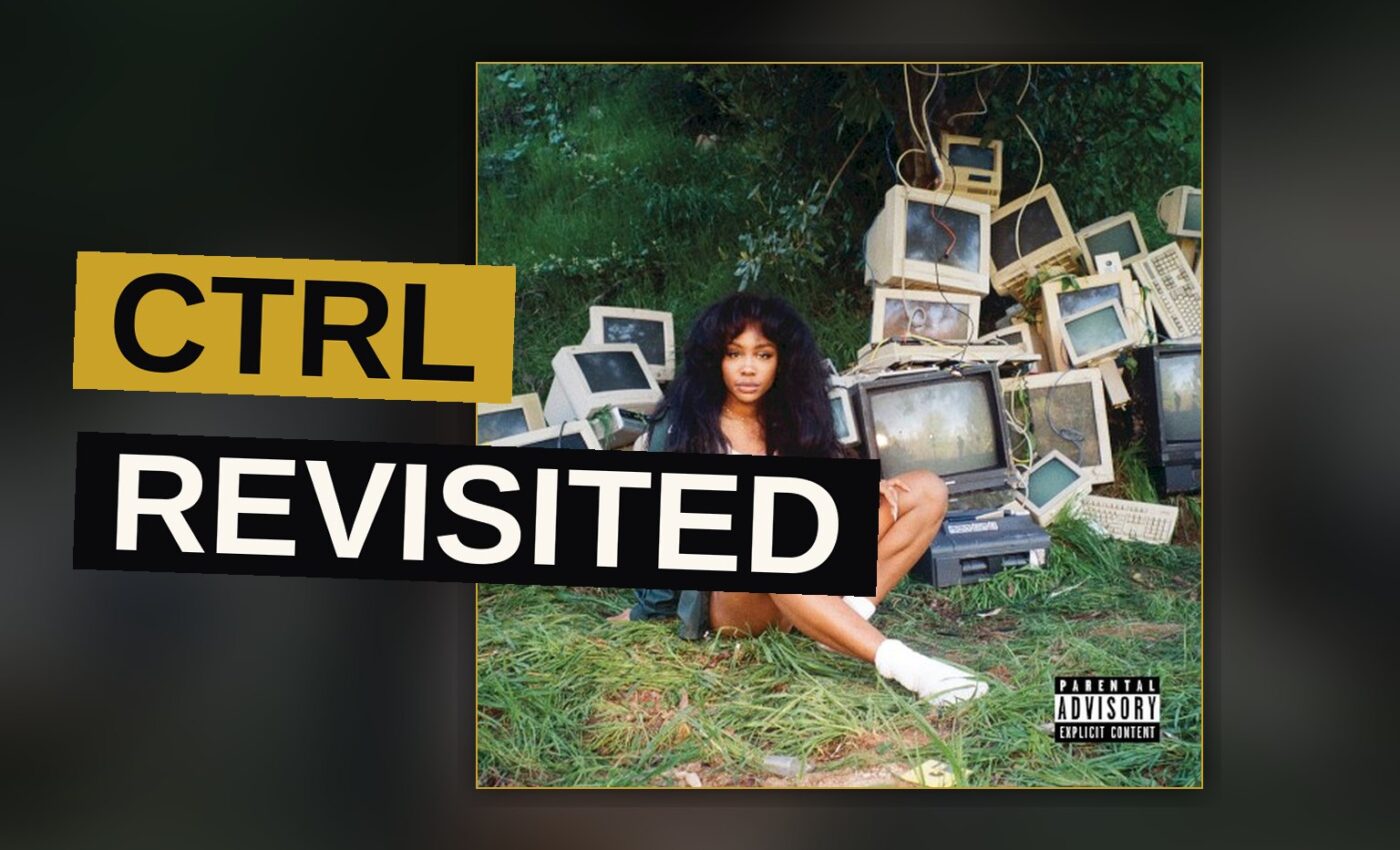
SZA’s debut album Ctrl is a reckoning. Released in 2017, it is a raw, cohesive R&B record about the mess of being a young woman: bad relationships, low self-esteem, sexual desire, and the slow, painful work of choosing yourself. It is not a polished product. It is a diary with a beat, and that is exactly what makes it land. The album runs 49 minutes across 14 tracks, and it earned a Metacritic score of 86 out of 100. On its own terms, Ctrl is a confident, honest statement of purpose, and it holds up as one of the defining debuts of its decade.
Opening on a Wound: Supermodel
The album opens with “Supermodel,” a track that sets the tone immediately. SZA sings about being left behind, about the indignity of loving someone who does not love you back. Her voice is delicate but pointed, and the production is sparse enough to let every word sting. It is not a comeback anthem. It is a wound, and she is pressing on it.
Love Galore and the First Statement
“Love Galore” follows, and it is the first real single of the record. It is a slow-burning meditation on a situationship that will not end. SZA is not playing the victim here. She is tired, and she is honest about wanting more than a man is willing to give. The hook is sticky, the mood is hazy, and it earned its place as one of the tracks critics singled out. It is a statement of intent: this album will not flinch.
Doves, Drew Barrymore, and Prom
“Doves in the Wind” is a strange, compelling pivot. It uses a spoken word sample to frame a song about sex, power, and the difference between being wanted and being valued. SZA is playful here, but the playfulness has teeth. It is one of the more experimental tracks on the record, and it works because she commits to the idea fully.
“Drew Barrymore” is the emotional center of the album. Named after the actress, the song is about feeling out of place at a party, about being the girl who does not fit the mold of what a man wants. SZA sings about the difficulty of accepting being alone, and it lands like a gut punch. The production is warm, almost nostalgic, and her vocal delivery is fragile in the best way. This is the track that made people pay attention.
“Prom” is a quieter kind of heartbreak. It is about growing up and realizing that the fantasy of youth is not coming back. SZA reflects on missed moments and the pressure to have it all figured out. It is not a sad song, exactly. It is a resigned one, and it fits perfectly into the album’s larger arc. Critics singled it out for good reason: it is one of the most honest tracks here.
The Weekend and the Run of Hits
“The Weekend” is the album’s biggest commercial moment, and it earns that status. The song is about sharing a man with another woman, and SZA flips the script by refusing to be the one who is ashamed. She knows the arrangement is wrong, and she sings about it with a kind of detached cool that makes the track feel like a confession and a defense at the same time. The melody is smooth, the hook is undeniable, and it is the track most likely to stay in your head.
“Go Gina” is a shorter, lighter track. It is a nod to the character Gina from Martin, and it is about the pressure to be strong, to hold it together, to not fall apart in front of everyone. SZA is talking to herself as much as to anyone else. It is not a major statement, but it is a necessary breather between the heavier cuts.
“Garden (Say It Like Dat)” is a standout, and critics were right to name it. The song is about wanting a man to say he loves her plainly, without games. The production is lush, and SZA’s voice floats over it with an ease that feels earned. It is a song about communication, about the frustration of wanting clarity and getting silence. It is one of the most accessible tracks on the record, and it shows a different side of her range.
“Broken Clocks” closes out the middle of the album, and it is a reflection on time, money, and the grind. SZA sings about working, about being tired, about the way life speeds up when you are not paying attention. It is a more grounded track than the ones around it, and it grounds the album in the real world. Another one critics singled out, and it holds up.
Anything, Wavy, and Normal Girl
“Anything” is a short, almost skeletal track. It is a plea, a moment of vulnerability where SZA offers herself up without condition. It does not overstay its welcome, and it works as a transition into the more introspective back half of the record.
“Wavy (interlude)” is exactly what it says: an interlude. It is brief, atmospheric, and it does not carry the weight of the songs around it. It is a moment to breathe, and it is fine for what it is. It does not need to be more.
“Normal Girl” is a return to the album’s central theme. SZA sings about wanting to be the kind of girl a man brings home to his mother, about the pressure to be palatable, to be easy, to be normal. It is a sharp critique of respectability, and it is delivered with the same honesty that runs through the whole record. The production is smooth, and the song lands as one of the more quietly devastating tracks here.
Pretty Little Birds and 20 Something
“Pretty Little Birds” is a duet about trust and the fear of being hurt. The track is gentle, almost fragile, and it gives SZA a chance to show a softer side without losing her edge. It is not the most memorable track on the album, but it is a solid pairing and a good setup for the closer.
“20 Something” is the perfect ending. It is a song about being young and lost, about the fear that you are running out of time to figure things out. SZA sings about being in her twenties with nothing to her name. It is a confession of anxiety, and it closes the album on a note of uncertainty rather than triumph. That is the right choice. Ctrl is not a record about having answers. It is a record about asking questions.
The Production and the Voice
The production across Ctrl is consistent without being repetitive. It draws from R&B, hip-hop, and a little bit of indie pop, and it never settles into a single mood for too long. The beats are often sparse, which lets SZA’s voice do the heavy lifting. That voice is the album’s real instrument. She can sound fragile, playful, angry, and resigned within the space of a single track, and she never loses control of the material.
The album also tests the borders of the genre. Critics received Ctrl as a raw, cohesive, and confident R&B debut, praising SZA’s honest songwriting about relationships, sexuality, and self-empowerment as well as her vocal delivery and production. It is not a traditional R&B record. It is messier, more personal, and more willing to sit in discomfort.
How the Critics Scored It
| Publication | Score |
|---|---|
| Metacritic | 86/100 |
The Verdict
Ctrl is not a perfect album. “Anything” and “Wavy (interlude)” are filler, and the back half does not hit as hard as the front. But the highs are high enough to carry the whole record. “Drew Barrymore,” “The Weekend,” and “Garden (Say It Like Dat)” are genuine highlights, and the album’s honesty is its greatest strength. SZA is not performing vulnerability. She is living in it, and that makes the record feel urgent even nine years later.
The Metacritic score of 86 out of 100 reflects the critical consensus. This is a debut that knows exactly what it is trying to do, and it does it well.
- Supermodel3:01
- Love Galore4:35
- Doves in the Wind4:26
- Drew Barrymore3:51
- Prom3:16
- The Weekend4:32
- Go Gina2:42
- Garden (Say It Like Dat)3:28
- Broken Clocks3:51
- Anything2:29
- Wavy (interlude)1:16
- Normal Girl4:14
- Pretty Little Birds4:06
- 20 Something3:18