
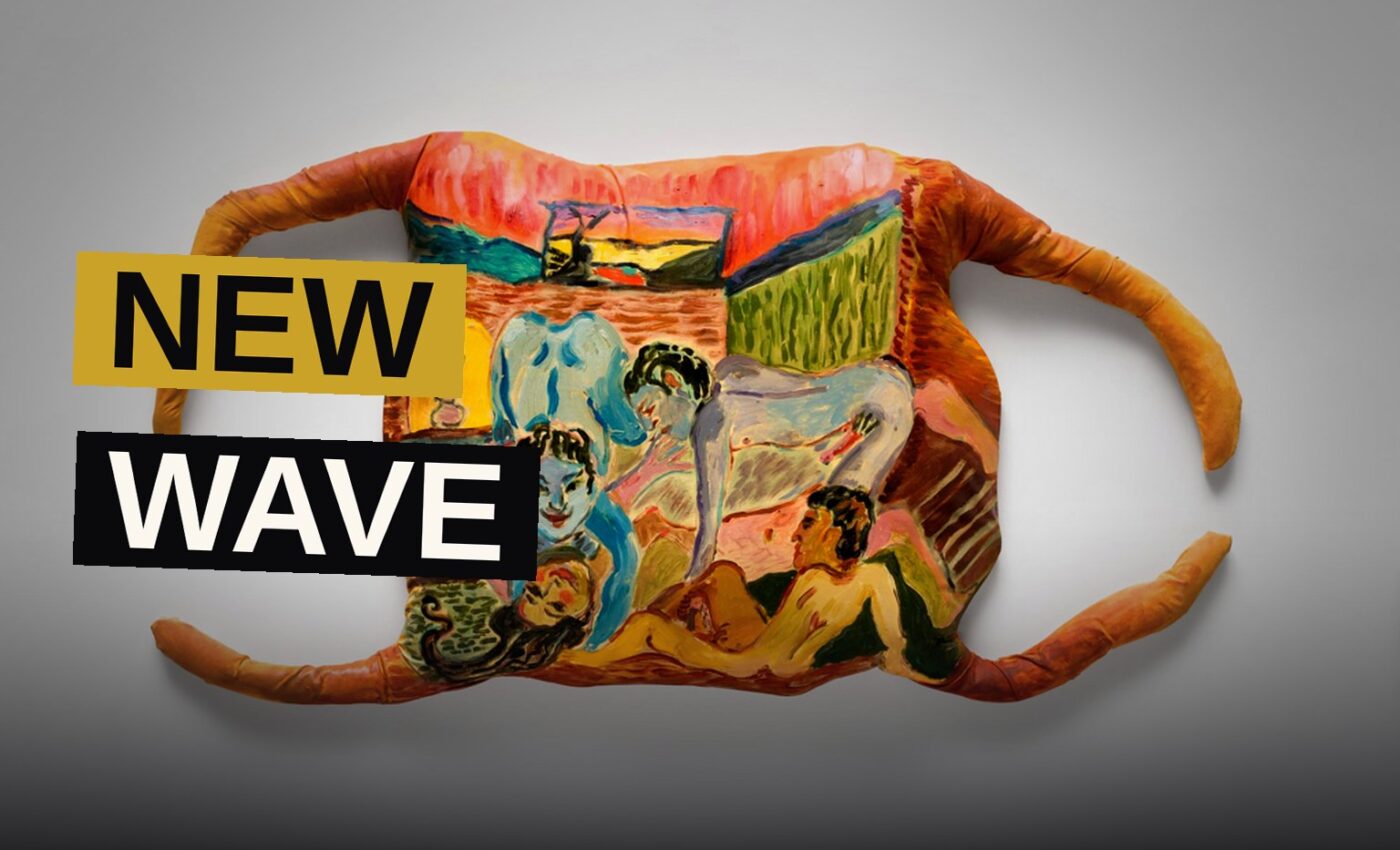
Brazil’s art world has spent years celebrating its early-modernist painters and mid-century abstractionists. Tarsila do Amaral, Anita Malfatti, Lygia Clark, Lygia Pape, and Mira Schendel have all been feted internationally. Now a new wave of Brazilian artists is pushing painting in a different direction, and women are leading it.
Panmela Castro, Agrade Camíz, Márcia Falcão, Maya Weishof, and Gokula Stoffel are five artists at the helm of this revival. Their work is urgent, vigorous, and often unflinching.
The Return to Painting
Brazil has seen this before. The Geração 80, or ’80s Generation, marked a “return to painting” after years of strict geometric abstraction. Artists like Luiz Zerbini, Beatriz Milhazes, Leda Catunda, and José Leonilson led that movement.
But abstraction never fully went away. Instead, it fused with the materiality of the medium. The result was a hybrid approach that still shapes contemporary Brazilian painting today.
Brazilian women artists have challenged stereotypes of beauty and womanhood before. Anna Bella Geiger and Lenora de Barros come to mind. But the directness with which today’s painters approach eroticism feels different.
Castro’s Testimony
Castro’s recent work makes that clear. Her 2021–22 solo show at Galeria Luisa Strina in São Paulo, curated by Daniela Labra, was titled To Flaunt is to be alive.
Flaunting, here, did not mean showing off status or possessions. It meant presenting one’s body candidly and intimately to affirm its resilience.
In a series of nudes, Castro sometimes depicts a sitter twice, as if imagining her own painting already hanging on the sitter’s wall. That doubling brings to mind the paucity of institutional archive imagery that preserves the memories of Black-Brazilian communities. Representation, or lack of it, is always a political act.
Castro conveys grit in specific works. A neon sign titled “Vulcanica Pokaropa,” from the Vigil series (2021), reads “Cada Día Peor” — “Worse Every Day.” A three-dimensional text-based sculpture reads “Eu Sobrevivi” — “I survived” — from the Residency series, 2021.
Psychological and physical pain recur across her output. The act of commemoration through portraiture becomes a self-reflexive testimonial gesture toward symbolic recovery.
The Other Four Artists
Castro is not alone. The other four artists named in the new wave bring their own approaches to figuration.
Agrade Camíz, Márcia Falcão, Maya Weishof, and Gokula Stoffel are listed alongside Castro as artists at the helm of the revival. The source does not describe their individual works in detail.
The institutional context matters. For years, Brazilian painting exhibitions often limited themselves to early-modernist figuration and mid-century abstraction. The international celebration of Amaral, Malfatti, Clark, Pape, and Schendel reinforced that canon.
What Makes This Wave Different
The key shift is frankness. Brazilian women painters today depict eroticism with a directness that feels new. They examine violence against women without turning away.
This directness appears in their dogged, unvarnished portrayals of the female body and desire, as well as their bracing examinations of violence against women. It seems uniquely of the moment.
Castro’s neon and sculpture works show this range. She moves between traditional portraiture and installation-like pieces. The message stays consistent: the body is a site of struggle and survival.
The Artists to Know
Here are the five artists named in the new wave:
- Panmela Castro — Known for nudes, neon text, and sculptural works that address survival, memory, and Black-Brazilian representation.
- Agrade Camíz — A painter working with figuration.
- Márcia Falcão — A figurative painter.
- Maya Weishof — A figurative painter.
- Gokula Stoffel — A figurative painter.
The list is not exhaustive. But these five artists represent the range of what the new wave offers.
The Weight of Representation
Castro’s work highlights a deeper issue. The lack of institutional archive imagery for Black-Brazilian communities shapes whose memories are preserved.
When Castro doubles a sitter in a painting, she is making that absence visible. She is also filling it. The act of painting becomes an act of preservation.
This is why representation matters. It is not just about who appears in a frame. It is about whose memories are kept and whose are lost.
Materiality and Legacy
The new wave also carries forward a technical legacy. The Geração 80 fused abstraction with the materiality of the medium.
That hybrid approach persists in contemporary painting. It roots the new wave in Brazilian art history.
Castro’s work shows the range of that legacy. Her practice moves between portraiture, neon text, and sculptural pieces.
A Broader Shift
The current moment feels different from previous returns to painting. The subject matter is more direct.
Violence against women is not abstract. Eroticism is not a taboo to be handled delicately. The painters address both head-on.
This is what makes the wave feel urgent. It is also communal. The five artists are part of a larger shift in Brazilian art.
Castro’s neon sign reads “Cada Día Peor” — “Worse Every Day.” Her sculpture reads “Eu Sobrevivi” — “I survived.” Between those two statements lies the full arc of her project: endurance, recorded in paint and light.
Source: hyperallergic.com
Get the Notebook.
The day's best stories and every fresh verdict, in plain English, in your inbox by seven. One email a day, no more.