
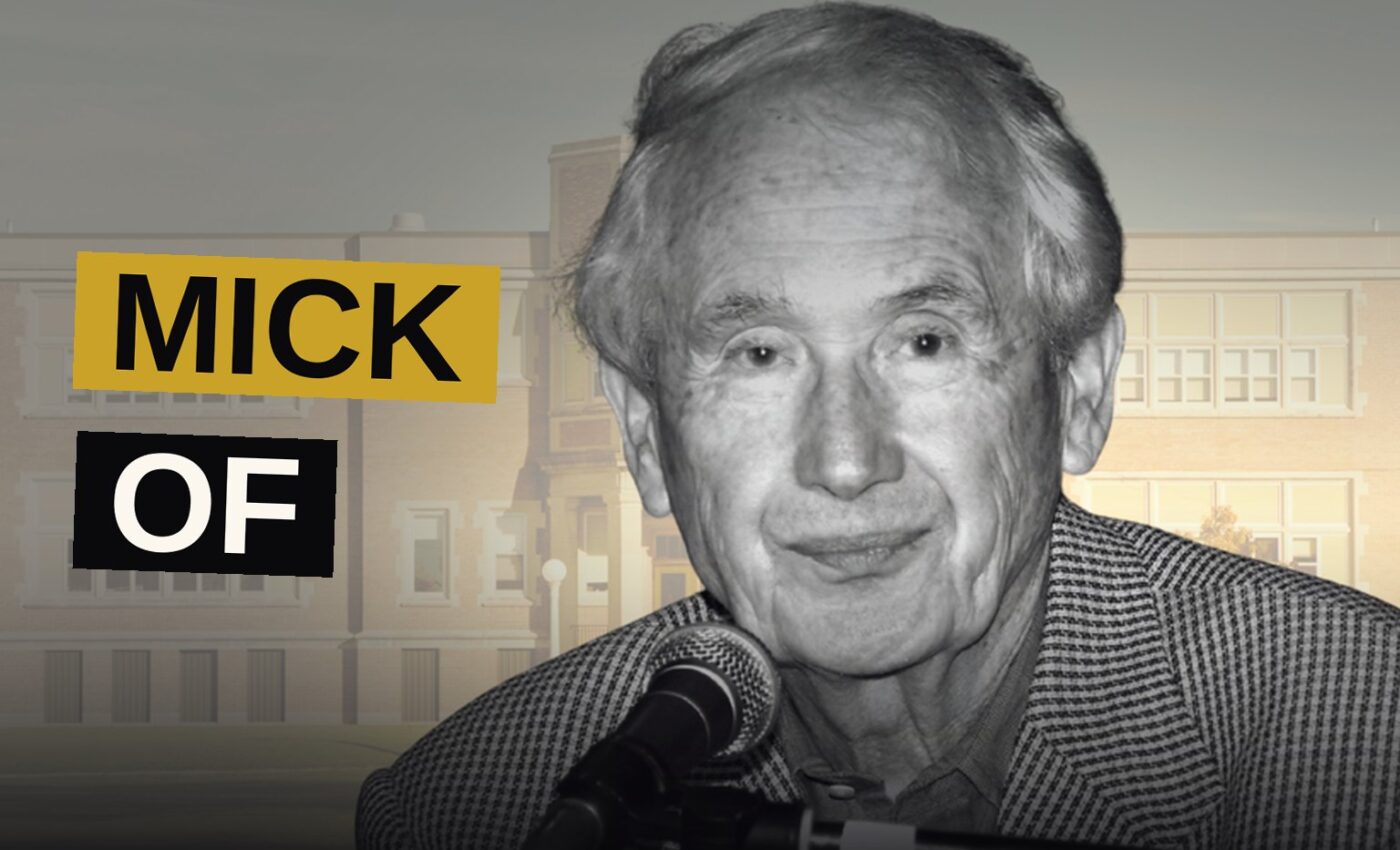
Frank McCourt, the beloved Irish memoirist and Stuyvesant High School creative writing teacher, had one piece of advice for a rookie teacher on his second day: get out.
Tom Allon, now a media executive, was that rookie. McCourt pulled him aside in a hallway, behind a thick column, and delivered his warning with a twinkle in his eye. “It’s five shows a day, in front of the toughest audience you’ll ever face,” McCourt said.
Allon recounts this story in a new essay about his enduring friendship with the late author of Angela’s Ashes. The advice was practical, but the relationship that followed was anything but. Allon left teaching two years later to pursue journalism, but the two stayed close.
A Rookie’s Warning
McCourt was adored as a teacher, but he wanted to be a writer. The path had not opened for him by his late fifties. When the novelist Jerzy Kosinski spoke at Stuyvesant, McCourt approached him with a plaintive question: “How can I be a writer like you?”
On nights and weekends, McCourt tried to write a book about his impoverished childhood. He told Allon he “couldn’t get the sounds of the classroom” out of his ears.
Dinner at the Lion’s Head
Over dinner at the Lion’s Head restaurant on Christopher Street in Manhattan, a famous journalist hangout, McCourt eyed columnist Pete Hamill across the bar. He confessed jealousy of Hamill and Jimmy Breslin, the literary columnists who became famous in New York in the 1980s.
“You know, I’ve always wanted to be a columnist,” McCourt said, a pint in his hands.
Allon asked what he would write about. The answer was a plan for a rotating column covering what McCourt called the three most important institutions in society.
Pubs, Churches and Schools
- Pubs — reviewing the bartender’s drinks and the liveliness of conversation
- Houses of worship — reviewing the rabbi or preacher’s sermon
- Schools — sitting in on classes and judging whether teachers engaged the kids
“They’re the three most important institutions in society—pubs, houses of worship and schools—and nobody writes about them unless there’s a scandal,” McCourt said.
Two weeks later, the column appeared. It was called “Forays,” and it ran in The West Side Spirit, where Allon was editor.
McSorley’s and the Phone Booth
The debut piece covered McSorley’s, the pub on East Seventh Street in Manhattan. The city’s oldest drinking establishment opened in 1854 and still serves ales and stouts today. It was McCourt’s favorite watering hole.
A few days after it appeared in print, an excited McCourt called Allon from a phone booth on East Ninth Street, near the pub. His voice sounded electric.
“Tom, you won’t believe what I just saw. Hanging above the men’s urinal is a framed copy of my McSorley’s column. Do you know how many people will see that?!!!”
The Blackboard Awards Story
Allon told that story for years at “The Blackboard Awards,” an annual event McCourt emceed for Allon’s media company. It honored 25 Teachers of the Year in New York City.
“Until he wrote Angela’s Ashes, that was Frank’s best-read piece of writing,” Allon would deadpan to the audience.
Angela’s Ashes became a worldwide phenomenon, selling more than 10 million copies. McCourt won the Pulitzer Prize. He remained a bit shocked by the attention.
| Institution | McCourt’s Review Subject |
|---|---|
| Pubs | The bartender’s drinks and conversation quality |
| Houses of worship | The rabbi or preacher’s sermon |
| Schools | Whether teachers engaged the students |
Fame and the Mick of the Moment
“Tom, I’m the mick of the moment,” McCourt once said of the hoopla, flashing his impish grin.
Allon knew while editing McCourt’s essays that he was a singular talent. The prose would crackle off the page, demanding attention. McCourt was painstaking in writing those pieces. They required very little editing.
“Why mess with a future Pulitzer Prize winner?” Allon asked.
Assignments That Worked
Watching McCourt teach was like watching a master on stage. He lobbed provocative questions at students and elicited detail from monosyllabic answers while making learning joyful.
His assignments were genius. One asked students to write a restaurant review of their mother’s or father’s home-cooked dinner. McCourt wanted detail, telling students he wanted to smell the pasta when he finished reading.
Another assignment asked for the most creative excuse note for why a student didn’t do the homework.
Two Dreams, One Friendship
Allon left Stuyvesant at 24 to become editor of a new weekly newspaper covering the West Side of Manhattan. McCourt told him he was proud that Allon was chasing his dream.
The two men ultimately chased their individual dreams. For McCourt, it meant overnight worldwide fame after years of trying to write. For Allon, it meant a journalism career.
The friendship endured because they shared more than a school hallway. McCourt believed that pubs, houses of worship and schools deserve attention — even when there is no scandal.
Source: lithub.com
Get the Notebook.
The day's best stories and every fresh verdict, in plain English, in your inbox by seven. One email a day, no more.