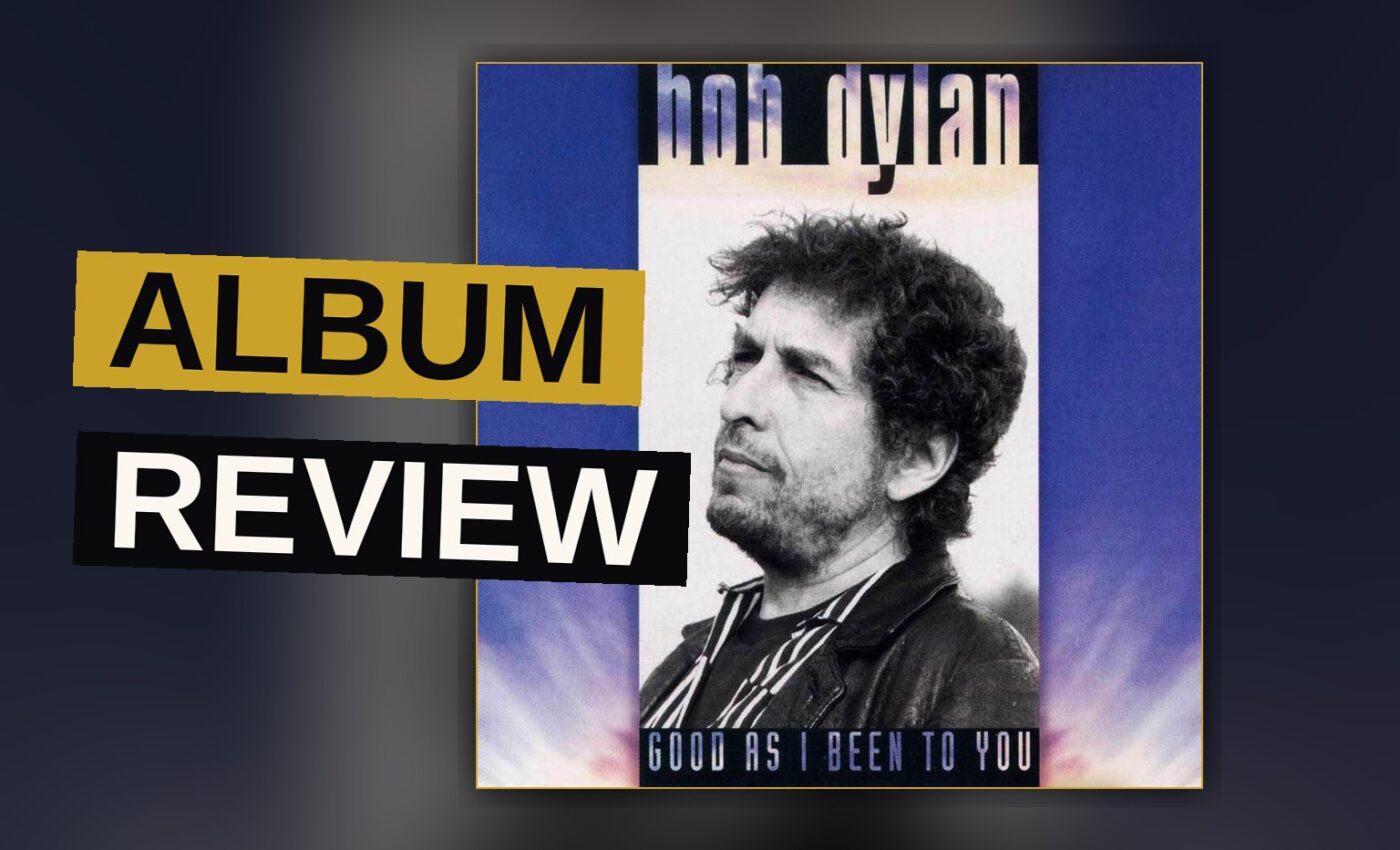
Bob Dylan’s 1992 album Good as I Been to You is a strange kind of quiet victory. It is a solo acoustic record, made up entirely of traditional folk songs and blues standards, recorded in a garage with no band and no overdubs. After a decade of uneven, heavily produced work, Dylan stripped everything back to a man, a guitar, and a harmonica. The album is not trying to reinvent anything. It is trying to prove that the old songs still hold weight, and that Dylan can still carry them.
The record arrived at a curious moment in his career. The 1980s had been rough, with albums like Knocked Out Loaded drawing shrugs from even loyal fans. By 1992, Dylan was in his fifties, his voice rougher and more weathered than the nasal sneer of his youth. Good as I Been to You was his first all-acoustic album since 1964’s Another Side of Bob Dylan, and his first album of entirely traditional material. It was a deliberate step away from the machinery of modern recording, a return to the source.
The title itself is a promise: no polish, no apologies, just what he has left.
Opening With Frankie and Albert
The album opens with “Frankie & Albert,” a murder ballad with deep roots in the folk tradition. Dylan plays it slow and steady, his fingerpicking precise, his voice leaning into the story of Frankie catching her man Albert with another woman. The song has been recorded countless times, but Dylan’s version feels less like a performance and more like a recollection. He is not acting out the drama; he is remembering it. It sets the tone for the record — worn, unhurried, and quietly confident.
The second track, “Jim Jones,” is a transport song about a man sentenced to a distant colony for stealing, and Dylan gives it a sharp, driving rhythm. His guitar work here is notably agile, picking out the melody with a clarity that suggests he spent real time with these songs before committing them to tape. It is one of the album’s most immediate tracks.
Blackjack Davey and Canadee-i-o
“Blackjack Davey” runs nearly six minutes, and it earns every second. The song, about a woman who leaves her husband for a charismatic gambler, is one of the oldest in the folk canon, and Dylan treats it with the patience it deserves. His delivery is sly, almost playful, as he sings the title character’s come-on lines. The guitar part is intricate, a steady pulse with small variations that keep the ear engaged across the long runtime.
This is the track that best captures what the album is trying to do: take a song that has been sung for centuries and make it feel personal, as if Dylan is telling it to you alone.
“Canadee-i-o” follows, a sea ballad about a young woman who disguises herself as a man to join her lover on a ship. Dylan’s version is tender, his voice cracking slightly on the higher notes in a way that suits the song’s melancholy. The story of cross-dressing and loyalty is handled without irony, played straight as a folk tale should be. It is a quiet highlight, less flashy than “Blackjack Davey” but just as effective in its restraint.
Sittin’ on Top of the World
“Sittin’ on Top of the World” is the album’s most recognisable blues standard, and Dylan’s take is loose and confident. The song is a boast about moving on from a lost love, and Dylan leans into the swagger. His harmonica work here is sharp, cutting through the acoustic arrangement with a bite that the slower ballads lack. It is a short, sharp shot of energy in the middle of the record, and it lands well.
“Little Maggie” is a brief, two-and-a-half-minute song about a woman who has gone wrong, a traditional tune that often features banjo in other versions. Dylan renders it on guitar with a brisk, almost throwaway feel. It is not a major moment, but it keeps the album moving. The change of pace is welcome, even if the song itself is slight.
“Hard Times” is the album’s most sombre track, a lament that Dylan slows to a crawl. The song is a plea for easier days, and Dylan’s ragged voice fits the material like a worn glove. His guitar work is sparse, letting the lyrics carry the weight. It is a bleak listen, but it is also one of the most emotionally direct performances on the record. Dylan does not try to brighten the song; he lets it sit in its own gloom.
Step It Up and Tomorrow Night
“Step It Up and Go” is a fast, fingerpicked blues that gives the album a jolt of energy. It is a two-minute burst of pure rhythm, closer to a barroom stomp than the introspective ballads that surround it. Dylan’s guitar playing is the star here, moving with a speed and precision that belies his age. It is not a deep song, but it does not need to be.
“Tomorrow Night” is a slow, aching ballad about longing and loneliness, and it is one of the album’s best vocal performances. Dylan’s voice, cracked and weary, sounds genuinely vulnerable as he sings about waiting for a lover who may never come. The song is transformed into something darker and more intimate. It is the track that stands out most on repeated listens, and it is easy to hear why. It is the moment where Dylan’s age and experience become an asset rather than a limitation.
“Arthur McBride” is an Irish anti-recruiting song about a soldier who tries to enlist the title character and gets beaten for his trouble. Dylan plays it with a steady, rolling rhythm, his voice taking on a slightly mocking tone as he describes the soldier’s humiliation. The song is a crowd-pleaser in the folk tradition, and Dylan handles it with a lightness that keeps the long runtime from dragging.
You’re Gonna Quit Me and Diamond Joe
“You’re Gonna Quit Me” is a short, mournful blues about a lover’s betrayal, and Dylan plays it with a raw, unvarnished quality. It is not a standout, but it fits the album’s mood of weathered resignation. At under three minutes, it is over before it wears out its welcome.
“Diamond Joe” is a gentle, rolling song about a man who works for a harsh boss, and Dylan’s version is one of the album’s most relaxed performances. His guitar work is fluid, and his voice, while rough, carries a warmth that is often missing from his more aggressive recordings. It is a pleasant, unassuming track that does not demand much attention but rewards it anyway.
Froggie Went a Courtin’ Closes the Record
The album closes with “Froggie Went a Courtin’,” a children’s song that Dylan stretches to over six minutes. It is an odd choice for a closer, and it is the album’s weakest moment. The song, about a frog who courts a mouse, is charming in its original form, but Dylan plays it so slowly and deliberately that it loses its playful spirit. His voice, already rough, sounds strained on the repeated refrains, and the long runtime feels like a test of patience rather than a reward. It is the one track where the album’s lo-fi approach works against it.
Good as I Been to You is not a major Dylan album. It does not have the ambition of his classic 1960s work or the cultural impact of his most famous records. It is a side project, a detour into the folk tradition that Dylan has always drawn from. But it is also a warm, honest record, one that shows a veteran artist comfortable enough to strip away the studio gloss and trust the material. The guitar work is consistently strong, and Dylan’s interpretive phrasing — his ability to make an old song feel new — is on full display.
The album’s weaknesses are real. Dylan’s voice has lost its range, and on tracks like “Froggie Went a Courtin’” that limitation becomes a problem. Some of the shorter blues numbers feel like filler, placeholders between the more substantial ballads. The record is uneven, and it never builds to a grand statement. It is content to be what it is: a collection of old songs, played by a man who has been singing them for decades.
What makes the album work is its sincerity. Dylan is not trying to impress anyone here. He is not chasing a hit or making a statement about the state of music. He is simply playing songs he loves, in the most direct way possible. That modesty is the record’s greatest strength.
The album was recorded quickly, in Dylan’s garage, with no band and no overdubs. That immediacy comes through in every track. You can hear the room, the rough edges, the occasional missed note. It is not a perfect record, and it does not pretend to be. But it is an honest one, and that honesty carries it further than polish ever could.
| Track | Length |
|---|---|
| Frankie & Albert | 3:50 |
| Jim Jones | 3:55 |
| Blackjack Davey | 5:50 |
| Canadee-i-o | 4:23 |
| Sittin’ on Top of the World | 4:31 |
| Little Maggie | 2:55 |
| Hard Times | 4:34 |
| Step It Up and Go | 2:58 |
| Tomorrow Night | 3:43 |
| Arthur McBride | 6:22 |
| You’re Gonna Quit Me | 2:48 |
| Diamond Joe | 3:17 |
| Froggie Went a Courtin’ | 6:24 |
The Record’s Place in Dylan’s Catalog
For fans of Dylan’s electric work, this album will likely feel like a curiosity. For fans of folk music, it is a reminder of how powerful a single voice and a single guitar can be. The songs have been sung for generations, and Dylan’s versions are worthy additions to that lineage. He does not improve on the originals, but he does not need to. He just needs to keep them alive, and he does.
Good as I Been to You succeeds on its own modest terms. It is a record that asks little of its listener and gives back a quiet, steady pleasure. The best tracks — “Blackjack Davey,” “Tomorrow Night,” “Sittin’ on Top of the World” — are as good as anything Dylan recorded in the 1990s. The weaker tracks are forgettable but not offensive. The album is a document of a man at ease with his legacy, playing the songs that shaped him.
It is not essential listening, but it is rewarding for those who take the time. It is a record for quiet evenings and long drives, for listeners who value atmosphere over spectacle. The album deserves its reputation as a pleasant surprise. It is not a comeback and it is not a masterpiece. It is simply a good record, made by a great artist at a moment when he had nothing left to prove. That is enough. 6 of 10.
Get the Notebook.
The day's best stories and every fresh verdict, in plain English, in your inbox by seven. One email a day, no more.
- Frankie & Albert3:50
- Jim Jones3:55
- Blackjack Davey5:50
- Canadee-i-o4:23
- Sittin’ on Top of the World4:31
- Little Maggie2:55
- Hard Times4:34
- Step It Up and Go2:58
- Tomorrow Night3:43
- Arthur McBride6:22
- You’re Gonna Quit Me2:48
- Diamond Joe3:17
- Froggie Went a Courtin’6:24