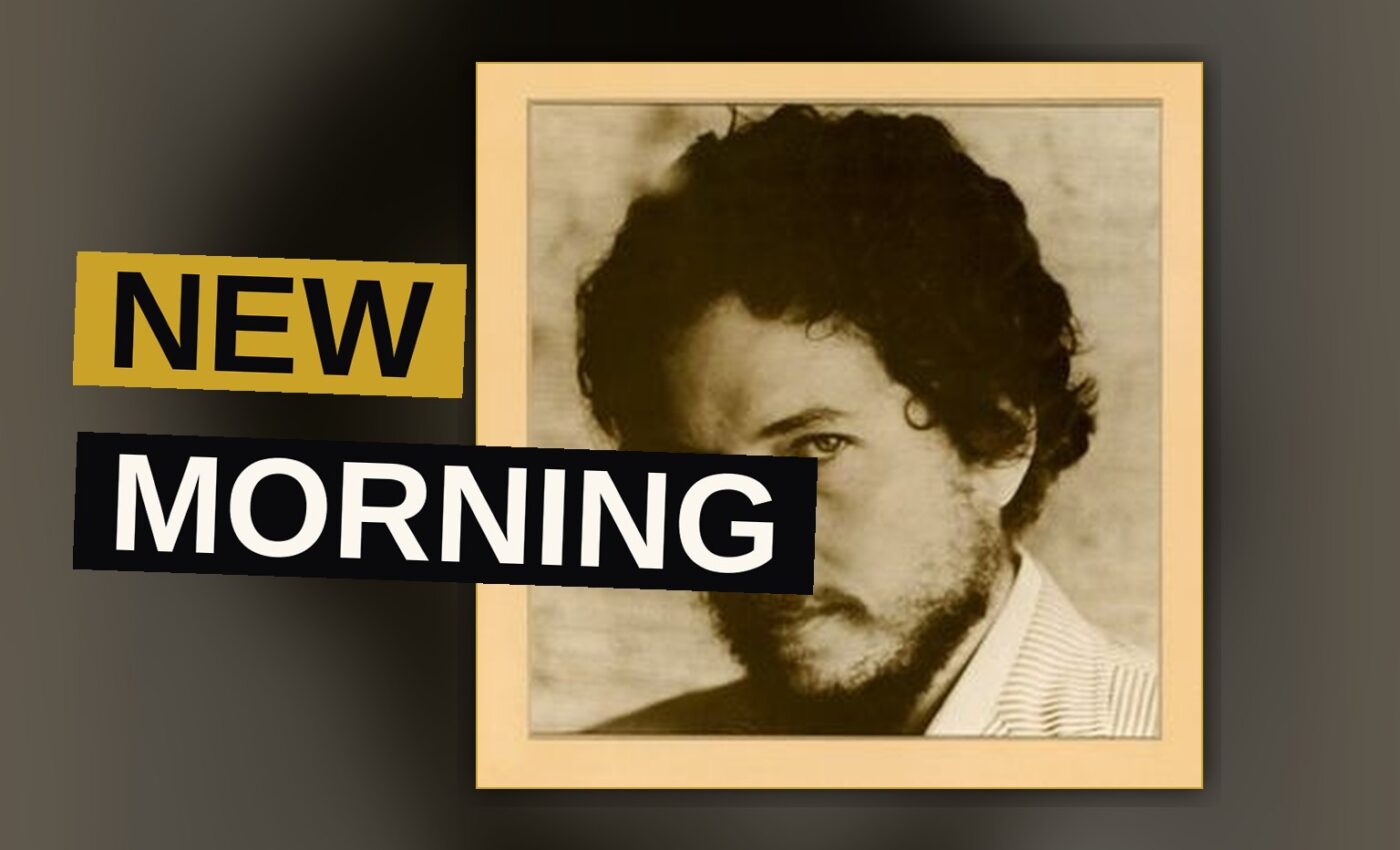
Bob Dylan’s New Morning is the sound of a man stepping back into the light. Released in 1970, it arrived as a direct answer to Self Portrait, a double album released earlier that same year and so widely dismissed that critics questioned whether Dylan had lost his way entirely.
New Morning is not a grand statement or a reinvention. It is a warm, domestic record, full of pianos, easy rhythms, and songs that sound like they were written in a living room rather than a myth.
The album’s ambition is modest: to be personal, to be human, and to remind everyone that the voice behind the 1960s classics still had something to say.
It succeeds on those terms, and it remains one of the most quietly rewarding records of his career.
If Not for You Opens the Record
The album begins with “If Not for You,” a love song so plain and direct that it feels almost radical for a man known for dense, surreal imagery. The melody is simple, the delivery is gentle, and the sentiment is clear.
It is the kind of track that could have been a hit for anyone. Dylan’s version has a lightness that makes it feel like genuine relief, as if he is singing to someone who pulled him out of a dark room.
“Day of the Locusts” follows, and it is the album’s most pointed piece of writing. The song is anxious and comic at once, with Dylan describing a crowd, the heat, and locusts buzzing in the trees. It is a rare moment of social observation on the record, and it lands with a sharpness that recalls his mid-60s work. The guitar work is crisp, and the vocal delivery is wonderfully unsettled — he sounds like a man who would rather be anywhere else, which is exactly the point.
“Time Passes Slowly” is the first real stumble, though it is a gentle one. The song is a meditation on idleness, with Dylan singing about sitting by windows and watching the days go by. The mood is pleasant, but the melody is thin, and the lyrics never quite find the depth they reach for. It is not a bad song — nothing here is — but it is the first track that feels like filler rather than intention.
“Went to See the Gypsy” is a strange, evocative piece that carries the mystery of an encounter that matters more than it explains. The piano is prominent, the vocal is weary, and the song fades out before it resolves.
It is one of the album’s best moments, precisely because it refuses to be neat.
“Winterlude” is a waltz, a small love song with a carnival feel. It is slight, almost a throwaway, but it has a charm that is hard to resist. The backing vocals are sweet, the piano is jaunty, and Dylan sounds like he is smiling. It is the kind of track that fills out a record without demanding attention, and it works.
If Dogs Run Free and the Title Track
“If Dogs Run Free” is the album’s most divisive track, and it is easy to see why. The song is built on a loose, jazzy piano figure, with Dylan delivering a spoken-sung vocal that sounds like a beat poet reading over a cocktail hour. The lyrics are playful, and the whole thing feels improvised, almost tossed off.
But it works.
The track has a freedom that matches its title, and it gives the album a moment of pure, unguarded playfulness. It is not a song for everyone, but it is a song that only Dylan could have made.
The title track, “New Morning,” is the record’s centerpiece, and it is a triumph. The song is built on a rolling piano line and a chorus that opens up like a window on a clear day. Dylan’s vocal is warm and full, and the lyrics are about the simple act of waking up and feeling alive. There is no irony here, no distance. It is the sound of a man who has decided that happiness is not a trap.
The track is often cited as the moment Dylan reclaimed his voice, and that reading holds up.
It is a great song, plain and true.
“Sign on the Window” is quieter and more introspective. It is a song about domestic longing, with Dylan singing about a cabin and a family to return to. The melody is lovely, and the vocal is tender, but the track feels slightly unfinished, as if the idea is stronger than the execution. It is still a highlight, though, because it shows a side of Dylan — the husband, the father, the man who wants a normal life — that he rarely let the public see.
“One More Weekend” is a rocker, the closest the album comes to a straightforward party track. The rhythm is loose, the guitar is fuzzy, and Dylan sounds like he is having fun. It is not a deep song, and it does not try to be.
It is the sound of a man taking a break from significance, and the record is better for it.
The Man in Me and the Closing Stretch
“The Man in Me” is the album’s most famous song now, and it earned that fame. The track is a soulful, piano-driven declaration of self-belief, with Dylan singing about the man inside him who will do right by his partner. The performance is confident, the arrangement is rich, and the chorus is genuinely uplifting. It is the most polished song on the record, and it stands as proof that Dylan could write a straight-ahead love song without losing his edge.
“Three Angels” is a strange, short piece that describes three angels hovering over a city street. The imagery is Biblical, but the tone is observational, almost documentary. The song feels like a sketch, a fragment of a larger vision that Dylan chose not to complete. It is not a failure, but it is the weakest track on the record — a moment where the album’s looseness tips into vagueness.
The record closes with “Father of Night,” a hymn-like prayer that runs just over a minute and a half. The song is simple and solemn, with Dylan singing about the father of day, the father of night, the father of darkness. It is a benediction, a way of ending the album on a note of peace. It is not a song that will stick in the memory, but it gives the record a sense of closure, a final breath after the warmth of the preceding tracks.
The Shape of the Record
New Morning is not a concept album, and it does not tell a story. But it has a shape.
The first half is lighter, more playful, with songs about love and escape. The middle is where the record finds its emotional core, with the title track and “Sign on the Window” reaching for something deeper. The final stretch is more reflective, with “The Man in Me” offering a confident peak and the last two tracks pulling the energy down into a quiet finish.
The production is clean and uncluttered, and the sound is intimate — close-miked, warm, and free of the ornate arrangements that weighed down some of his later 70s work. The album runs roughly 36 minutes, and it does not overstay its welcome. Every track earns its place, even the weaker ones, because they contribute to the overall mood of ease and renewal.
| Track | Length |
|---|---|
| If Not for You | 2:44 |
| Day of the Locusts | 4:04 |
| Time Passes Slowly | 2:40 |
| Went to See the Gypsy | 2:55 |
| Winterlude | 2:26 |
| If Dogs Run Free | 3:42 |
| New Morning | 4:01 |
| Sign on the Window | 3:45 |
| One More Weekend | 3:16 |
| The Man in Me | 3:12 |
| Three Angels | 2:11 |
| Father of Night | 1:31 |
Final Judgment
New Morning is not the equal of Dylan’s 1960s classics, and it does not need to be. It is a different kind of record — smaller, warmer, and more human. After the disaster of Self Portrait, Dylan needed to remind the world that he was still a songwriter of substance, and he did so without grand gestures or defensive posturing.
He simply wrote good songs and sang them well.
The album has aged better than many of its contemporaries. “The Man in Me” has become a cultural touchstone, “If Not for You” remains a standard, and the title track is one of the most genuinely joyful songs in his catalog. The weaker moments — “Time Passes Slowly,” “Three Angels” — are not failures so much as reminders that Dylan was not trying to be perfect. He was trying to be present.
It is a warm, intimate, and consistently solid record, one that rewards repeated listening and never feels like a chore. It is the sound of a man who found his footing again, and that is worth celebrating.
New Morning earns a 9 out of 10.
Get the Notebook.
The day's best stories and every fresh verdict, in plain English, in your inbox by seven. One email a day, no more.
- If Not for You2:44
- Day of the Locusts4:04
- Time Passes Slowly2:40
- Went to See the Gypsy2:55
- Winterlude2:26
- If Dogs Run Free3:42
- New Morning4:01
- Sign on the Window3:45
- One More Weekend3:16
- The Man in Me3:12
- Three Angels2:11
- Father of Night1:31