
The “Student Driver—Please be Patient!” bumper sticker is everywhere. The cars wearing it are often driving too aggressively to be beginners. It is a small, harmless conspiracy theory, but it points at something real about how Americans talk to each other on the road.
Bumper stickers became common in the 1950s, after World War II technology made them cheap to produce. The Interstate system, built under Eisenhower, carried these bits of imagery and advertising across the country. They combine advertising, conversation starter, and warning. They are quintessentially American in that mix of functions.
Bumper Stickers as American Slanguage
The humble bumper sticker has changed in recent decades. A trip to Whole Foods or Target in a mid-sized Southern city is now a minefield of messages, from “Let Me Merge or I’ll Kill Myself” to “Pardon My Weird Driving, I’m Thinking About Centipedes Again” to profane and unhinged variants on “Baby On Board.”
One favorite spotted in the wild: “Men Have Made a Lot of Bad Art.” It is an inarguable truism that nonetheless really pisses people off.
Since the pandemic, the trend has moved toward self-infantilization. Stickers like “Hot Girls Hit Curbs” are designed to indemnify the driver against minor breaches of etiquette. “Don’t Honk at Me, I’m Just a Baby” traps the driver in an existentialist nightmare.
Charleston Parking Deck
In Charleston last week, two cars sat next to each other in a parking deck, both wearing “Don’t Honk at Me, My Dad is Dead” stickers. One of them was the car I arrived in.
We are asked not just to consider the actions of our fellow drivers, but their emotional state and origin story.
The “Student Drivers” stickers are the peak of this trend. They defray accountability from the driver and shift it to other motorists. Every interaction becomes a complex power dynamic.
A Wreck on Ashley Avenue
I may be overly sensitive this week. While in Charleston, a driver totaled our family car, slamming into it while it was safely parked on Ashley Avenue. No sticker can exculpate that driver. No chuckle can counteract the nuisances of trips to the impound lot, the rental agency, or the time on the phone with cops and insurance agents.
My daughter, less anxious than I am and infatuated with the horse-drawn carriages of the Holy City, summed it up: “Maybe a horsie killed our car, dad.”
Commander at the Vegan Pub
Cars and their imperfect pilots were on my mind the day after. I met up with some friends at our local vegan pub for a few rounds of Commander. Just as we were getting into our first game, an archeologist came up to our table, introduced himself, and asked to be our fourth.
We did the standard introductory conversation of “who’s your favorite Commander and when did you pick up Magic.” He was piloting an Arthur, Marigold Knight deck and said he started playing with Bloomburrow. We had an enjoyable couple of games, one of which he won. I was impressed by both the caliber of his play and his deck, which wasn’t the modified preconstructed deck I expected.
Reading Players at the Table
That’s one of my favorite aspects of Magic: reading another player’s vibe and seeing how that expectation is confirmed or disproven by their play. We have player stereotypes, which range from mildly amusing to thought-terminating, and we have built-in psychographics for various playstyles.
Whether this is fair or not is up to you, but we do make assumptions based on Commanders, color combinations, and longevity.
Personally, while I want everyone to have a great time, I don’t conceal my power level. I have invested too much in this game, both financially and intellectually, to want to seem like anything but an expert. Magic is part of my identity, and I think it’s foolish and self-defeating to hide your identity. There is a huge caveat here, of course, based on personal safety.
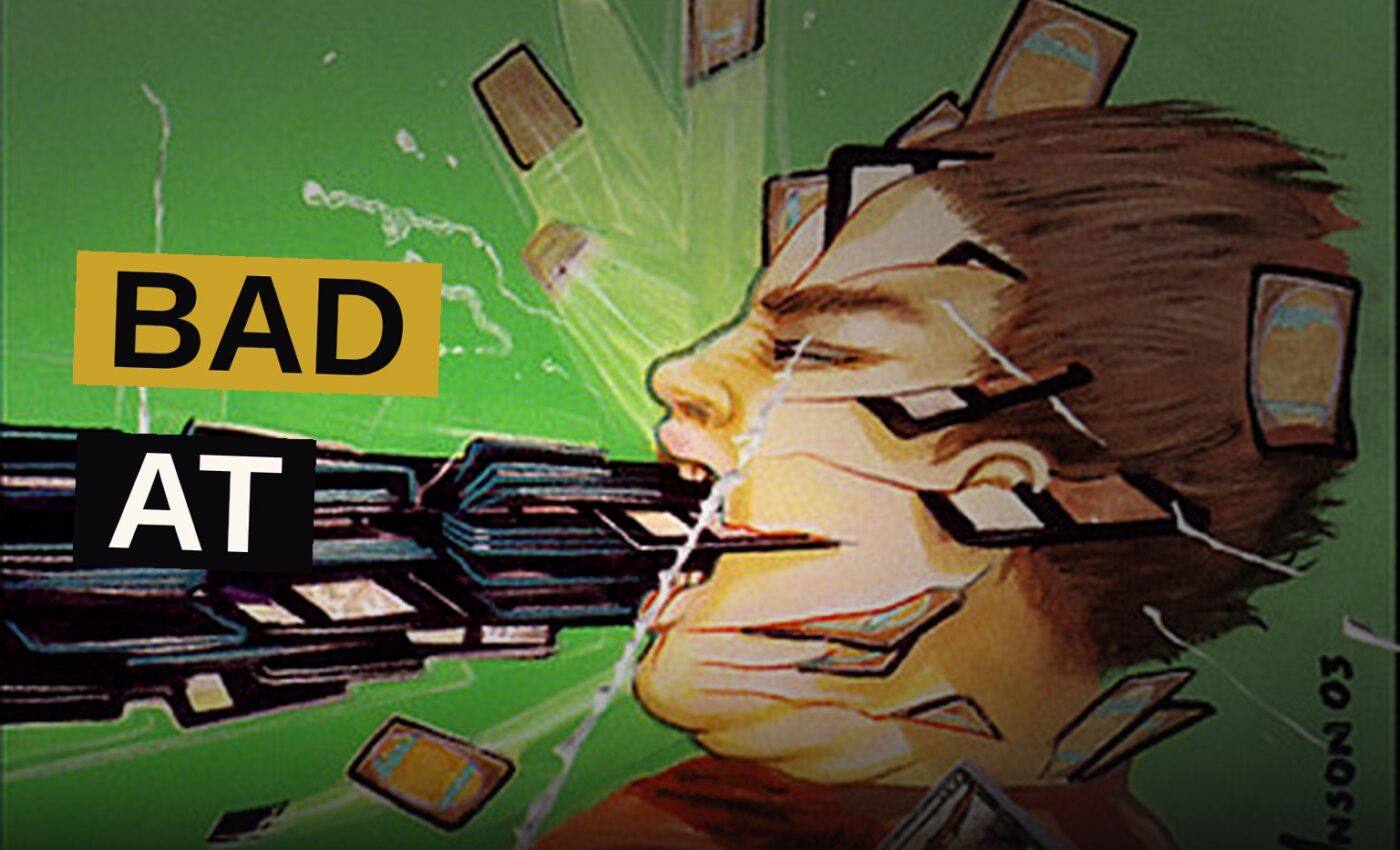
The Bad at Magic Confession
I’m proud of playing Magic, and I’m prouder still of writing for Hipsters of the Coast and my other gigs as a professional Magic writer. This also means that I get visibly embarrassed when I make a mistake or a misplay and have failed many on-board skill checks.
At the end of a long game of Commander, I have swung with a 3/3 into a 3/4. I have attacked into a tapped-out opponent who has a Masako the Humorless out. I have had to roll back combats, main phases, and even entire turns when I realize that my Smothering Abomination would have been sacrificed to itself.
In these situations, my immediate response is generally to apologize to my opponent and say: “sorry—you have to understand: I’m bad at Magic.”
It’s a great phrase, as it both lets you off the hook for your mistakes and elicits a chuckle from your opponent.
Sunday’s Game
I deployed it on Sunday, after the second pint of coffee porter was downed and my car accident story was shared with the table in dudgeon that ramped faster than a Gwenna deck.
I attacked with a massive creature into a Tinybones, the Pickpocket with the expected results, and then followed it up with: “You know why I made that play, right?”
The Sticker Trends Compared
| Bumper Sticker | Message | Effect on the Interaction |
|---|---|---|
| “Student Driver—Please be Patient!” | Asks for patience | Shifts accountability from the driver to other motorists |
| “Hot Girls Hit Curbs” | Self-deprecatory | Indemnifies the driver against minor breaches of etiquette |
| “Don’t Honk at Me, I’m Just a Baby” | Self-infantilization | Traps the driver in an existentialist nightmare |
| “Don’t Honk at Me, My Dad is Dead” | Emotional appeal | Asks others to consider the driver’s emotional state and origin story |
The Student Driver stickers are the apotheosis of this trend. They preempt the usual tension of driving, reducing the complicated chains of autobahn etiquette into a kind of cringing defensiveness.
The comparison to Magic is direct. The “I’m bad at Magic” phrase lets me off the hook for my mistakes and gets a laugh. The Student Driver sticker does the same thing on the road. Both are ways of managing what other people expect from you.
Neither one changes the underlying facts. The car on Ashley Avenue was totaled while parked. My misplays still happened, no matter what I said afterward. The sticker and the phrase are social tools, not mechanical fixes.
They shape how people respond to you. They do not change what you did.
The daughter’s remark stays with me. She did not need a phrase or a sticker. She just looked at the wreck and offered her own theory, charming and impossible.
Maybe a horsie killed our car, dad.
Source: hipstersofthecoast.com
Get the Notebook.
The day's best stories and every fresh verdict, in plain English, in your inbox by seven. One email a day, no more.