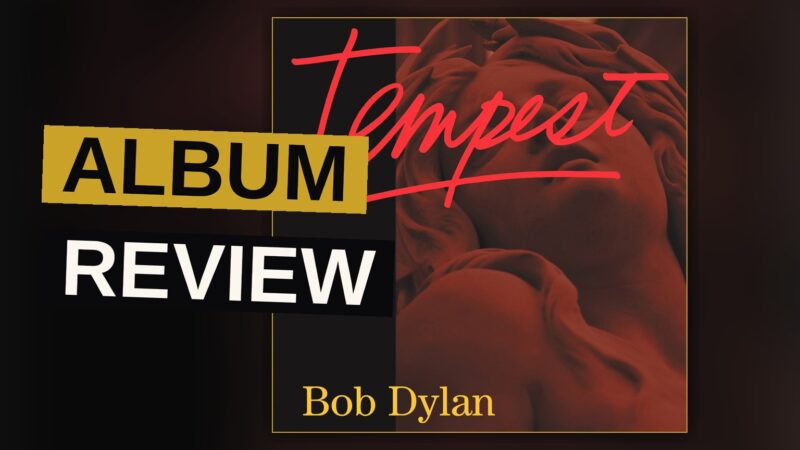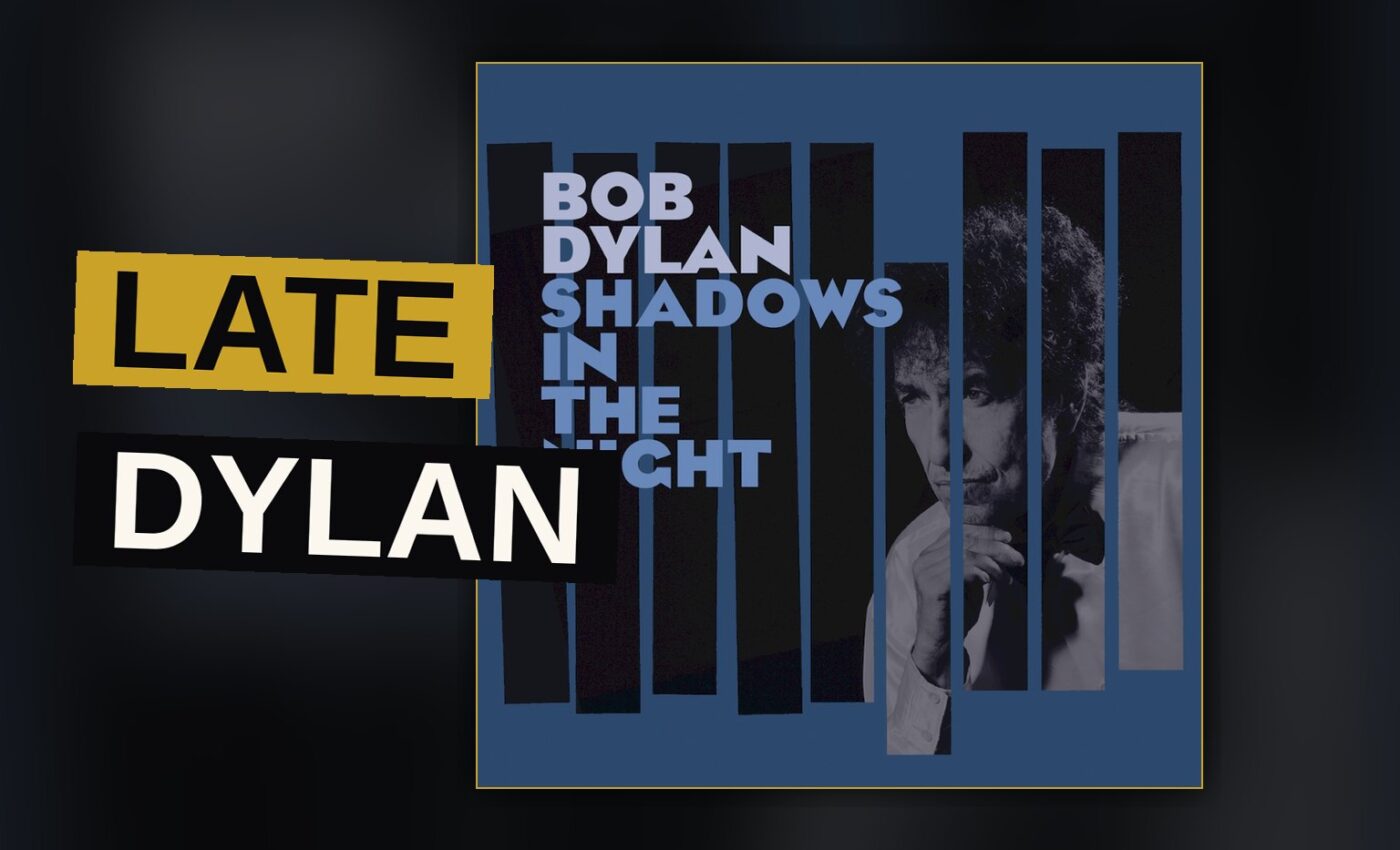
Bob Dylan has spent the last two decades of his career making records that seem designed to confuse expectations. He has released blues-rock albums, Christmas albums, and three records of his own songs recorded with a vintage band. Shadows in the Night, released in 2015, is the strangest and most intimate of that late run: ten songs from the Great American Songbook, recorded live in the studio with a small band and no overdubs.
The songs are not covers in the usual sense. Dylan treats them as material to be inhabited rather than performed, singing each one as if he wrote it himself and has been carrying it around for decades.
The record is a direct challenge to the idea that Dylan’s voice, by 2015 a cracked and weathered instrument, could no longer carry melody. He does not try to croon. He does not try to smooth anything over. Instead he leans into the grain of his own voice, letting the songs bend around him. The result is not a nostalgia trip or a polite tribute. It is a strange, stubborn, and often beautiful record that stands among the best of his late period.
Songbook Material
The origins of Shadows in the Night lie in Dylan’s work with Jack Frost — his own production pseudonym — and a small group of musicians who had backed him on his previous album, Tempest. The songs themselves were written for the stage and the screen, not for the radio. They are theatrical pieces, built to be sung in a single take to a live audience, and Dylan seems drawn to exactly that quality.
That theatricality is what Dylan seizes on. He does not treat them as relics. He treats them as scripts.
The band is the key. Dylan assembled a core group built around guitars, upright bass, pedal steel, and light percussion. The upright bass anchors the record, giving it a low, steady pulse that the other instruments drift over. The pedal steel adds a liquid, weeping texture, and the guitars weave in and out of Dylan’s voice. The effect is intimate to the point of discomfort, as if you are standing in the room while Dylan sings to someone just out of frame.
This is not the first time Dylan has turned to this material. Shadows in the Night was followed by Fallen Angels and Triplicate, completing a trilogy of standards records. But this first volume is the strongest. The later records are more polished and more conventional. Shadows in the Night is raw, immediate, and strange. It sounds like a man alone in a studio at night, working through songs that have been with him his whole life.
Opening With a Fool
The record opens with “I’m a Fool to Want You,” a devastating opening choice. Dylan sings it slowly, almost painfully, stretching the syllables until they crack. The pedal steel weeps behind him. The song is about self-knowledge and self-loathing in equal measure, and Dylan delivers it with a weariness that feels earned.
“The Night We Called It a Day” follows, and it is one of the record’s quiet triumphs. Dylan’s version is slower than most, almost funereal. He sings the title line with a slight pause between “called” and “it,” as if the words themselves are hard to get out. The pedal steel takes a solo that sounds like a sigh.
“Stay With Me” is a shorter, lighter piece, and it is the first track where Dylan’s limitations show. The song is a plea for companionship, but Dylan’s version lacks the suppleness the melody needs. He pushes against the notes rather than gliding into them. It is not a failure, but it is the least essential track on the record.
Autumn Leaves and Its Peers
“Autumn Leaves” is the centerpiece. The song is one of the most recorded standards in history, and Dylan does something remarkable with it. He slows it down to a crawl, nearly halting the tempo, and sings it as a meditation on loss rather than a lament. The guitars and pedal steel weave around each other in a sparse arrangement that leaves Dylan completely exposed. His voice cracks on the word that anchors the song’s central image of seasonal decay.
It is the most moving performance on the record, and one of the best things he has recorded this century.
“Why Try to Change Me Now” picks up the pace slightly. The song is a self-justifying monologue from a man who knows his flaws and is not interested in fixing them. Dylan sounds almost amused here, delivering the lines with a wry shrug. It is a lighter moment, and a welcome one.
“Some Enchanted Evening” is the other great performance. The song, from the musical South Pacific, is a hymn to the possibility of love at first sight. Dylan strips it of its theatrical bombast and turns it into a private confession. He delivers the famous warning about never letting a found love go with a gravity that makes it sound like a promise he has broken before. The arrangement is almost bare, just guitar and voice, and it works perfectly.
The strongest tracks on the record share a quality of directness. They do not decorate the emotion. They sit in it.
- “Autumn Leaves” — a slowed, exposed meditation on loss
- “Some Enchanted Evening” — stripped to guitar and voice, a private confession
- “The Night We Called It a Day” — nearly funereal, with a sighing pedal steel solo
- “I’m a Fool to Want You” — slow, cracked, and devastating
- “What’ll I Do” — childlike simplicity, no irony at all
- “That Lucky Old Sun” — a reverent, hymn-like close
Slower Middle Stretch
“Full Moon and Empty Arms” is the first of the lesser tracks. The song is a brooding piece about loneliness, and Dylan’s version is competent but unremarkable. It does not add anything to the original. The melody is too stiff for his voice, and he sounds like he is working against the material rather than through it.
“Where Are You?” is better. The song is a searching ballad about absence, and Dylan’s delivery is suitably haunted. He sings the title question with genuine bewilderment. The arrangement is sparse, with the pedal steel carrying the emotional weight. It is a solid track, though it does not reach the heights of the record’s first half.
“What’ll I Do” is a return to form. The song is a simple, devastating piece about a lover who has gone away. Dylan sings it with a childlike simplicity, stripping the song of any irony or sophistication. It is just a man asking what he will do without the person he loves. The guitar accompaniment is delicate and precise.
Lucky Sun Closer
“That Lucky Old Sun” closes the record, and it is a strange choice. The song is a spiritual about a man who envies the sun because it has no worries. Dylan’s version is slow and reverent, almost like a hymn. He sings about the sun rolling around heaven all day with a quiet acceptance that feels like peace.
It is a fitting end to a record that has been about confronting the past and making peace with it. The last note fades out slowly, and the silence that follows feels earned.
What the Record Achieves
The genius of Shadows in the Night is that it refuses to be a nostalgia act. Dylan is not trying to recreate the sound of the 1940s or 1950s. He is not trying to pay tribute to anyone else. He is using these songs as vehicles for his own obsessions: memory, loss, regret, and the passage of time. The songs are old, but the feelings are present tense.
Critics broadly praised the record as a surprisingly successful, spare and emotionally raw reinterpretation of these standards. The album was warmly received on release, with reviewers treating it as another triumph in Dylan’s late career even if some found the concept a strange fit.
The production is also worth noting. The sound is warm and analog, with a slight hiss that makes it feel like a document of a real performance rather than a polished studio product. Dylan’s voice is front and center, and the band plays quietly around him, never stepping on his lines.
There are moments where the record falters. “Stay With Me” and “Full Moon and Empty Arms” do not rise to the level of the surrounding material. Dylan’s voice is not a flexible instrument, and some of the melodies require a flexibility he cannot provide. But those moments are few, and they are outweighed by the successes.
Final Judgment
Shadows in the Night is a late-career triumph. It is a record that could have been a joke, a cash grab, or a vanity project, and instead it is one of the most honest and emotionally direct albums Dylan has ever made. The songs are old, but the pain is new. The arrangements are spare, but the feeling is full.
Dylan has spent his career rewriting the rules of popular music. On Shadows in the Night, he does something even more radical. He stops rewriting and starts listening. He lets the songs speak for themselves, and he finds his own voice inside them.
The record is not for everyone. Listeners who want Dylan to rock will be disappointed. Listeners who want him to be a crooner will be confused. But listeners who want to hear a great artist confront his own mortality through the songs of another era will find something profound here.
The quiet is the point. Dylan has never been an artist who needed volume to make himself heard, and on this record he proves it again. He does not shout. He does not strain. He simply sings, and the songs do the rest.
Get the Notebook.
The day's best stories and every fresh verdict, in plain English, in your inbox by seven. One email a day, no more.
- I’m a Fool to Want You4:51
- The Night We Called It a Day3:25
- Stay With Me2:56
- Autumn Leaves3:02
- Why Try to Change Me Now3:38
- Some Enchanted Evening3:28
- Full Moon and Empty Arms3:26
- Where Are You?3:37
- What I’ll Do3:21
- That Lucky Old Sun3:39