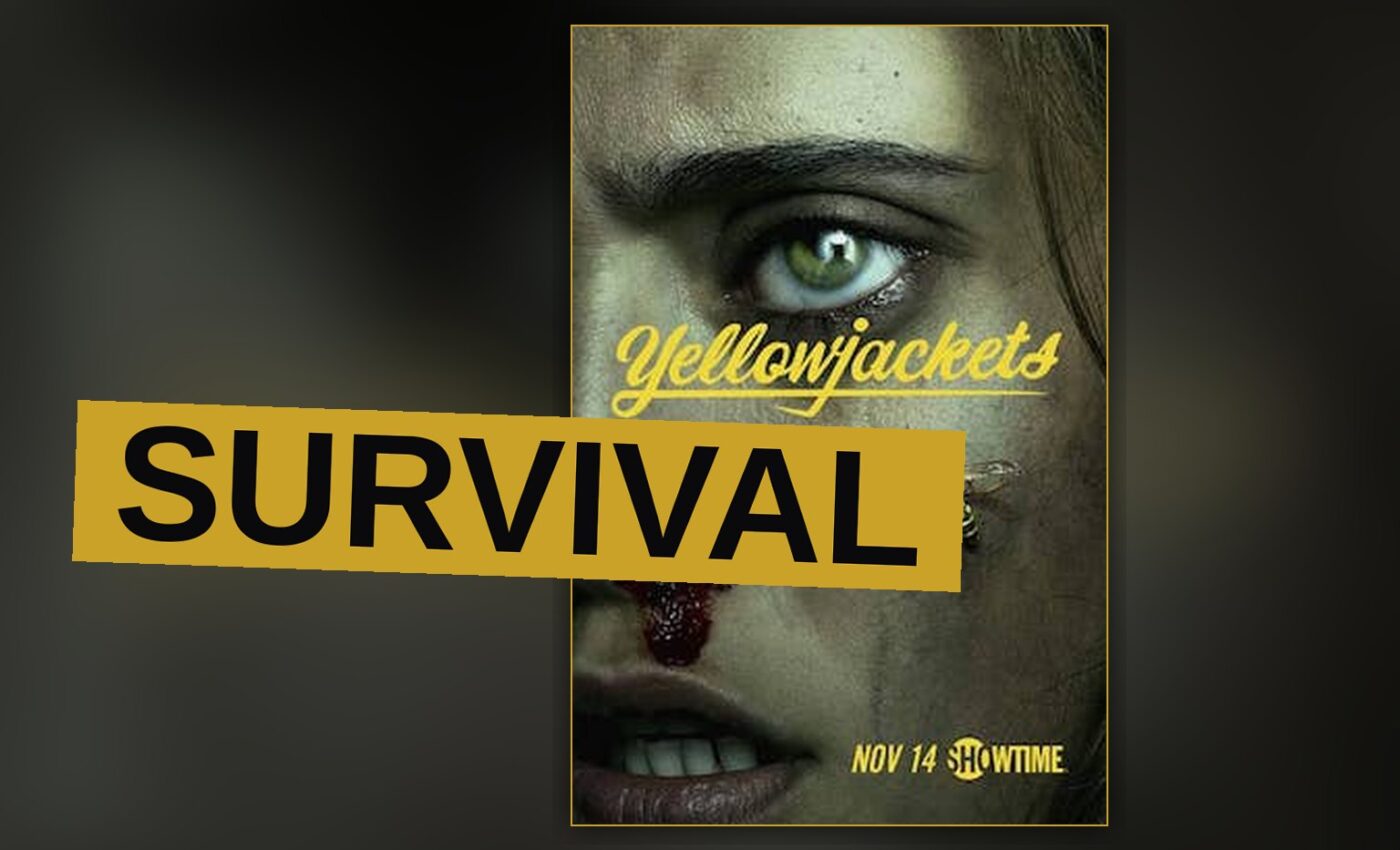
Yellowjackets is not a show that explains itself quickly. The 2021 series, created by Ashley Lyle and Bart Nickerson, opens with a brutal image: a girl running through snow, a pit trap, a scream. Then it cuts to 1996, where a New Jersey high school soccer team boards a plane for nationals. The plane crashes in the wilderness.
The survivors are stranded for nineteen months. The show then jumps to 2021, where the adult survivors are still haunted by what they did to make it out. It is a survival drama, a psychological thriller, and a mystery about the monstrous things people carry inside them. It is also, at its core, a story about trauma that refuses to stay buried.
The premise is simple, but the execution is dense. The show splits its time between the past and the present, and both timelines work to build a single, oppressive dread. In the past, the girls descend into hunger, superstition, and violence. In the present, the women — now middle-aged and successful — find their carefully constructed lives cracking under the weight of a shared secret. The show never lets you forget that something terrible happened out there. It just refuses to tell you exactly what.
Trailer, via Paramount Plus.
Past and Present
The 1996 timeline is where Yellowjackets does its heaviest lifting. The team is a believable group of teenagers, not a collection of archetypes. There is Shauna, the quiet best friend with a hidden streak; Taissa, the driven captain; Natalie, the angry outsider with a drug habit; and Misty, the weird one who is far more dangerous than anyone realizes. The crash strands them in a remote Canadian forest, and the show tracks their slow, horrifying transformation from teammates into something closer to a tribe with its own rituals.
The 2021 timeline is more uneven. The adult versions of the characters are played by Melanie Lynskey, Tawny Cypress, Juliette Lewis, and Christina Ricci, and the casting is impeccable. Lynskey is especially good as Shauna, a suburban housewife whose boredom and rage simmer just beneath the surface. Ricci’s Misty is a standout, a cheerful sociopath whose desire to be needed has curdled into something predatory. The present-day story involves a postcard, a blackmail threat, and a journalist digging into the crash, but the plot moves slowly.
Hunger as Horror
What makes Yellowjackets uncomfortable is not the gore, though there is some. It is the way the show treats hunger as a force that rewires people. The girls begin as athletes, proud and disciplined. By the second half of the season, they are starving, and their moral codes start to bend. One character dies in the crash’s immediate aftermath, but the real horror comes later, when the survivors begin to talk about what they will do if rescue does not come.
The show refuses to shy away from the implication that the girls resorted to cannibalism. It does not show it directly, not yet, but it plants the idea early and lets it grow. There are dreamlike sequences, animalistic masks, and a growing sense that the wilderness itself is a character, something with its own appetite. The dread is earned.
The Mystery Box Problem
Yellowjackets is a mystery box show, and that comes with a cost. The creators have said they have a five-season plan, and the first season is clearly designed to set up long arcs. That means questions pile up faster than answers. Who sent the postcards? What happened to the girl who fell into the pit? What is the symbol carved into the trees? Why does the adult Taissa sleepwalk? Some of these questions get partial answers. Most do not.
This is fine for viewers who enjoy the ride. It is less fine for viewers who want a story that pays off its own investments. The season finale resolves one major plot thread — the fate of a character in the present — but it leaves the central mystery of the wilderness mostly intact.
Casting That Carries
The young cast is excellent across the board. Sophie Nélisse plays the teenage Shauna with a haunted stillness that makes her adult counterpart feel inevitable. Jasmin Savoy Brown is fierce as teenage Taissa, and Sophie Thatcher brings a raw, wounded energy to young Natalie. But the show’s secret weapon is Samantha Hanratty as teenage Misty. Hanratty plays Misty as a girl who is desperate for approval and completely unhinged beneath the surface.
The adult cast matches that energy. Lynskey gives Shauna a weary, dangerous calm that makes her the center of the present-day story. Lewis brings her trademark volatility to Natalie, and Cypress grounds Taissa in a quiet, obsessive drive. Ricci steals nearly every scene she is in.
The acting is not the problem. The acting is the reason the show works at all.
Craft and Sound
The direction is strong, especially in the wilderness scenes. The show makes the forest feel vast and indifferent, and the winter sequences are genuinely cold to watch. The sound design is also notable — the show uses silence and ambient noise to build tension, and the soundtrack leans on 1990s alt-rock that fits the period without feeling like a jukebox. The visual style is not flashy, but it is precise.
The writing is more uneven. The dialogue is sharp in the past timeline, where the girls talk like real teenagers — cruel, funny, and scared. In the present, the dialogue is often more on-the-nose, with characters saying things like “we don’t talk about it” and “you don’t know what I’m capable of.” It is not bad writing, but it is less subtle than the show seems to think it is.
Slow Middle Stretch
The first season runs ten episodes, and the middle stretch drags. Around episodes four through seven, the present-day plot stalls, and the past timeline repeats similar beats: the girls hunt, they fight, they forage, they stare at the symbol. The show is building atmosphere, but atmosphere alone is not momentum.
The final two episodes pick up considerably. The penultimate episode contains a sequence that is genuinely harrowing, and the finale ends on a note that is both satisfying and maddening.
What Works, What Does Not
- The central premise is strong, and the two-timeline structure keeps the story fresh.
- The performances are uniformly excellent, especially Ricci and Lynskey.
- The horror is psychological rather than purely visceral, and that makes it stick.
- The show treats its teenage characters with respect, refusing to make them mere victims.
- The mystery box approach means the first season raises more questions than it answers.
- The present-day plot is thin and often feels like filler.
Final Score
Yellowjackets is a compelling, well-acted, and genuinely unsettling show. It is also a show that is clearly saving its biggest reveals for later seasons, and that is a gamble. The first season works as a mood piece, a character study, and a horror story, but it is not a complete narrative.
The show is at its best when it focuses on the girls in the woods and at its weakest when it tries to make the adult timeline feel urgent. The performances and direction are strong enough to carry the slow patches, and the final stretch is worth the wait. But viewers who want a self-contained story will be disappointed, and viewers who want answers will have to wait for them.
It is a show that is easy to recommend and hard to fully praise. It is ambitious, messy, and often brilliant, but it is also incomplete. For what it is — a gripping, unsettling, and well-made opening chapter — it earns its place. It holds a 7.4/10 on TMDB, based on 1024 audience votes.
Get the Notebook.
The day's best stories and every fresh verdict, in plain English, in your inbox by seven. One email a day, no more.