
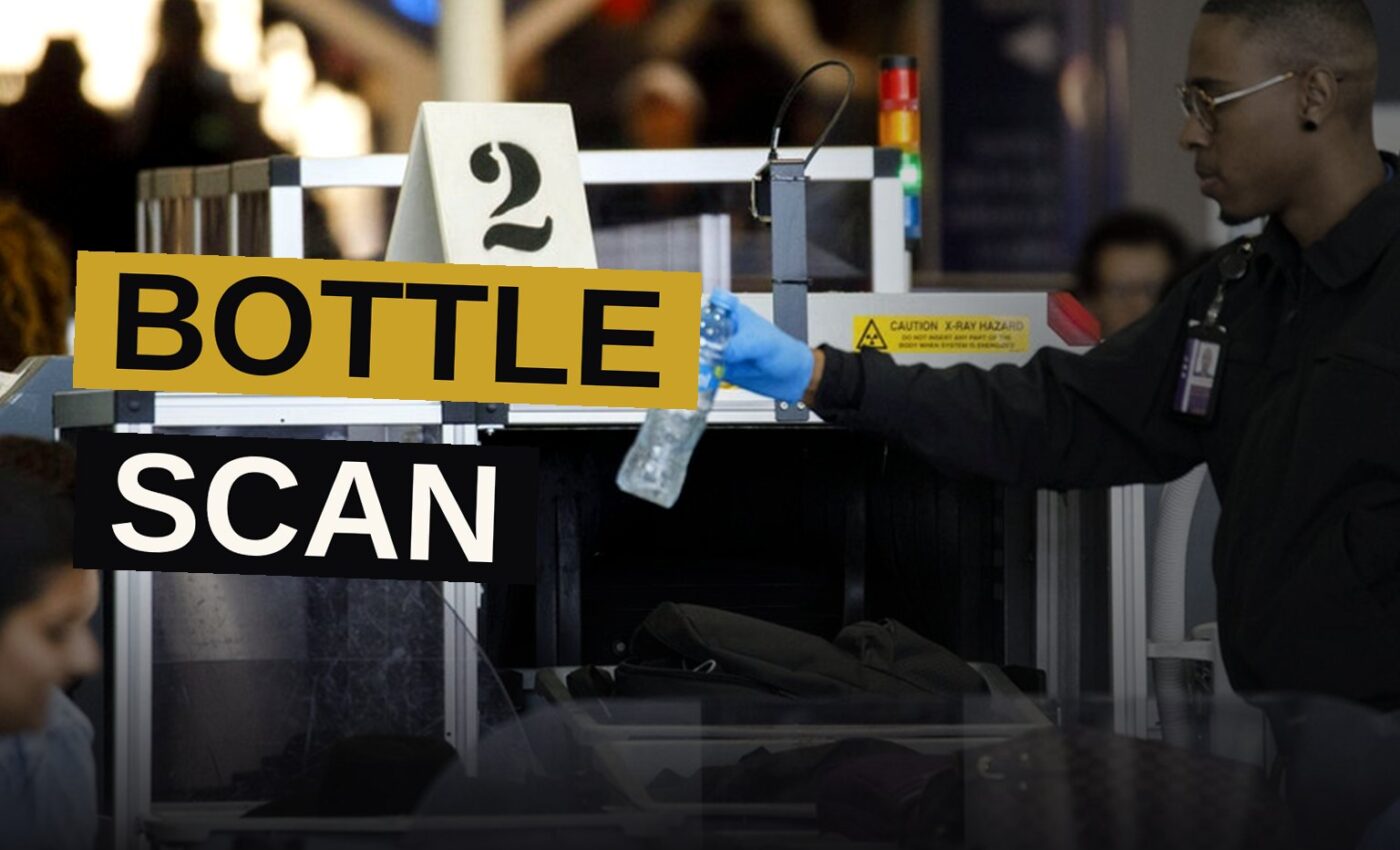
CBS News reports that senior administration officials said the Transportation Security Administration is weighing whether to let TSA PreCheck members bring full water bottles through security checkpoints at a limited number of airports in the coming months.
The proposal calls for beginning at airports where CT screening machines and automatic detection systems capable of telling water apart from other liquids and spotting possible dangers already operate. Officials did not name any particular airports that might take part in the new plan.
The TSA currently lacks the means to lift all limits on liquids. The current 3-1-1 rule remains in force, meaning travelers may bring carry-on liquids in containers no larger than 3.4 ounces.
The Technology Behind the Bottle Scan
These kinds of machines are not new inventions. CT scanners can already look into a sealed bottle and distinguish between water and something far more dangerous. Automated detection systems can mark a threat on their own, without a human officer needing to open the bottle or test what it holds.
For years, the same type of imaging technology has been used at airports, though not at every checkpoint. The newer machines bring together scanning ability with software that can recognize particular liquids based on their density and composition.
The problem lies with scale. The means to scan entire bottles of liquid already exist, yet the TSA has failed to obtain enough of these machines to put them into wide use, even just among PreCheck passengers. Funding for this endeavor is simply not available to the agency.
The central obstacle is that funding gap. For the program to matter, the TSA would need to install the new machines at enough airports, and that expense exceeds what the agency currently has available.
CBS News was told by the officials involved that no schedule has been set for buying or putting the gear into service. What they did say is that the shift may happen within the next few months, and that it will affect only airports that already have the necessary technology on hand.
What the 3-1-1 Rule Means Now
Nearly two decades on, most travelers still live by the 3-1-1 rule at airports worldwide. The regulation limits liquids, gels and aerosols to containers no larger than 3.4 ounces, with all such items required to fit inside a single quart-sized bag.
A scheme to employ liquid explosives against planes crossing the Atlantic was stopped, and the rule followed soon after. It has stayed in force ever since, despite advances in screening technology.
The newer CT systems change how screening is figured. They can tell apart water from other fluids and spot possible dangers without forcing a passenger to clear out a container.
The agency has no current plan to scrap the rule altogether. Instead, it is weighing a limited exemption for PreCheck passengers at airports equipped with the necessary technology.
The rule remains unchanged for all other people. Those going through standard security lines must still take their quart-sized bags out and put them on the belt for inspection.
PreCheck: Who Gets In
The U.S. government operates PreCheck, a program that lets travelers skip regular security lines and receive faster screening instead. The cost of joining depends on which authorized enrollment provider travelers choose, with membership coming in at $85 or less for a period of five years.
Before travelers can be approved, they must go through a security check that covers both a background review and an in-person appointment at an enrollment center.
According to the TSA, the shorter screening process usually lasts 10 minutes. PreCheck members are allowed to leave their shoes, belts and light jackets on, and they can keep laptops and compliant liquids inside their bags.
Since its launch, the program has grown steadily, and it is now widely used by frequent fliers who want to move through security more quickly. It is available at most major airports across the country.
Gateside by TSA: A Related Change
Just days after the agency rolled out its Gateside by TSA initiative for PreCheck travelers, which lets approved members without airline tickets move through security and into gate areas at 13 airports, the water bottle story has surfaced.
Passenger volumes and operational effects from the initial rollout will be assessed by the TSA before the program grows further.
It is worth noting when the two announcements were made. Each program gives PreCheck members benefits that the wider public does not receive.
TSA’s Gateside program targets individuals wishing to greet arriving passengers at the gate, make use of airport restaurants and shops, or see travelers through the terminal. It stands apart from the water bottle proposal, yet both initiatives speak to a wider pattern of the TSA granting more advantages to vetted travelers.
The Airports in Question
No airports were named by the officials as the first to receive the water bottle program. Instead, they explained that the rollout would focus on facilities already fitted with newer CT screening technology and automated detection systems.
Travelers are left in the dark on this front, since the TSA has kept quiet about which airports will get the new equipment and how many locations could end up in the first round of installations.
In recent years, airports have upgraded their screening equipment, though the rate of change has not been consistent. Certain major hubs now use the newer CT scanners at some checkpoints, while other airports still depend on older technology.
CBS News was told by officials that they would not say how many airports the program would begin at. What the officials confirmed instead is that the rollout will target airports that already have the necessary equipment.
People hoping to find out if their local airport is among those included will need to wait on the TSA for more details. The agency has yet to say when it plans to share that information.
The Funding Problem
CBS News reports that senior administration officials say the Transportation Security Administration lacks the funds to purchase new scanners for every single checkpoint across the nation.
Replacing screening machines at thousands of checkpoints comes with a heavy price tag, and the TSA has spent years trying to update its equipment without closing the funding gap.
The officials gave no word on how much money the TSA would need or where it might come from. All they said was that the agency lacks the resources at present to carry out a nationwide rollout.
For the foreseeable future, the water bottle program will probably stay limited in scope. The TSA can test it at a handful of airports, but a national rollout would need a funding pledge that has yet to be given.
The change will not reach most airports quickly, so travelers should not count on it arriving at their local airport soon, unless that airport has already installed the newer CT technology.
What Travelers Should Expect
The TSA has not yet given a timeline for its water bottle initiative, so the 3-1-1 rule is still being enforced for now. Officials who spoke to CBS News said the change could arrive within the coming months, though they did not provide a specific date.
Those who wish to secure a spot at the front of the queue would do well to sign up for PreCheck. The membership comes with an annual fee of $85 or less, covering a period of five years.
Full bottles are still restricted at security checkpoints, even for PreCheck members. The program remains unlaunched, and the TSA has offered no timeline for its rollout.
For years now, the most secure method has held steady: empty your bottle before going through security, then refill it once you clear the checkpoint. Remember to follow the 3-1-1 rule when you bring along other liquids.
Anyone traveling with a whole bottle that lacks the new technology will still be told to get rid of it at a checkpoint, even if they have forgotten about the requirement. The rule remains in force across the board.
The Bottom Line
A shift toward water bottles is underway, though it will take some time before it affects most passengers. The transition will begin gradually, at just a handful of airports, and will initially apply to only a modest number of travelers.
No final decisions have been made yet by the TSA. There is no word on which airports will take part, when the program will begin, or what happens to passengers who carry bottles into airports without the new technology.
Empty bottles remain the tried-and-true approach for keeping travelers hydrated while passing through airport security. The 3-1-1 rule, which governs what containers can be carried onto planes, continues to hold. Those who wish to drink during their flight can fill up after clearing security, just as they have done for years.
Whether the TSA can actually put this proposal into action over the next few months remains to be seen. The technology already exists. Funding is another matter entirely. Closing that funding gap is the obstacle the agency faces.
Key Facts Box
- TSA PreCheck membership costs $85 or less for five years
- The 3-1-1 rule limits carry-on liquids to 3.4 ounces or less per container
- PreCheck screening normally takes 10 minutes, according to the TSA
- Gateside by TSA launched at 13 airports
- The water bottle program would apply only to PreCheck travelers at airports with newer CT screening technology
- The TSA does not have funding for a nationwide rollout of the new scanners
- The officials did not name specific airports for the water bottle program
- The 3-1-1 rule remains in effect for all travelers
Most travelers will notice no difference today. Bottles remain empty, to be filled after security, just as before. The TSA is planning ahead, though it has not yet funded whatever comes next.
Source: cbsnews.com
Get the Notebook.
The day's best stories and every fresh verdict, in plain English, in your inbox by seven. One email a day, no more.