
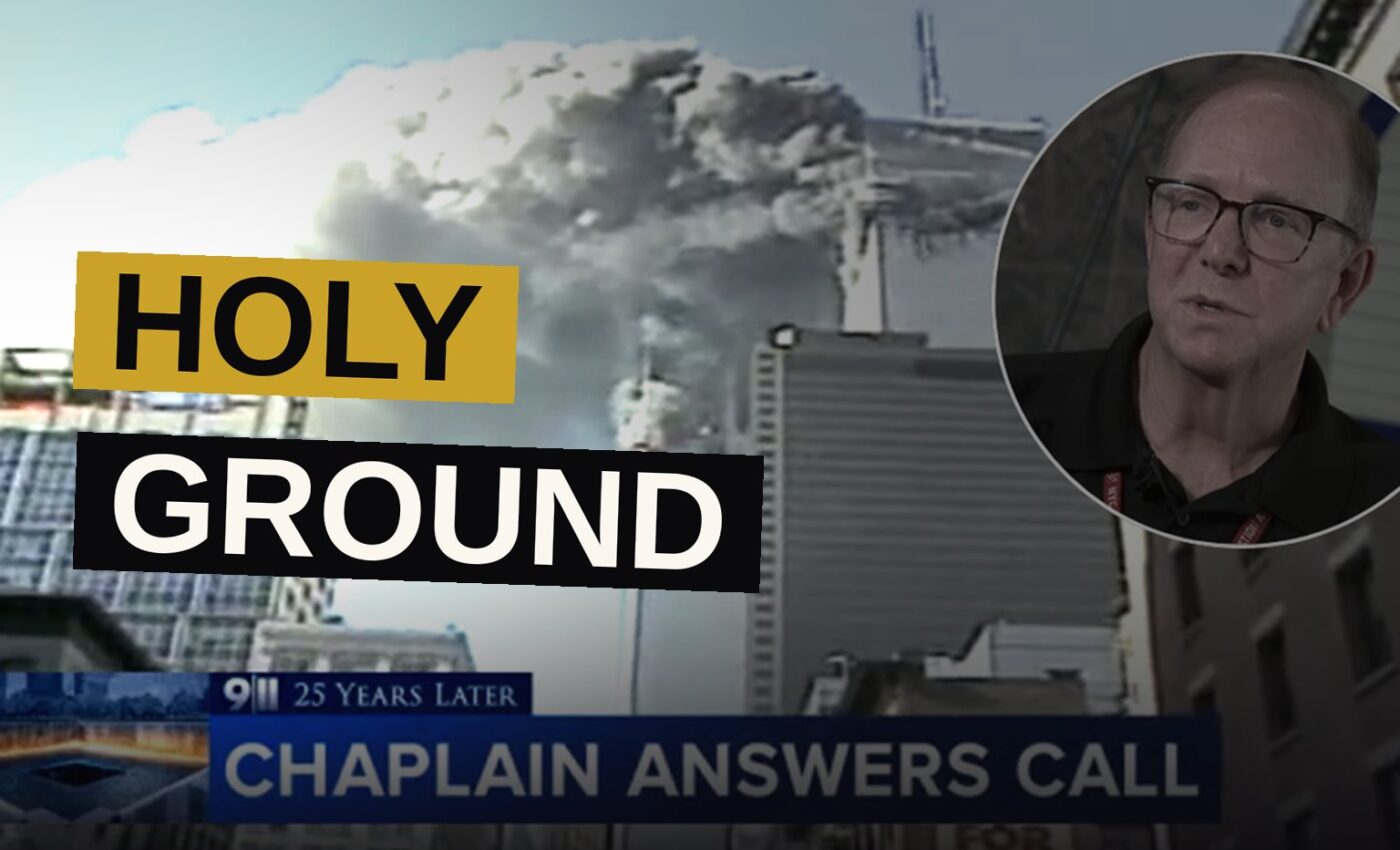
Perry Messick, who serves as the chaplain for Collingdale’s fire and police departments, says the memory of September 11th remains vivid. He recalls the event with a sense of anger that has not faded over the quarter-century since.
He remembered it, just as he had before: “My initial response is that I was angry. I was angry. How could somebody do this?”.
Instead of staying idle while events unfolded, Messick responded to a summons for chaplains to serve at the World Trade Center disaster site in New York City. He traveled there for 30 days, arriving just as rescue operations were giving way to recovery work.
The Call to Ground Zero
As a chaplain, Messick went to the site fully aware that his role would differ from what he might have anticipated. What he found there exceeded anything he could have imagined: destruction on an overwhelming scale.
“I just looked around and saw the destruction and then the smells, the sights, the heat,” Messick recalled. “And what came to mind was something from the Bible. I thought of the 23rd Psalm: ‘Yea, though I walk through the valley of the shadow of death.'”
The pictures stayed with me. There was a single instant that brought home the true weight of what had been lost, making it feel personal rather than abstract.
“I looked down, and I saw a woman’s red shoe and a man’s brown shoe, and I thought to myself, ‘I wonder what happened to them?'” he said. “It started to make it real.”
Ministry of Presence
Once Messick arrived at ground zero, he knew his job was what he called “ministry of presence.” His role was to be there, pray with the first responders, listen to them, and help some of them talk — people who had not yet spoken about what they had seen.
“They said, ‘You need to know how we view this place. This is holy ground, and for you to be here and stand with us helps give meaning to what we are doing.'”
Messick’s sense of his role on the site came from the message he heard from the first responders. His job was not about providing answers or solutions. Instead, he was there to be present alongside people during the hardest moment of their lives, lending significance to what they were doing.
The Shoes on the Ground
He kept both the red shoe and the brown shoe with him. Though small items within a vast ruin, they rendered his loss palpable, something he could not dismiss.
“I wonder what happened to them?” he asked himself.
There is no response to that question. Yet the instant he described brought the actuality of the day into view, and it began to make it real.
Standing on Holy Ground
Messick found a framework for his work in the first responders’ own words about holy ground. He was no outsider peering in from afar. He was part of what gave their work meaning.
That understanding guided him during his 30 days at the site. It also guided him in the years since, as he continued his ministry in Collingdale.
Messick’s work at ground zero did not hinge on finding the right words. Instead, it centered on simply being present with people enduring something almost beyond comprehension.
Lessons in Perseverance
The work taught Messick lessons about perseverance, endurance and faith during life’s most difficult moments, according to his own account. He says it helped the first responders he served, but he also changed personally through the process.
“As far as my sermons, I’d have to ask the church if my sermons got better or not,” he said with a laugh. “But I know I got bolder about talking about the issues of life because I saw people in the very worst situations.”
A pastor who is known for having the right thing to say found himself struck dumb instead. He stood at ground zero, where the destruction lay, and was unable to find any words at all. The date was September 11th, and the grief, the sorrow, the tears silenced him then. Even after he had turned away from the scene, the images remained with him.
Hope After the Why
Messick keeps his work going in Collingdale, building on what he took away from 9/11. The point he keeps making stays just as relevant today as it did back then: there may be no explanation for why things happen, but hope is always available.
“Not just 9/11, but dealing with issues of life, loss of loved ones,” Messick said. “There is purpose for your life. If you are here and you are still breathing, there is purpose for your life.”
The note was not meant solely for those who came to his aid when he served. It reaches beyond them to anyone enduring loss, grief, or the most difficult questions life can pose.
A Pastor’s Changed Voice
Messick described the experience as one that altered his approach to speaking on difficult topics. He witnessed people in the most dire circumstances, which he said granted him a new kind of confidence.
He said “I know I got bolder about talking about the issues of life because I saw people in the very worst situations,”.
The lessons from ground zero did not remain at the site; they traveled with him to Collingdale, where they shaped both his sermons and his daily work there.
The Purpose That Remains
Today, Messick’s work in Collingdale carries on without pause. What happened at ground zero does not lie in the past for him; it shapes both his current efforts and his words.
The message is simple: there is purpose for your life.
“If you are here and you are still breathing, there is purpose for your life,” Messick said.
He wants people to look back on those attacks twenty-five years later with more than just sorrow for what was destroyed. He wants them to recall the hope that followed. He wants them to think not only about the fury that came afterward, but also about the action that turned it into something constructive.
The memories persist. The shoes remain fixed in his mind. So too do the odors and the warmth. The first responders were the ones who named the spot sacred ground.
He carries with him what he learned there: perseverance, endurance and faith through life’s most difficult moments. Time has not dimmed those lessons.
In Collingdale, Messick still works as chaplain, carrying with him the experience of his time at ground zero. That work did not simply pass by him; it changed how he speaks and how he serves.
Source: abc7.com
Get the Notebook.
The day's best stories and every fresh verdict, in plain English, in your inbox by seven. One email a day, no more.