
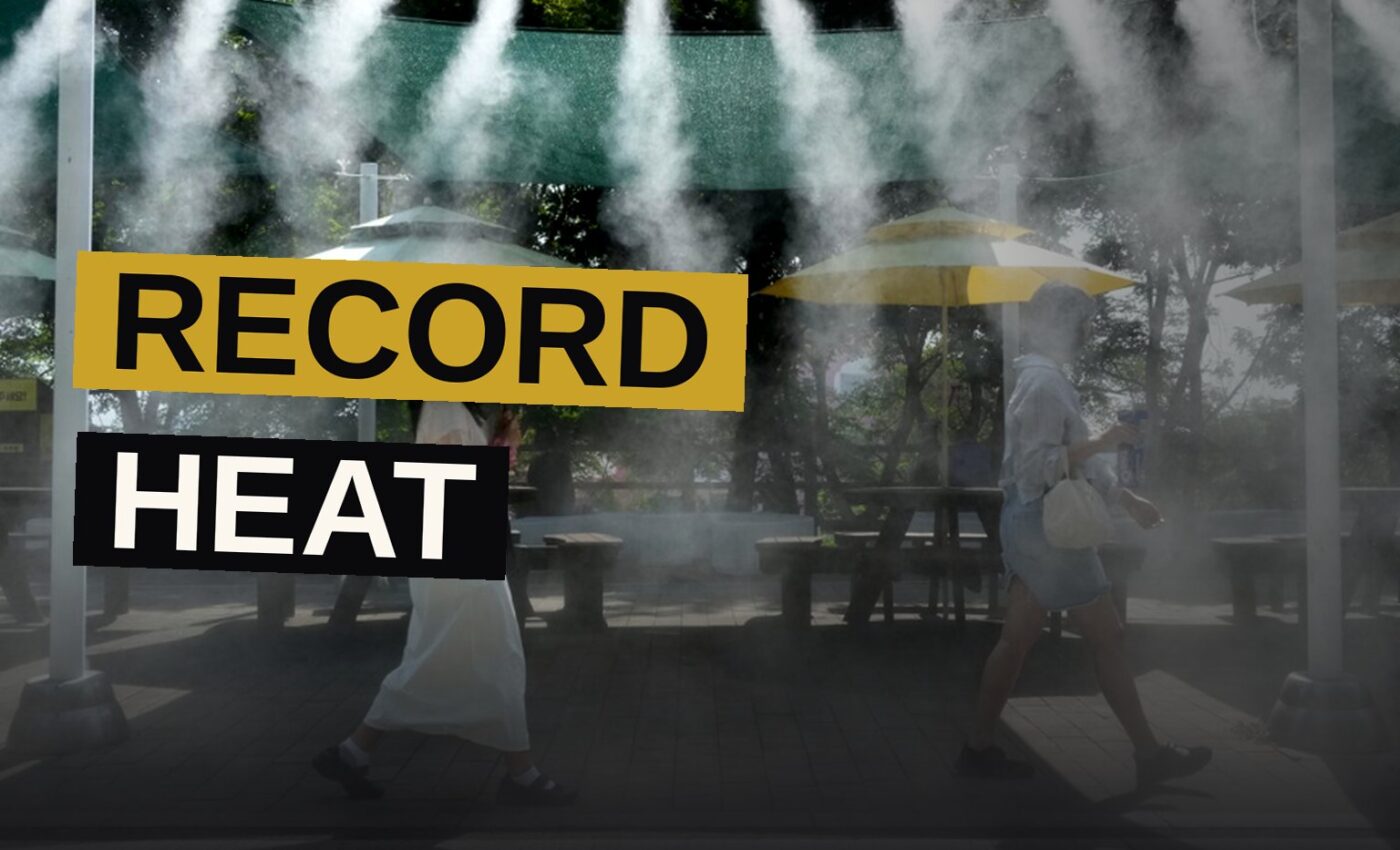
Earth just cooked through its hottest month on record — again.
The climate service Copernicus, which serves Europe, reports that August 2026 came in as tied with July 2023 for the hottest month on record. The average temperature across the planet reached 62.53 degrees Fahrenheit (16.96 degrees Celsius), which is one-hundredth of a degree Celsius above the old record. Because that small difference sits inside the uncertainty range, the two months are treated as a shared title.
The heat didn’t stop there. August’s sizzle helped push the globe and the United States through the hottest Northern Hemisphere summer scientists have recorded.
The August Numbers
The world’s average temperature last month rose to a point that exceeded the pre-industrial baseline by 1.65 degrees Celsius, which works out to nearly 3 degrees Fahrenheit. That figure pushes past the longer-term 1.5 degrees Celsius, or 2.7 degrees Fahrenheit, limit established under the Paris climate agreement reached in 2015.
Copernicus records show that the eight hottest months ever measured have occurred since July 2023, with no exception.
The climate system is now operating outside what scientists expected a decade ago, according to Samantha Burgess, who serves as strategic climate lead for Copernicus.
“Our climate system is really operating well outside the range we would have expected just a decade ago,” Burgess said Wednesday from a United Kingdom beset with heat waves.
“We’ve transitioned from climate being very abstract and perhaps impacting the global South or far away places to climate impacting and disrupting our daily lives with schools closing, hospitals being overwhelmed, roads melting, train lines buckling. And the reality is we will get more of these conditions that we’ve seen this summer.”
The US Summer Records
Wednesday brought news from the National Oceanic and Atmospheric Administration that the Lower 48 states had endured a summer hotter than any seen during the peak of the devastating Dust Bowl in 1936. The United States felt the heat especially hard.
June through August 2026 in the contiguous United States averaged 74.37 degrees (23.54 degrees Celsius). That’s nearly four tenths of a degree warmer than the mark set 90 years earlier.
The month of August shattered US heat records by more than half a degree Fahrenheit, with an average temperature of 75.58 degrees (24.21 degrees Celsius). Daytime highs reached a scorching 88.56 degrees (31.42 degrees Celsius), which also set a new record. July had done the same, breaking yet another long-standing Dust Bowl-era mark.
“This summer has really been exceptional. We’ve seen records that existed for close to 100 years be broken, in the U.S. in particular,” Burgess said.
According to Copernicus, this past summer tied with 2024 for the hottest on record globally.
Why August Beat July
An all-time record occurring in August instead of July carries its own warning, since August is traditionally cooler than July.
Zeke Hausfather, a climate scientist with Berkeley Earth, said that the steady stream of record-breaking temperatures — including the mark set in August — proves that human-driven climate change is speeding up.
The Copernicus record runs from 1940, while NOAA’s numbers for the United States begin at 1895. Global data, which usually tracks with Copernicus but requires more time to produce, starts at 1880.
El Nino and Fossil Fuels
The rise in temperature is being driven by two factors, according to scientists: human-caused climate change and an unusually large El Nino.
Parts of the Pacific periodically warm naturally and temporarily, which alters weather worldwide. Several scientists argue, however, that human emissions of heat-trapping gases from burning coal, oil and natural gas far outweigh El Nino as a driver of global warmth.
“While El Nino is starting to ramp up the heat, the underlying driver remains our relentless burning of fossil fuels. Climate change makes every El Nino hotter, and until we stop burning coal, oil, and gas these record-shattering months will simply keep on coming,” said Friederike Otto, a climate scientist at Imperial College London.
El Nino typically adds just one or two tenths of a degree Celsius (two to four tenths Fahrenheit) to global temperature, according to Burgess. The vast majority of the additional warmth, he said, comes from burning fossil fuels.
The coming months will see this El Nino breaking records for strength, according to forecasts.
Dessler’s Warning
Texas A&M climate scientist Andrew Dessler said in an email that “It is now time to stop acting surprised that our warming planet keeps getting warmer. This is occurring exactly as forecast by scientists literally decades ago,”.
“The interesting question is not whether we will keep breaking heat records (we will), but whether we’re going to do anything about it or just stand there while the climate train runs us over.”
Record Ocean Heat
The oceans are not escaping the heat.
Copernicus reports that global monthly ocean temperatures in August matched an all-time record for the warmest month on record, which was first set in March 2024. The same month also saw Aug. 22 break the previous mark for the hottest day ever recorded in the world’s seas.
Hausfather’s Forecast
The forecast is not comforting.
Hausfather notes that “it is increasingly likely that 2026 ends up beating 2024 as the warmest year on record, and almost certain that 2027 beats both, potentially reaching as high as 1.8 degrees Celsius (3.2 degrees Fahrenheit) above preindustrial levels on the back of an unprecedentedly-strong El Nino event.”
On certain days, the climate crosses a mark that has not been crossed before, reaching 2 degrees Celsius (3.6 degrees Fahrenheit) above temperatures seen in the middle of the 1800s, according to Burgess.
Texas Tech climate scientist Katharine Hayhoe says that as temperatures keep going up, we should expect heat waves, storms, floods and wildfires to happen more often and to be more severe.
Stiell’s Statement
Simon Stiell, the man leading the United Nations on climate issues, made clear what is at stake.
The burning of vast amounts of coal, oil and gas continues without end, and so long as it does, the pollution it produces will keep heating our planet. That heat will keep breaking all-time records, killing millions, costing trillions, straining transport and health systems, and driving up prices on everyday goods like food. This is the rising cost of humanity’s dependence on fossil fuels, and the global climate crisis they are fueling.
The Records at a Glance
The records keep falling. Here’s what scientists now know:
- The eight hottest months on record have all occurred since July 2023
- August 2026 tied July 2023 for the hottest month ever measured
- US summer 2026 beat the Dust Bowl summer of 1936 for the first time
- Global ocean temperatures in August tied a March 2024 record
- Aug. 22 was the hottest day ever recorded in the world’s seas
The Timeline of Climate Data
| Dataset | Start Year |
|---|---|
| Copernicus global data | 1940 |
| NOAA US data | 1895 |
| NOAA global data | 1880 |
There is no longer any doubt about the continued arrival of the heat, according to scientists who now say it will keep arriving.
As Dessler framed it, the real issue comes down to whether humanity acts or simply stands still while the climate train runs over everyone.
Source: npr.org
Get the Notebook.
The day's best stories and every fresh verdict, in plain English, in your inbox by seven. One email a day, no more.