
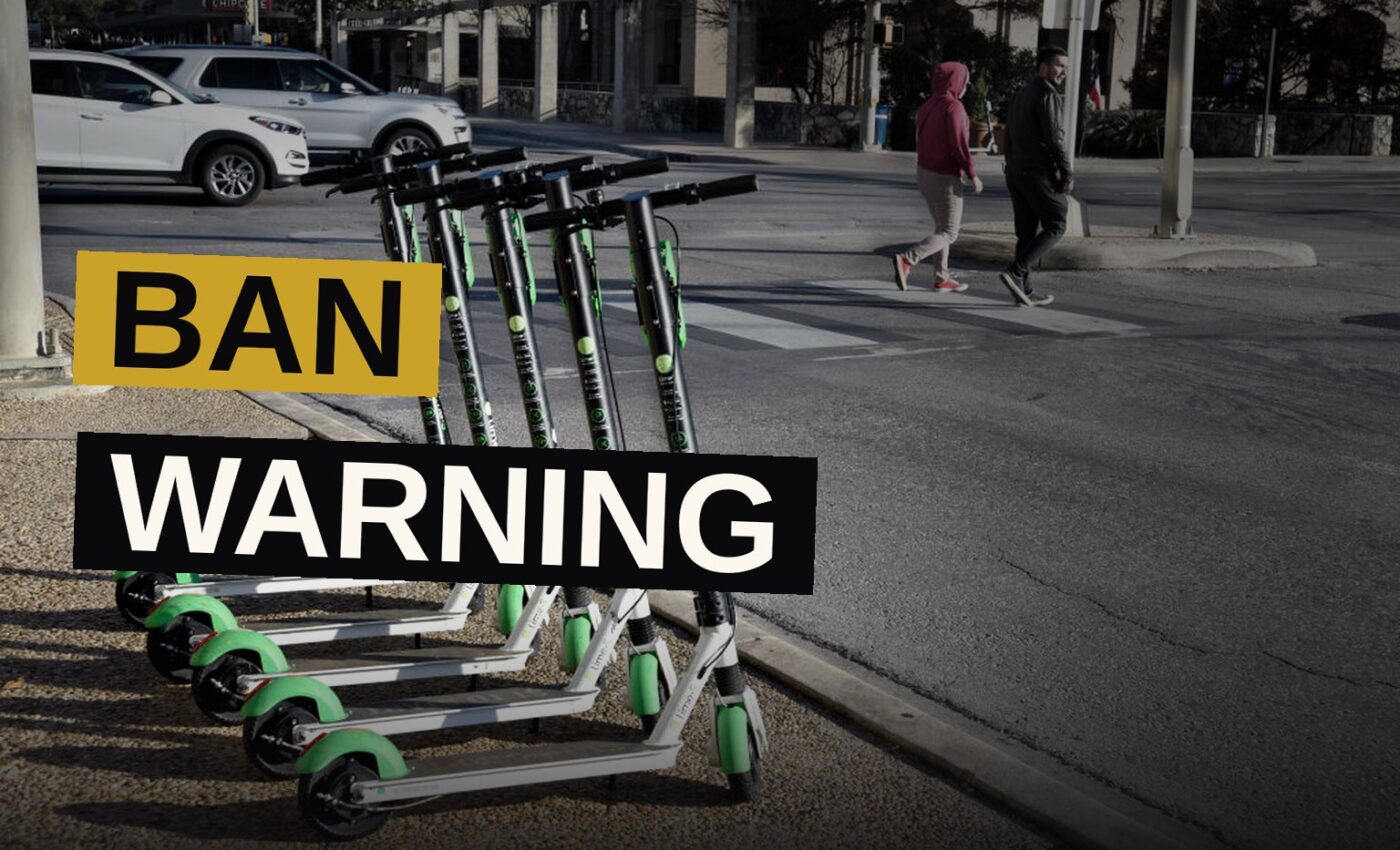
Texas A&M System regents have put scooter and e-bike riders on notice: fix the crash problem, or the devices are gone from campus.
Campus incidents involving micromobility devices rose 37 percent from 2024 to 2025, according to KBTX. Peter Lange, Texas A&M’s chief operating officer, told regents the university recorded 52 incidents last year, with about half resulting in injury.
“The bottom line of this is if we don’t get it fixed soon, because this is a very old subject, we’re going to ban them and you’re not going to have them at all,” Regent John Bellinger said, according to KBTX. “So we got to get it fixed or it’s out.”
The crash surge behind the warning
The jump in crashes is the trigger for the ban talk. The 37 percent increase from 2024 to 2025 caught the attention of the system’s governing board.
Lange’s report to the regents showed the severity of the problem. About half of the 52 incidents involved injury, according to his report.
The regents did not announce a specific timeline for a decision. Bellinger’s warning was blunt: either the university finds a way to bring the numbers down, or the devices will be banned outright.
What counts as a micromobility device
Micromobility devices cover a range of personal transportation options. The term includes scooters, e-bikes and similar small electric vehicles that have become common on college campuses.
These devices are now a normal part of getting around the College Station campus. KBTX reported that 38 percent of registered micromobility devices on campus are electric, and that number is expected to grow.
Regent Sam Torn on the system-wide problem
Regent Sam Torn said the issue is not unique to Texas A&M’s main campus. The problem extends across the Texas A&M System, including Prairie View A&M.
“This has got to get fixed,” Torn said, according to KBTX. “I’ve heard it is a big problem at Prairie View… So across the system, we’ve got to go look. If we can do it to make it safer, not just for those riding it, but for those that are in the path, we need to do it.”
The system-wide framing matters. A ban at College Station could set a precedent for other campuses in the Texas A&M System, which includes multiple universities across the state.
Torn’s comments suggest the regents are thinking about this as a systemic issue, not just a single-campus problem. He said he has heard Prairie View A&M has a significant issue, though no crash figures for that campus were reported.
Existing rules on campus
Texas A&M already has rules governing micromobility devices on campus. The university requires all such devices to be registered before they can be brought to campus.
There is also a power limit. The university bans devices with electric motors above 750 watts, according to university rules.
Riders are required to yield to pedestrians, travel at safe speeds and keep control of their devices. These are basic safety rules, but enforcement is the question.
The university also requires bikes, scooters and similar devices to be parked at designated bike rack areas. This is meant to keep walkways clear, though it does not address the crash risk from moving devices.
Helmets are encouraged for personal electric vehicle riders, but they are not mandatory under current university guidance. That means riders can legally use e-bikes and scooters without head protection.
Reaction on the r/aggies subreddit
The threat of a ban has sparked reaction on the r/aggies subreddit. Responses ranged from sarcasm to criticism, with several users arguing a scooter ban would overlook broader transportation problems on campus.
“Who knew that micromobility devices were DEI tools used by critical race theorists and gender idealists to injure good sweet pure Aggies?” one Reddit user wrote. “Good thing those regents are on the case to snuff this left wing wrongthink scootering out.”
The sarcasm reflects a view that the regents are targeting the wrong problem. Some students see scooters and e-bikes as a solution to campus transportation issues, not the cause of them.
Another Reddit user pointed to the practical side of the debate. “How are they going to do that when they don’t fund the buses and it’s impossible to get to campus?!” the user wrote. “I don’t have one but I’ve had so many issues with transportation I’ve considered it.”
That comment captures a key tension. If campus transit is underfunded or unreliable, students may see personal electric devices as their best option for getting to class on time.
The transit funding tension
The Reddit criticism points to a deeper issue: campus transportation funding. If buses are not funded adequately, students turn to other options.
The regents’ public comments focused on the devices themselves and the risk they pose. The reported discussion did not include transit funding as a topic.
But the student reaction suggests the ban talk is not happening in a vacuum. For many students, scooters and e-bikes are not a luxury. They are a way to get across a large campus when other options fall short.
The university has not said whether it is considering improvements to bus service or other transit options alongside any potential ban. That information was not part of the regents’ discussion as reported by KBTX.
What happens next
Chron has reached out to Texas A&M University for comment.
The regents have not set a deadline for a decision. Bellinger’s comments suggest the window is not unlimited, but no specific date was given.
The key question is whether the university can reduce crashes without a ban. The regents have said they want the problem fixed, but they have not said what a fix would look like beyond the threat of prohibition.
The stakes for students
A ban would change daily life for many students at Texas A&M. With 38 percent of registered devices now electric, a large share of the campus community uses these devices regularly.
The full impact of a ban is not known. The university has not said whether a ban would apply to all devices or only some. The regents spoke about banning them entirely, but the details of any such policy are not clear.
Key facts
- 37 percent: increase in micromobility crashes from 2024 to 2025
- 52: incidents recorded at Texas A&M last year
- About half: of incidents resulted in injury
- 38 percent: of registered micromobility devices on campus are electric
- 750 watts: maximum motor power allowed under current university rules
The regents have made their position clear. The next move belongs to the university and its students.
If the crash numbers do not come down, the scooters and e-bikes will be gone. That is not a prediction. It is the warning from the board.
Source: chron.com
Get the Notebook.
The day's best stories and every fresh verdict, in plain English, in your inbox by seven. One email a day, no more.