
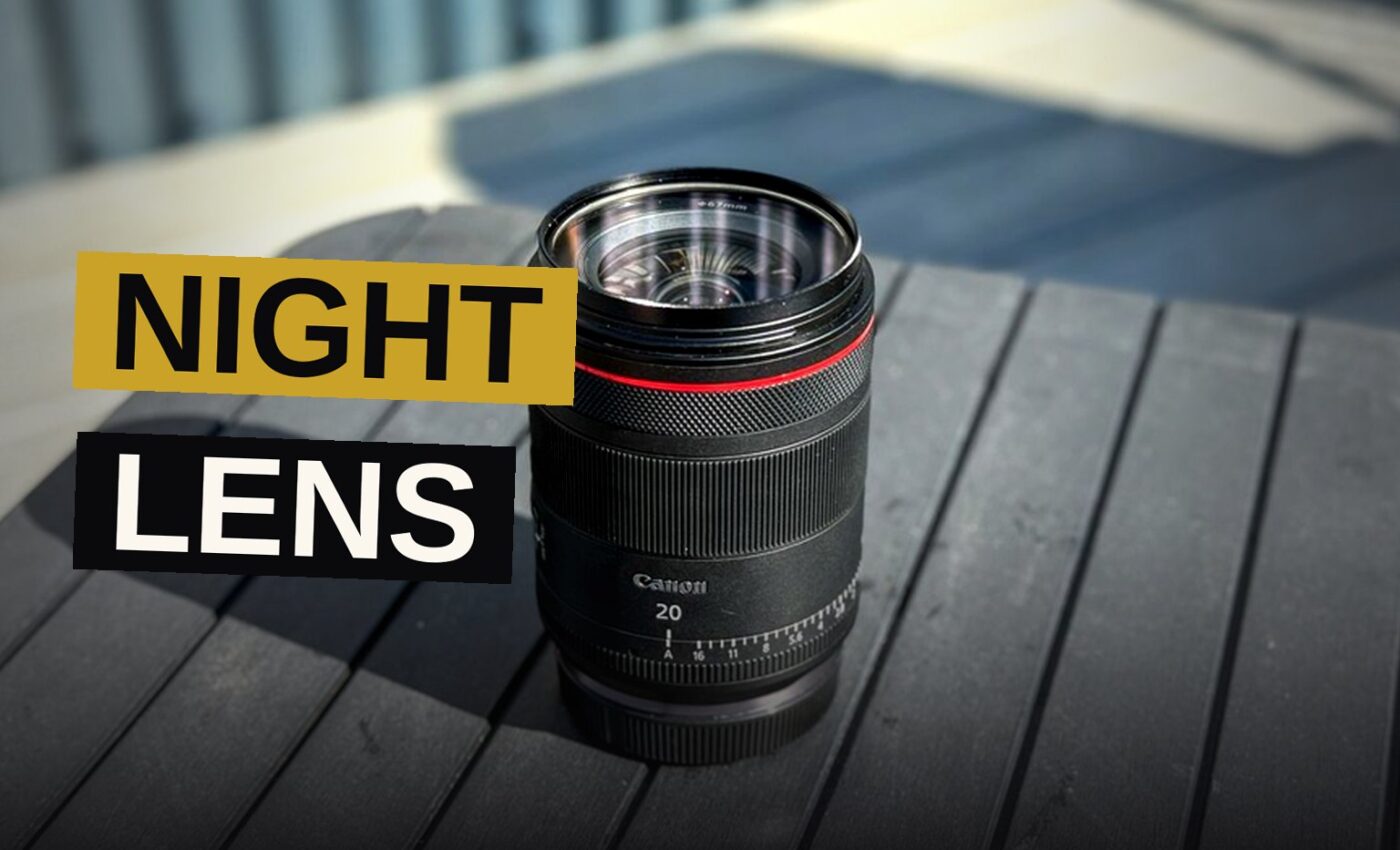
Canon has a new wide-angle prime lens aimed squarely at photographers who work in the dark. The Canon RF 20mm f/1.4L VCM pairs a 20mm focal length with a fast f/1.4 aperture, a combination designed for low-light shooting and astrophotography. Live Science took the lens to the dark skies of Wales to test it against the Perseids meteor shower, and the results point to a strong performer with a few notable compromises.
This Canon L-series lens bears the maker’s premium badge, a sign of top-tier construction and optics. It commands a high price, and the review observes that although the sharpness and aperture render it a capable instrument, casual shooters may find it hard to justify the expense. The lens targets a particular sort of photographer — one who frequently shoots wide and works in dim conditions. That premise underpins the entire review: this is a specialty tool, and its value depends almost entirely on how often you capture wide-angle scenes in low light.
The Design and Build
When you lift the Canon RF 20mm f/1.4L VCM, its build feels substantial right away. Live Science describes it as “solid and reassuringly well-built,” weighing in at 1.14 pounds (519 grams). This is not a small 20mm prime, yet the weight sits well, and the review found it comfortable to carry and shoot with. Though larger and heavier than most primes, that size never caused trouble during testing.
Smooth, well-weighted focus and control rings make this lens pleasant to operate by hand. The switches and programmable buttons are easy to locate by feel alone, which is important in dim conditions — a person photographing under a night sky should not need to look down or reach for a headlamp while working the controls. A rugged design that resists moisture adds value for photographers who work outside, particularly those who might run into rain or mist during landscape sessions.
One standout feature is the dedicated aperture ring, which puts physical control of aperture settings right at the photographer’s fingertips, separate from any camera body dials. The review points to how the ring operates, describing it as “an ASMR dream.”.
Shooting the Night Sky
In Carmarthenshire, Wales, the lens was put to the ultimate test beneath Bortle 3 skies. Live Science captured the night sky during the peak of the Perseids, an event that happened when there was a new moon. This combination of circumstances — truly dark skies, a meteor shower at its height, and no moonlight to dim the stars — comes very close to the ideal conditions for astrophotography.
Under dark skies, the f/1.4 opening truly matters. The Milky Way shows up wonderfully, full of detail, without pushing the ISO too far. With the 20mm reach, there’s plenty of sky available, and the quick opening gathers a great deal of light.
“We took the lens out to Carmarthenshire in Wales under Bortle 3 skies to photograph the night sky during the peak of the Perseids, which also coincided with the new moon — the perfect recipe for astrophotography.”
In the middle of the picture, the lens performs at its best, producing stars that are sharp and clearly outlined — precisely the kind of image that astrophotographers aim for. The outer regions tell a different tale.
Sharpness and Softness
A mild softness appears around the edges at f/1.4, accompanied by slight star stretching toward the frame’s outer regions. The reviewer notes that neither flaw is serious enough to spoil an image, though both become visible upon close examination of the corners.
This is the trade-off at the heart of the lens. The review lists this edge softness and some stretching or warping around the edges as the lens’s main weaknesses. The center sharpness, by contrast, is listed as a major strength. For most images, and most viewers, the center performance will be what matters — but photographers who scrutinize their corners should know what to expect when shooting wide open at f/1.4.
Autofocus and Everyday Use
When using the Canon RF 20mm f/1.4L VCM in the field, the experience is simple and effective, particularly in dim conditions. During testing, the autofocus performed well and remained dependable. For everyday work capturing landscapes or video, there is little need for thought. The lens handles its tasks without demanding much attention from the user.
Photographers can assign the lens function button and control ring to different settings, putting the controls they use most within easy reach. The review points out that this small feature can save a surprising amount of time, making the customization genuinely useful.
Another practical benefit comes from the filter thread itself, which measures 67mm. That size is widespread, meaning photographers who already own filters in that size do not have to buy a whole new collection.
Key Specifications
| Specification | Detail |
|---|---|
| Focal length | 20mm |
| Aperture | Constant f/1.4 |
| Weight | 1.14 pounds (519 g) |
| Dimensions | 3 x 3.9 inches (76.5 x 99.3 mm) |
| Filter thread | 67 mm |
This camera doesn’t come with a lot of extra features, and the review treats that absence as a virtue. Its design lets you grab it and start shooting right away, which makes ease of use one of its standout strengths.
Strengths and Weaknesses at a Glance
The review points to several strong features: the lens delivers excellent sharpness at the center, its f/1.4 aperture makes for brighter astrophotography, the 20mm focal length works across many shooting situations without being too narrow, and the L-series optics produce consistently high image quality. The body is built to withstand bad weather, the focus and zoom rings move smoothly and feel well balanced, and the controls can be set up to suit individual preferences.
The review points to several drawbacks. Edge softness at f/1.4 and star stretching near the frame’s limits stand out as the principal complaints. The lens is bigger and heavier than most prime lenses, although the reviewer says it remains easy to hold and well balanced in the hand. Price is the other concern, flagged by the reviewer as the biggest hurdle for casual photographers.
Who Should Buy It
This lens is built for photographers working in dim conditions or those who need a dedicated wide-angle prime. It offers the greatest benefit to astrophotographers, though it carries real value for landscapes, architecture, interiors and environmental work as well. The Canon RF 20mm f/1.4L VCM delivers its strongest results in situations where light is scarce, and it performs well across several genres beyond its primary use.
The main thing that sets it apart from a zoom is its f/1.4 opening, which lets in more light than most zoom lenses can manage. For people who own a wide-angle zoom but often raise the ISO setting to deal with dim conditions, this lens closes that gap while also giving the precise control that a fast prime offers.
The expense is what gives people pause. It is a costly piece of glass, and the review makes plain that unless you frequently capture scenes at their widest or work in dim conditions, the bill may be difficult to account for. It is a specialized instrument suited to a particular set of tasks.
The Verdict
Photographers who favor shooting in dim conditions and at wide angles will find the Canon RF 20mm f/1.4L VCM to be a solid pick. The lens delivers clear images with its large f/1.4 opening, which works especially well for those taking pictures of the night sky.
The lens delivers outstanding sharpness at its center. Its f/1.4 aperture setting elevates astrophotography to a new level. At 20mm, the focal length falls short of being overly specialized, and the L-series optics contribute to consistently high image quality throughout.
There are genuine trade-offs here, but they are easy to live with. The borders soften at f/1.4, and there is a little stretching and warping near the edges. It is bigger and weighs more than most primes, yet the review insists it remains quite easy to handle.
This lens serves as a genuine instrument for photographers who know how to use it, while the cost will be difficult to defend for anyone without that skill.
Source: livescience.com
Get the Notebook.
The day's best stories and every fresh verdict, in plain English, in your inbox by seven. One email a day, no more.