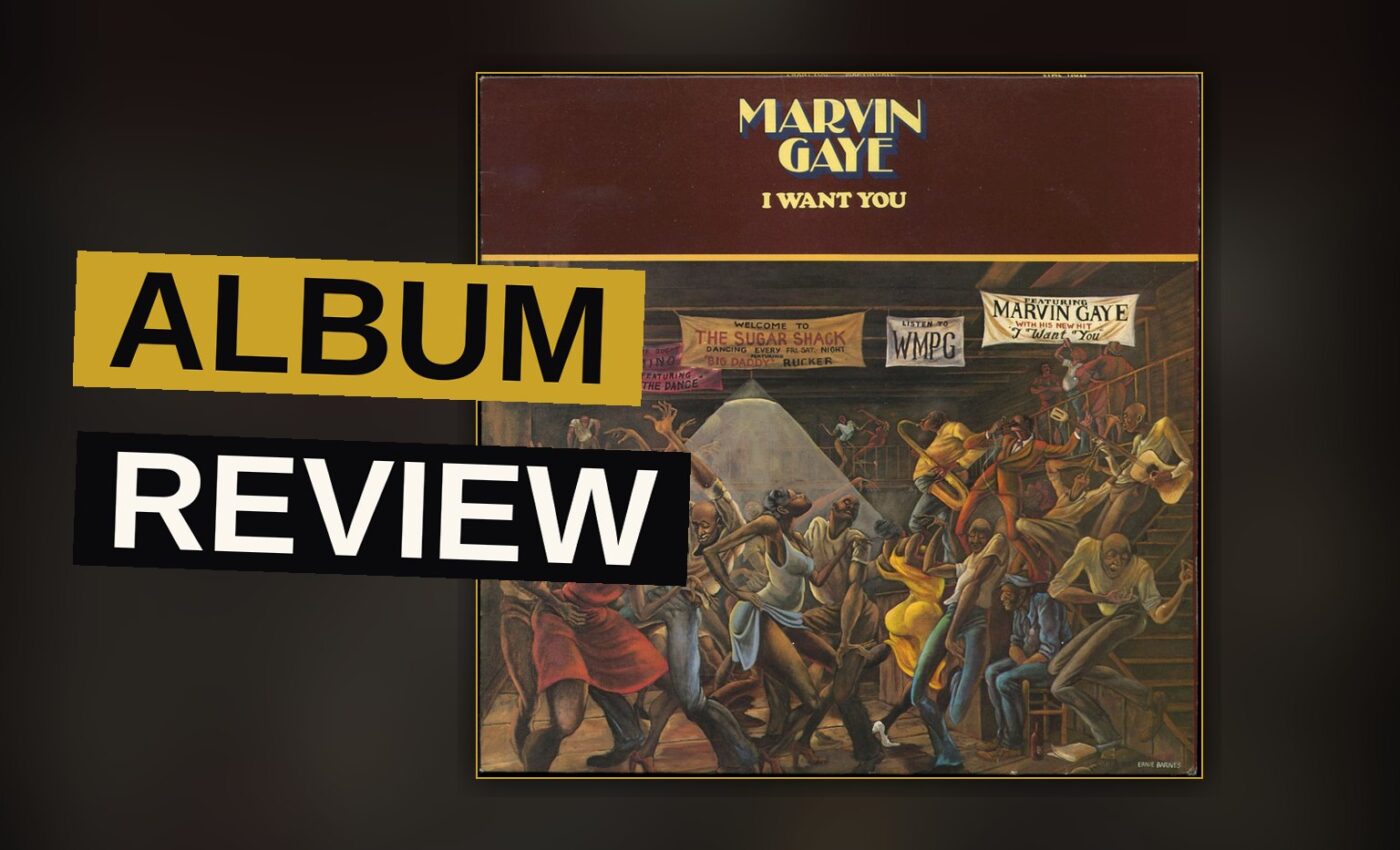
Marvin Gaye’s I Want You is not an album that announces itself. It seeps in. Released in 1976, it is a record built on slow heat, live instrumentation, and the kind of intimacy that feels less like performance and more like eavesdropping. Gaye was not trying to make a hit machine here; he was making a mood, a late-night space where desire is the only weather. Inspired by his relationship with Janis Hunter, the album trades the social protest of What’s Going On for something far more personal — a study of longing, touch, and the quiet ache of wanting someone.
The record runs 38 minutes across 11 tracks, though several of those are interludes and jams. That brevity is a strength. Nothing overstays, and the whole thing moves like a slow dance that knows exactly when to end. It is sensual, yes, but also disciplined. Gaye’s voice floats above bongos, guitars, and drums, and the result is an album that feels both lush and restrained.
Sonically, it is a masterclass in texture. The live band gives every track a breathing quality, a sense that these songs were played, not programmed. The BBC called it “Marvin Gaye’s most sensual release,” and that assessment holds. There is a physicality to the music here, a warmth that digital production rarely captures. This is an album you feel in your chest before you hear it in your head.
The Title Track Sets the Terms
The album opens with “I Want You (vocal),” the single that gave the record its name. It is the thesis statement, a four-and-a-half-minute track that lays out the entire emotional terrain. Gaye sings with a pleading urgency, his voice weaving through the percussion and bass like a hand reaching across a table. The production is immaculate — every instrument sits in its own space, and the mix breathes. It is a song about obsession, but it never feels frantic. The desire is patient, which makes it more dangerous.
Then comes “Come Live With Me Angel,” a six-and-a-half-minute centerpiece that stretches out like a long summer evening. This is where the album’s live instrumentation truly shines. The bongos and guitars interlock, and Gaye’s vocal performance is conversational, almost whispered at times. It is a seduction built on patience, not pressure. The track earns its length because it never repeats itself aimlessly; every bar moves the feeling forward.
The first side’s structure is unusual. After the vocal “I Want You” and “Come Live With Me Angel,” we get “After the Dance (instrumental),” a four-minute piece that serves as a palate cleanser. It is smooth, melodic, and gives the listener a moment to breathe before the record dives back into its themes. Some critics have called the instrumental tracks on the deluxe edition bland, and that critique has merit — but this one works because it is placed with intent. It cools the room down before the heat returns.
“Feel All My Love Inside” and the First Half’s Hinge
“Feel All My Love Inside” and “I Wanna Be Where You Are” close out the first half. The former is a shorter, more direct track, a declaration of physical intent that does not waste words. The latter is barely a minute and a half, more of a fragment than a full song. It functions as a bridge, a whispered thought that leads into the second half of the record. Some might call it padding, but it works as a connective tissue — a moment of vulnerability before the album shifts gears.
That shift matters. The record spends its first half establishing a mood, and these two tracks are the hinge. They are not the biggest moments, but they prepare the ground for what comes next. Without them, the back half would feel abrupt.
“Since I Had You” and the Confessional Core
Side two opens with “I Want You (intro jam),” a 20-second burst that feels like a memory of the title track. It is a strange choice, almost a false start, but it sets up the longer jam that follows. “All the Way Around” is a mid-tempo groove, a track that leans heavily on the rhythm section. Gaye’s vocal is lower here, more grounded, and the song feels like a confession rather than a plea. It is not the most memorable track on the record, but it holds its own.
“Since I Had You” is where the album gets personal. This is the closest Gaye comes to direct autobiography, a song about absence and the weight of missing someone. The production is sparse, letting the voice carry the emotion. It is a quiet track, but it lands harder than some of the louder moments because it feels real. There is no performance here, just a man remembering.
“Soon I’ll Be Loving You Again” picks the pace back up, a three-minute track that is more optimistic than what came before. It is not a banger, but it is a shift in tone — a promise rather than a memory. The album needed this pivot. After the introspection of “Since I Had You,” this track points forward, suggesting that the longing has an end point.
The Closing “After the Dance (vocal)”
The record closes with a second “I Want You (intro jam)” at 1:41, a longer, more developed version of the earlier interlude, and finally “After the Dance (vocal).” That final track is a revelation. Where the instrumental version was a palate cleanser, the vocal version is the emotional payoff. Gaye sings the melody with a tenderness that the earlier tracks only hinted at, and the song feels like a resolution — not a happy ending, but a settled one. It is the right way to close a record about desire: not with a bang, but with a sigh.
Sonically, the song is beautiful and it is well produced, the use of live instrumentation with various instruments such as bongos, guitars and drums blend incredibly well together. — ArdyReviews, on “I Want You”
The Deluxe Edition’s Extra Tracks
The album has been reissued in special editions, and those versions include additional instrumental tracks. The BBC noted that the “special edition” of the 1976 album gets a reappraisal, and that framing is fair. The core record is tight, but the expanded versions risk diluting the mood. Some of those extra instrumentals are pleasant but forgettable — background music rather than essential listening. The strength of the original album is its economy. Every track earns its place. The deluxe extras, by contrast, feel like they are filling time rather than adding depth.
That does not diminish the original. I Want You is a complete statement. It does not need more material. The 38 minutes it runs are precisely calibrated, and the sequencing — from the opening single through the interludes to the closing vocal — is deliberate. This is an album that knows what it is, and it does not apologize for its focus.
Live Players and Gaye’s Quiet Voice
The live instrumentation is the album’s secret weapon. In an era when production was getting slicker and more synthetic, Gaye leaned into real players. The bongos, guitars, and drums are not just backing — they are conversation partners. They respond to Gaye’s voice, and he responds to them. The result is a record that feels alive, even 50 years later. You can hear the room, the air, the space between the notes.
Gaye’s vocal performance is the other pillar. He does not shout here. He murmurs, he coaxes, he pleads. The BBC described the material as “near the knuckle, personal stuff,” and that is accurate. This is not a record of grand gestures. It is a record of small, intimate moves — a hand on a shoulder, a whispered name, a pause that says more than a word. Gaye was never one to shy away from baring his soul, and that honesty is what makes the album endure.
The title track remains the standout, and it is easy to see why critics have singled it out alongside “Come Live With Me Angel” and “I Wanna Be Where You Are.” Those three songs capture the album’s range: the obsession, the seduction, and the vulnerability. They are the peaks, but they are not the whole story. The connective tissue — the jams, the interludes, the instrumentals — is what makes the peaks matter.
Why the Record Endures
I Want You is a record that rewards patience. It is not immediate. It does not grab you by the lapels. Instead, it waits, and if you meet it halfway, it opens up into something rich and rare. This is Marvin Gaye at his most personal, backed by a band that understands exactly what he is trying to do.
The album is not perfect. The interludes, while purposeful, can feel slight, and the deluxe edition’s extras do not add much. But the core record — those 38 minutes — is a coherent, confident piece of work. It is sensual without being crude, personal without being self-indulgent, and polished without being cold.
For anyone who wants to understand why Gaye is considered one of the greats, this is essential listening. It is not the protest record that defined his legacy, nor the pop perfection of his earlier hits. It is something quieter and more intimate — a man working through his own feelings in real time, with a band that has his back.
- Artist: Marvin Gaye
- Album: I Want You
- Release year: 1976
- Total running time: 38 minutes
- Track count: 11
- Tracks critics singled out: “I Want You,” “Come Live With Me Angel,” “I Wanna Be Where You Are”
It is a record that knows desire is not a destination. It is a place you live for a while, and then you leave. Gaye captures that feeling perfectly, and he does it without ever raising his voice. That is the mark of a master.
Get the Notebook.
The day's best stories and every fresh verdict, in plain English, in your inbox by seven. One email a day, no more.
- I Want You (vocal)4:35
- Come Live With Me Angel6:30
- After the Dance (instrumental)4:25
- Feel All My Love Inside3:23
- I Wanna Be Where You Are1:18
- I Want You (intro jam)0:20
- All the Way Around3:50
- Since I Had You4:06
- Soon I'll Be Loving You Again3:15
- I Want You (intro jam)1:41
- After the Dance (vocal)4:40