
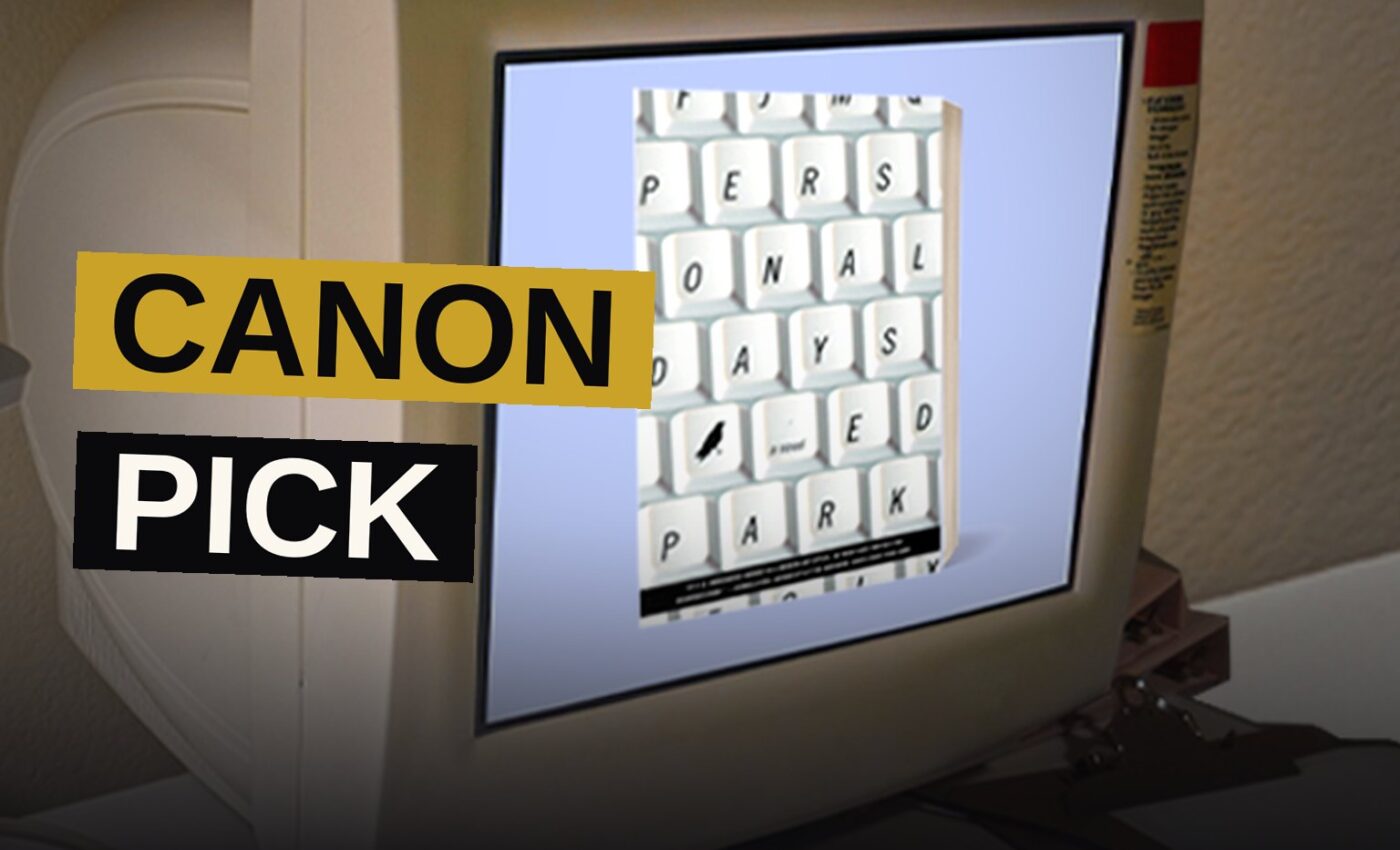
James Folta, managing editor of Points in Case, calls Ed Park’s first novel Personal Days “one of the best comic novels of all time,”. He is starting a new series that recommends books from what he calls the Funny Novel Canon, with Park’s debut work topping the list.
The recommendation kicks off an ongoing series Folta describes as “a working syllabus for literary humorists.” He’s inviting readers to email him suggestions for future installments—”nicely please!” The series is meant to grow over time, with Folta building a shared reading list for anyone who loves literary comedy.
Park’s funny, ambitious career
Folta is quick to note that Park is a serious literary figure. His latest book, Three Tenses, and his Pulitzer Prize finalist Same Bed Different Dreams are “complex without resorting to gimmicks or cheap obfuscation that implies depth,” Folta writes. Park is “a genuinely creative writer, who continues to challenge himself to try something new.”
Folta also points to Park’s broader body of work as evidence of his range. Park’s writing is always “smart and ambitiously challenging in form and structure,” Folta notes. He cites Park’s love of H.S. Keeler’s “web-work” as part of that sensibility.
But the humor is the throughline. Folta points to Park’s collection of short pieces, An Oral History of Atlantis, as some of his funniest writing. Still, it’s Personal Days that earns the top recommendation.
Park and Folta wrote together for McSweeney’s together. “I’, and Folta admits that he is not exactly unbiased when it comes to the matter.
An office full of nothing but gossip
A cast of office workers drift through Manhattan offices belonging to some shadowy firm with vague purposes. Little actual labor appears to get done among them. Instead, they are lost in rumors, romantic feelings, and uncertainty about their colleagues, bosses, and the strange figures who haunt their building.
The novel centers around a central mystery tied to the company, but it earns its reputation through humor rather than suspense. “Park is going for jokes,” Folta writes.
Park builds his story around dry observations, wordplay, and odd specifics that never feel added on or forced. Coworkers develop absurd theories about one another. The office setting—”the most fertile breeding ground for speculation”—gives Park room to push plausibility without breaking it, letting his absurdities bend naturally within it.
The jokes remain firmly rooted in the particulars of office existence. The odd theories and peculiar details arise organically from the workplace, which allows the humor to hit its mark without ever feeling contrived.
Wordplay that drives the plot
Folta makes the case that the wordplay in Personal Days stands out for its quality. What earns laughs are Park’s humorous twists of language and her memorable names, yet these devices serve a purpose beyond mere comedy. Homonyms and mishearings are woven into the story itself, with the plot turning on wordplay and puns at several points.
Folta won’t reveal how the story ends, but he lets slip that the book’s final part takes a big turn, using “a really fun, formal constraint.”. He describes the effect as “a wonderful combination of sitcom and Oulipo.”, noting that Park uses headers and other formal shifts throughout the text to slip in little jokes and manage his pacing.
Funny in ways only writing can be
The humor in Personal Days stands apart because it depends on writing rather than imitation. Folta says the novel earns its laughter through language alone, unlike many humorous novels that borrow their jokes from film and television, writing that reads like transcribed dialogue from the screen.
Park’s approach differs from others; he builds his comedy on jokes and situations that can only exist on the page. This is what sets Personal Days “a very special novel.” apart.
How the comedy functions depends on this difference. Park’s jokes are constructed for the printed page rather than a screen, and that choice is precisely what gives the novel its distinctive quality.
Folta’s series will continue with future recommendations. He’s asking readers to email him with funny novels they love. The pitch is simple: build a canon of literary humor, one book at a time.
Park’s case for the canon
Park’s career supports the argument for his place in that canon. He’s earned a Pulitzer Prize finalist spot. His work is “smart and ambitiously challenging in form and structure,” Folta writes.
Folta says that Personal Days manages to balance formal ambition with genuine humor, something he finds unusual. The novel shows that funny books can match the sophistication of their more serious peers.
The book is built with a playful, deliberate structure that carries through its entire length. The headings, the changes in form, the measured handling of pace—each of these devices works to support the comedy instead of getting in its way.
Here’s what makes Personal Days stand out, according to Folta:
- The wordplay is folded into the plot itself, with homonyms and mishearings driving key turns in the story.
- The office setting lets absurd theories about coworkers bend plausibility without breaking it.
- Park uses formal shifts and headers to deliver jokes and control pacing.
- The final section deploys a formal constraint that Folta won’t spoil.
- The humor relies on jokes that can only work on the page, not on screen.
The opening spot on the Funny Novel Canon goes to Ed Park, and Personal Days earns it. For newcomers, it stands as the starting place. For longtime fans, Folta’s recommendation simply confirms what they already suspected.
Source: lithub.com
Get the Notebook.
The day's best stories and every fresh verdict, in plain English, in your inbox by seven. One email a day, no more.