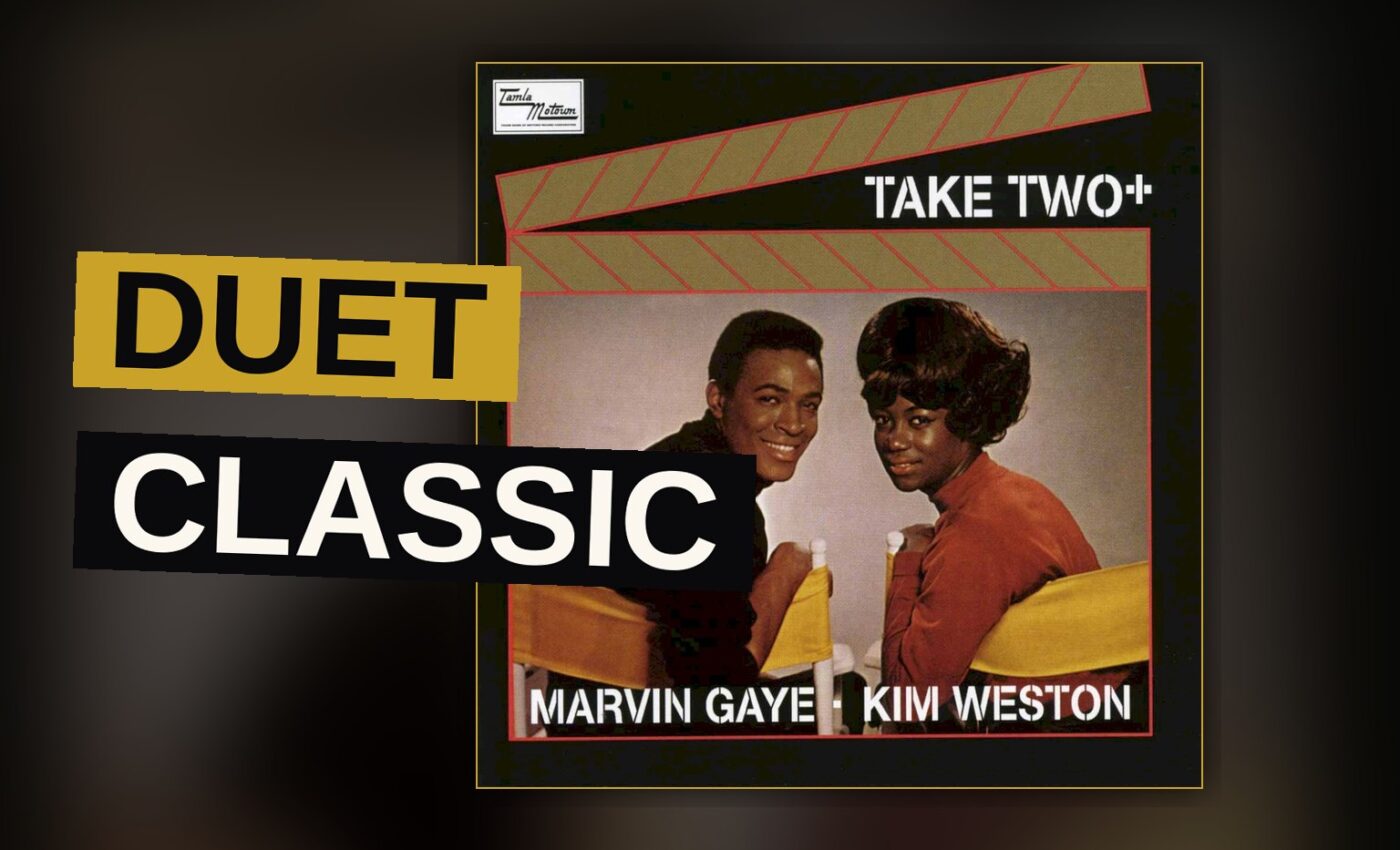
Marvin Gaye and Kim Weston’s Take Two is a 1966 Motown album built on a simple premise: put two of the label’s strongest voices in a room, hand them a dozen songs, and let the chemistry do the work. It is not a concept record. It is not a grand statement. It is a duet album in the classic sense—two singers trading lines, sharing choruses, and trying to make each track feel like a conversation.
The record’s ambitions are modest. That is not a knock. The album knows exactly what it is: a polished, professional showcase for a pairing that worked well even if it never reached the heights of Gaye’s later work with Tammi Terrell.
The title track leads the record, and it is the reason most people still remember this album at all. “It Takes Two” opens with a sharp, insistent beat and a horn line that grabs you immediately. Gaye and Weston trade verses with real energy, and the chorus lands hard. It is the kind of uptempo soul that Motown did better than anyone in 1966, and it remains the clear standout here.
The song is a genuine peak—fast, steamy, and confident. It comes close to equaling any quick duet number Gaye ever cut at the label, and it sets a bar the rest of the album spends its runtime trying to reach.
Opening With the Strongest Card
After the title track, the record settles into a more measured groove. “I Love You, Yes I Do” is a slower, sweeter number that lets both voices breathe. It is pleasant but slight, the kind of track that works in the moment and fades quickly after.
“Baby I Need Your Loving” follows, and it is a cover of the Four Tops hit. Gaye and Weston do not reinvent it, but they give it a softer, more conversational feel. The song’s melody is strong enough to carry the performance, and the duo’s harmonies on the chorus are clean and effective. It is not a revelation, but it is solid.
“It’s Got to Be a Miracle (This Thing Called Love)” picks the pace back up. The title is a mouthful, and the song leans into a gospel-tinged arrangement that suits Weston’s voice particularly well. She takes the lead on the verses with a warmth that Gaye matches on the responses. The track is one of the better deep cuts here, even if it never quite catches fire the way the opener does.
“Baby Say Yes” closes out this early run with a playful, call-and-response structure. It is charming, but the material is thin. The song repeats its hook a few times too many, and while the singers sell it, the track does not leave much of an impression.
The Ballad That Earns Its Place
“What Good Am I Without You” is the second track that has been singled out, and it is easy to hear why. It is a ballad, slower and more serious than most of what surrounds it. The arrangement is spare, letting the voices carry the weight.
Gaye and Weston both commit fully to the performance, and the result is the most emotionally direct moment on the album. The song asks a simple question and lets the singers answer it together, and the harmony work here is the best on the record. It is a quiet highlight, the kind of track that rewards a second listen.
“Till There Was You” is a cover of a Broadway standard, and it is an odd fit. The gentle, old-fashioned melody does not sit naturally in a Motown duet format. Gaye and Weston do their best with it, but the song clashes with the label’s signature sound. It is not a failure, exactly, but it is the most forgettable track on the album.
“Love Fell on Me” rights the ship with a brighter, more rhythmic arrangement. The song moves quickly, and the duo’s interplay feels more relaxed here. It is a minor track, but it is enjoyable in the moment.
Covers and Originals in the Back Half
“Secret Love” is another cover, and like “Till There Was You,” it feels slightly out of place. The song’s roots in the film Calamity Jane do not translate perfectly to the Motown style, though Gaye and Weston handle it with more polish than the previous standard. It is competent but unremarkable.
“I Want You ‘Round” brings the energy back up. The track has a sharper, more insistent groove, and the singers lock into it well. It is not on the level of the opener, but it is one of the more consistent performances on the back half.
“Heaven Sent You, I Know” is a slower number that leans into Weston’s strengths. She carries much of the melody, and Gaye provides steady support. The song is pleasant but does not build to much. It feels like a filler track, competently performed but lacking a memorable hook.
“When We’re Together” closes the album on a lighter note. It is a straightforward, upbeat duet that sums up the record’s mood: friendly, polished, and uncomplicated. The song does not try to do anything bold, and it does not need to. It ends the album cleanly, leaving the listener with the sense that they have heard a solid, professional set.
What the Duo Achieves
The chemistry between Gaye and Weston is the album’s core asset, and it is a real one. They are not as great a team as Gaye and Tammi Terrell, who would define his duet career a year later. But Weston is a strong partner in her own right. She has a bigger, more theatrical voice than Terrell, and she pushes Gaye to match her energy on the faster tracks.
On the ballads, she softens him, drawing out a gentler side. The pairing works. It just does not reach the level of greatness that Gaye would find with Terrell.
What holds the album back is the material. The title track is a genuine classic, and “What Good Am I Without You” is a strong ballad. The rest of the record is filled with covers and lightweight originals that do not give the duo much to work with.
- “It Takes Two” — the clear standout, a steamy uptempo number
- “What Good Am I Without You” — the best ballad, spare and direct
- “Baby I Need Your Loving” — a solid cover with clean harmonies
- “It’s Got to Be a Miracle (This Thing Called Love)” — a strong deep cut
The pop standards feel like odd choices, and several of the original tracks are built on thin hooks that repeat without developing. The singers elevate the material, but they cannot make every song memorable.
Final Call
Take Two is a good album, not a great one. It is the sound of two talented singers doing professional work on a set of uneven songs. The highlights are real, and the chemistry is genuine.
But the record’s best moments are front-loaded, and the back half never quite recovers the energy of the opener. It is worth hearing for “It Takes Two” alone, and “What Good Am I Without You” earns its reputation. The rest is well done but not on the same level.
For a Motown duet record from 1966, that is a fair outcome. The album does what it sets out to do, and it does it cleanly. It just does not reach for more.
Get the Notebook.
The day's best stories and every fresh verdict, in plain English, in your inbox by seven. One email a day, no more.
- It Takes Two2:53
- I Love You, Yes I Do2:18
- Baby I Need Your Loving3:09
- It's Got to Be a Miracle (This Thing Called Love)3:27
- Baby Say Yes3:12
- What Good Am I Without You2:50
- Till There Was You2:24
- Love Fell on Me2:25
- Secret Love2:44
- I Want You 'Round2:24
- Heaven Sent You, I Know3:01
- When We're Together2:36