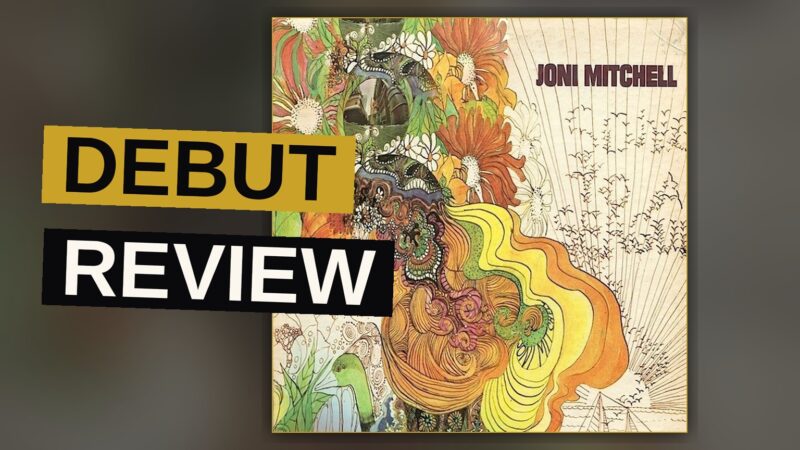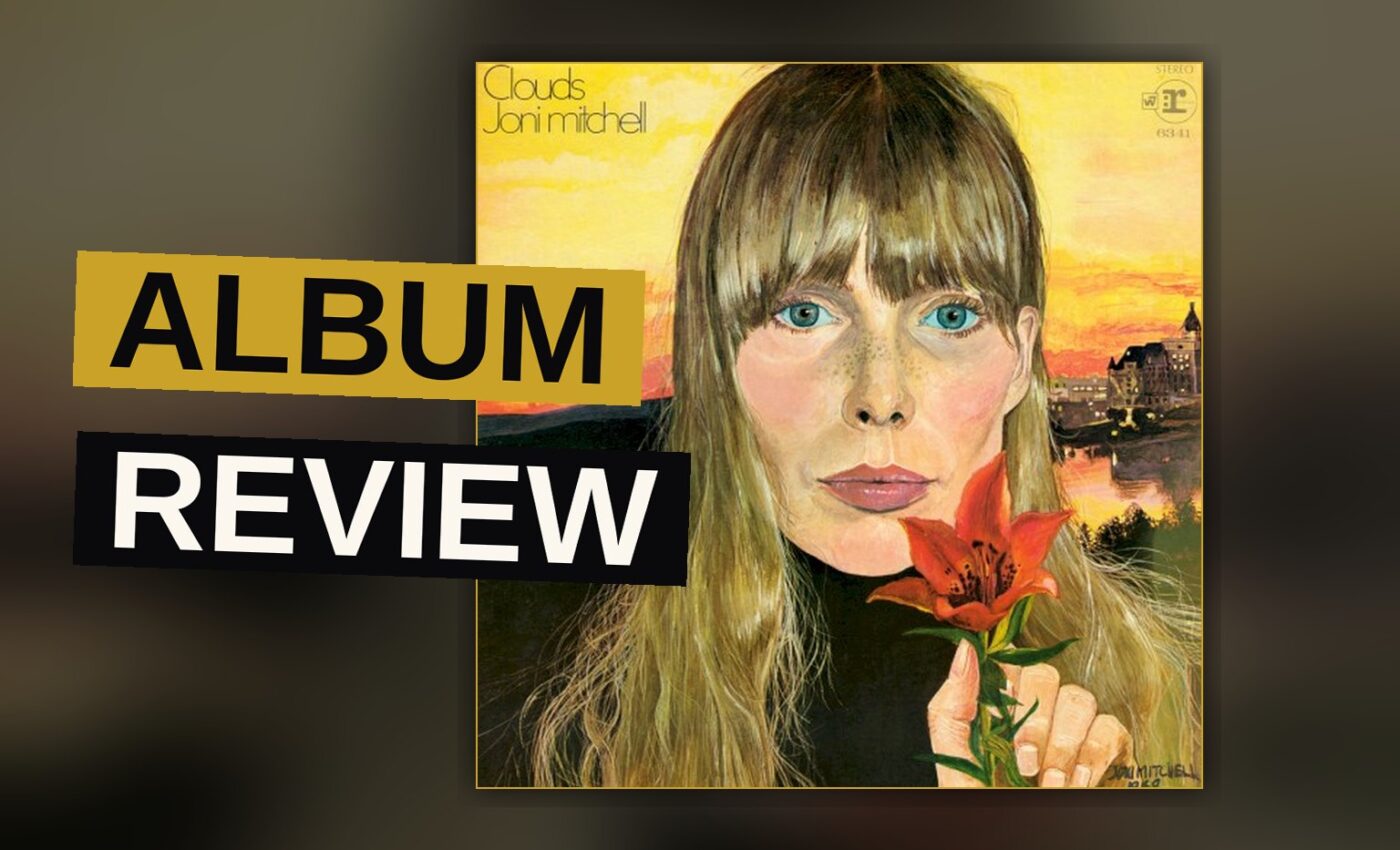
Joni Mitchell’s second album, Clouds, is the sound of a songwriter deciding who she is. Released in 1969, it arrived a year after her debut, Song To A Seagull, and it finds her trading the murky, overstuffed arrangements of that record for a stark, intimate clarity. Here, it is mostly just her voice, her guitar, and her piano, and the songs have to stand on their own. They mostly do. Clouds is a beautiful, inspired folk record, and it is the moment Mitchell stopped sounding like a promising imitator and started sounding like herself.
The album opens with Tin Angel, a slow, drifting ballad that sets the tone for everything that follows. It is a love song, but not a simple one; Mitchell sings about a relationship with a wariness that feels adult and earned. The melody is delicate, almost fragile, and her voice bends around the words with a control that is striking for a 25-year-old. It is a confident opening statement, and it announces that this record will not be rushed.
Chelsea Morning and the Bright Opening Stretch
Chelsea Morning follows, and it is a burst of light after the dusk of the opener. This is the song that would later become a standard, covered by many artists over the decades, and you can hear why. The imagery is vivid — sun on the pavement, bells in the chapel — and the melody is so catchy it feels effortless. Mitchell’s delivery is playful, almost giddy, and the song captures a specific kind of urban happiness that few writers have ever matched. It is a pop song in folk clothing, and it is near-perfect.
I Don’t Know Where I Stand slows things down again, and it is a masterclass in ambivalence. The narrator is waiting for a phone call, unsure of where she stands with her lover, and Mitchell captures that anxious limbo with remarkable precision. The lyrics are plain and direct, but the way she sings them, with a quiver of uncertainty, makes the simplicity feel profound. It is a quiet song, but it lingers.
That Song About the Midway is where Mitchell starts to stretch. It is a longer, more narrative piece, with a folk-rock lilt that hints at where she would go on later records. The song tells the story of a carnival worker, and Mitchell’s voice takes on a theatrical quality as she sketches the scene. It is not as immediate as the tracks around it, but it rewards attention, and it shows a writer willing to experiment with structure and character.
Roses Blue and the Middle Turn
Roses Blue is the strangest track on the album, and the most divisive. It is a blues-tinged number with a hypnotic, almost trance-like rhythm, and the lyrics are more abstract than anything else here. Mitchell sings about a woman named Rose and the color blue, and the meaning is elusive. Some listeners find it muddy; others find it haunting. It sits in the middle of the record like a puzzle, and it is the track most likely to split an audience. It is not a failure, but it is the least immediate song on Clouds, and it takes the most effort to unlock.
The Gallery is a return to more solid ground, and it is one of the best songs Mitchell ever wrote. It is a portrait of a man who is a collector of women, a gallery where he hangs his conquests, and Mitchell’s disdain is sharp but controlled. The melody is gorgeous, and the lyrics are cutting, painting a picture of a man too busy with his collection to notice the woman in front of him.
It is a breakup song, but it is also a critique of a certain kind of male ego, and it lands with a precision that is almost painful. This is the song that makes the album essential.
I Think I Understand is a gentler, more philosophical number. Mitchell sings about the failure of a relationship and her attempts to make sense of it, and the tone is resigned rather than bitter. The melody is simple, almost hymn-like, and her voice carries a weariness that feels earned. It is not a standout, but it is a solid album track that keeps the record’s mood consistent.
The Fiddle and the Drum and the Closing Pair
Songs to Aging Children Come is a brief, almost a cappella piece that functions as a palate cleanser. The lyrics are cryptic — aging children, songs that come to them — and the arrangement is sparse, just Mitchell’s voice and a little guitar. It is the kind of track that feels like an interlude, and it works as one. It is not a song you will hum, but it adds texture to the record’s second half.
The Fiddle and the Drum is a protest song, and it is one of the most direct political statements Mitchell ever made. The lyrics are a plea for peace, framed as a conversation between a fiddle and a drum, and the message is unambiguous. The narrator loves the fiddle but cannot stand the drum, and the metaphor is clear. It is a simple song, almost folkloric in its construction, but it is effective, and it shows that Mitchell could engage with the world beyond her own heart without losing her lyrical gift.
Both Sides, Now as the Closer
The album closes with Both Sides, Now, and it is the song that defines the record. Mitchell wrote it after reading a passage in a novel, and the song asks a question that has haunted listeners for decades. It is a song about the limits of understanding, about looking at clouds and love and life from every angle and still coming up short.
Mitchell was 25 when she recorded it, but it sounds like the work of someone much older, someone who has already been disappointed and is learning to live with it. The melody is achingly beautiful, and her vocal performance is flawless. It is the best song on the album, and it is one of the best songs of the decade.
Ranking the Tracks
Clouds is not a perfect record. Roses Blue is a stumble, and a few of the middle tracks — I Think I Understand, Songs to Aging Children Come — are more workmanlike than inspired. But the highs are so high that they overshadow the low points. Chelsea Morning is a pop gem, The Gallery is a sharp, bitter masterpiece, and Both Sides, Now is a song that will outlive us all.
The album also marks a clear step forward from Mitchell’s debut. Where Song To A Seagull was wordy and uncertain, Clouds is focused and confident. Mitchell has pared back her arrangements and let her voice and her words carry the weight, and they are strong enough to do it.
- Both Sides, Now — a career-defining song, and the album’s emotional peak.
- The Gallery — the sharpest writing on the record, and the most cutting.
- Chelsea Morning — pure, joyful pop-folk, and impossible to resist.
- Tin Angel — a delicate, confident opener that sets the tone.
- I Don’t Know Where I Stand — a quiet, precise portrait of anxiety.
- That Song About the Midway — ambitious and narrative, if not immediate.
- The Fiddle and the Drum — a simple, effective protest song.
- I Think I Understand — solid, but unremarkable.
- Songs to Aging Children Come — a brief, cryptic interlude.
- Roses Blue — the weakest track, and the hardest to love.
As a whole, Clouds is a record that rewards patience. It is not flashy, and it does not announce itself with fireworks. It is a quiet album, a collection of songs that reveal their depths slowly, and it gets better with every listen. It is also a crucial document of an artist in transition, a songwriter who had found her voice and was just beginning to understand what she could do with it.
8 of 10.
Get the Notebook.
The day's best stories and every fresh verdict, in plain English, in your inbox by seven. One email a day, no more.
- Tin Angel4:09
- Chelsea Morning2:35
- I Don't Know Where I Stand3:13
- That Song About the Midway4:38
- Roses Blue3:52
- The Gallery4:12
- I Think I Understand4:28
- Songs to Aging Children Come3:10
- The Fiddle and the Drum2:50
- Both Sides, Now4:35