
There was a season, not so long past, when the whole singular business of Cookie Clicker seemed a jest and nothing graver. A man presses upon a cookie; the cookie increases; the increasing continues until reason itself grows numb. I confess I fell beneath its spell as readily as any acquaintance of mine, and many upon Twitter and Reddit made similar admission, as though owning to some pleasurable madness.
Of Origins
Cookie Clicker was not alone in its kind. Before it came Ian Bogost’s Cow Clicker, a deliberate jest upon the whole idle scheme. But Cookie Clicker bore no such comic intent, and Candy Box arrived at nearly the same hour, so that the public wondered whether the jest was upon them, or whether there was no jest at all—only the dreadful, astonishing truth that beholding numbers grow is its own peculiar reward.
More than ten years have since passed, and the offspring of that jest have multiplied beyond counting. Last week alone, 54 new idle works appeared upon Steam, swelling the total tagged “idler” to some 4,314 titles. The kind, once an oddity, now stands as an empire of its own, vast and strange.
A Few Worthy of Note
Not all of this great number is contemptible. Next Reign: Kingdom offers work of careful, evident labor and music of feeling, lending the pressing of buttons some semblance of soul. We Need More Humans! presents the novel and somewhat troubling premise of carrying off mankind with increasing skill, and possesses a look distinct from its brethren. Zad Archery’s look is plain enough to be found upon a hundred other works, yet it has gathered nearly 700 “mostly positive” opinions, proof that even a common design may prosper.
These, however, are but minor lords beside the reigning masters of the kind. Bongo Cat commands some 135,803 souls at this very hour; Task Bar Hero holds 66,292 more; even humble Banana claims 3,628 devoted followers. Such numbers make the newer works appear small beside them, who must content themselves with rising, if only a little, above a great tide of mechanical likeness.
The Trouble of Likeness
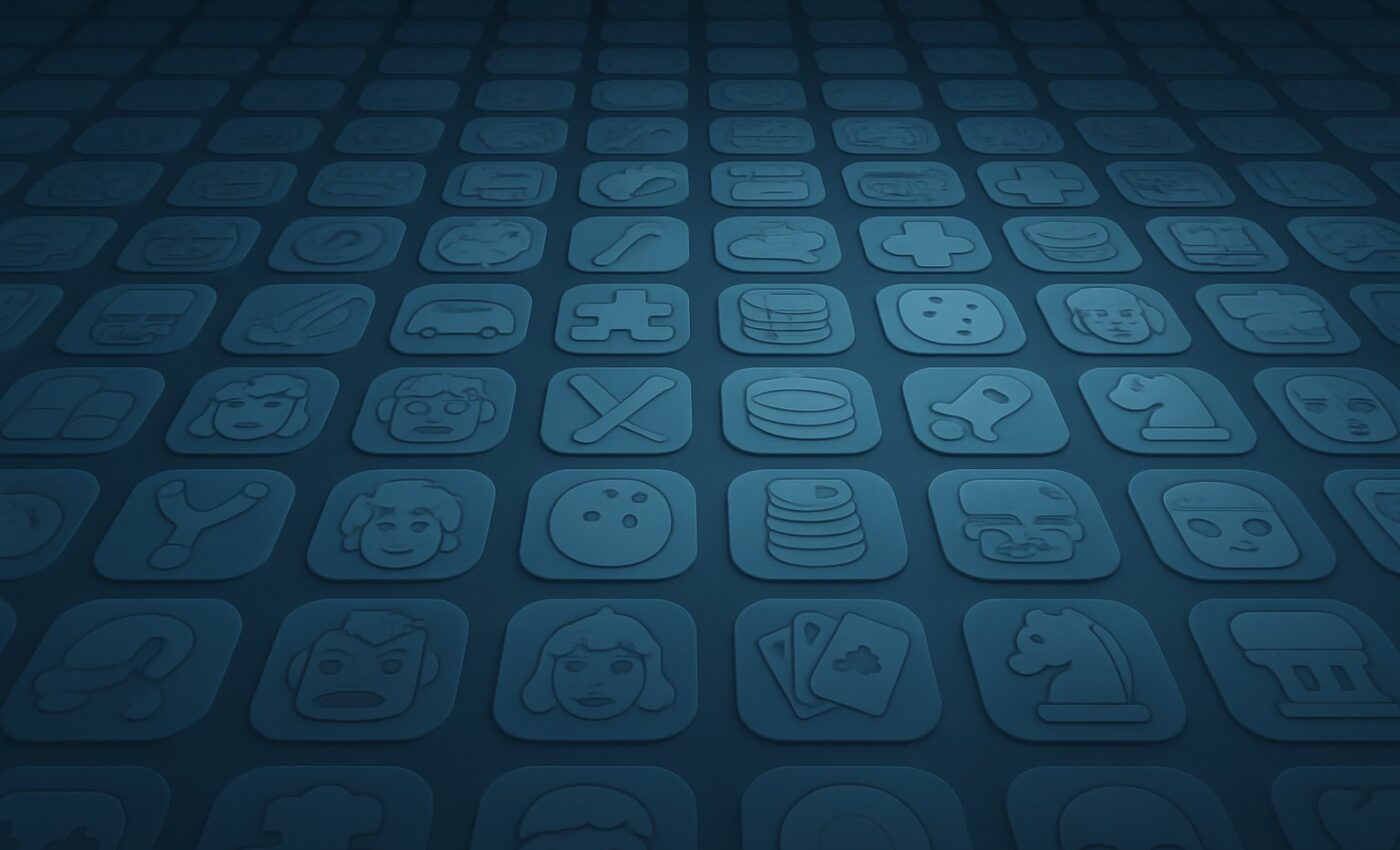
For likeness is the true affliction here. A great many of last week’s works bear an odd and singular resemblance to one another—not merely in scheme but in appearance, in the very color of their faces. A peculiar shade of blue haunts these faces like a recurring ghost, without charm and fixed in its lasting, as though called forth from some shared and dreary well.
The reason, upon inspection, proves not remarkable at all. Many of these works own plainly to artificial hands in their making. One declares its pictures and other portions “made by machine.” Another states plainly that its materials “were made using machine aid,” its maker admitting no skill of the pencil. Brainrot Clicker, in keeping with its name, discloses matter of picture, of word, and of labor born of like origin, while Path of the Idle Cultivator confesses to employing such aid “for its faces and some translations.”
These are merely a few specimens among many. Should one look through the whole list, without order, of idle works, the same tired blue, the same hollow face, the same absence of a human hand appears again and again, until the games run together into a single mass scarcely to be told apart—the fruit of a mill rather than a maker’s hand.
A Closing Reflection
What began as an amusing jest at the expense of vain progress has become, by strange and inevitable turning, a business of the vain made wholesale. Cookie Clicker asked us to laugh at the vacancy of continual pressing; its heirs, born of mechanical devices and borrowed code, ask nothing at all—they merely appear, all the same, all blue, all careless of whether we take notice. Perhaps that very carelessness is the truest jest of all.
Get the Notebook.
The day's best stories and every fresh verdict, in plain English, in your inbox by seven. One email a day, no more.