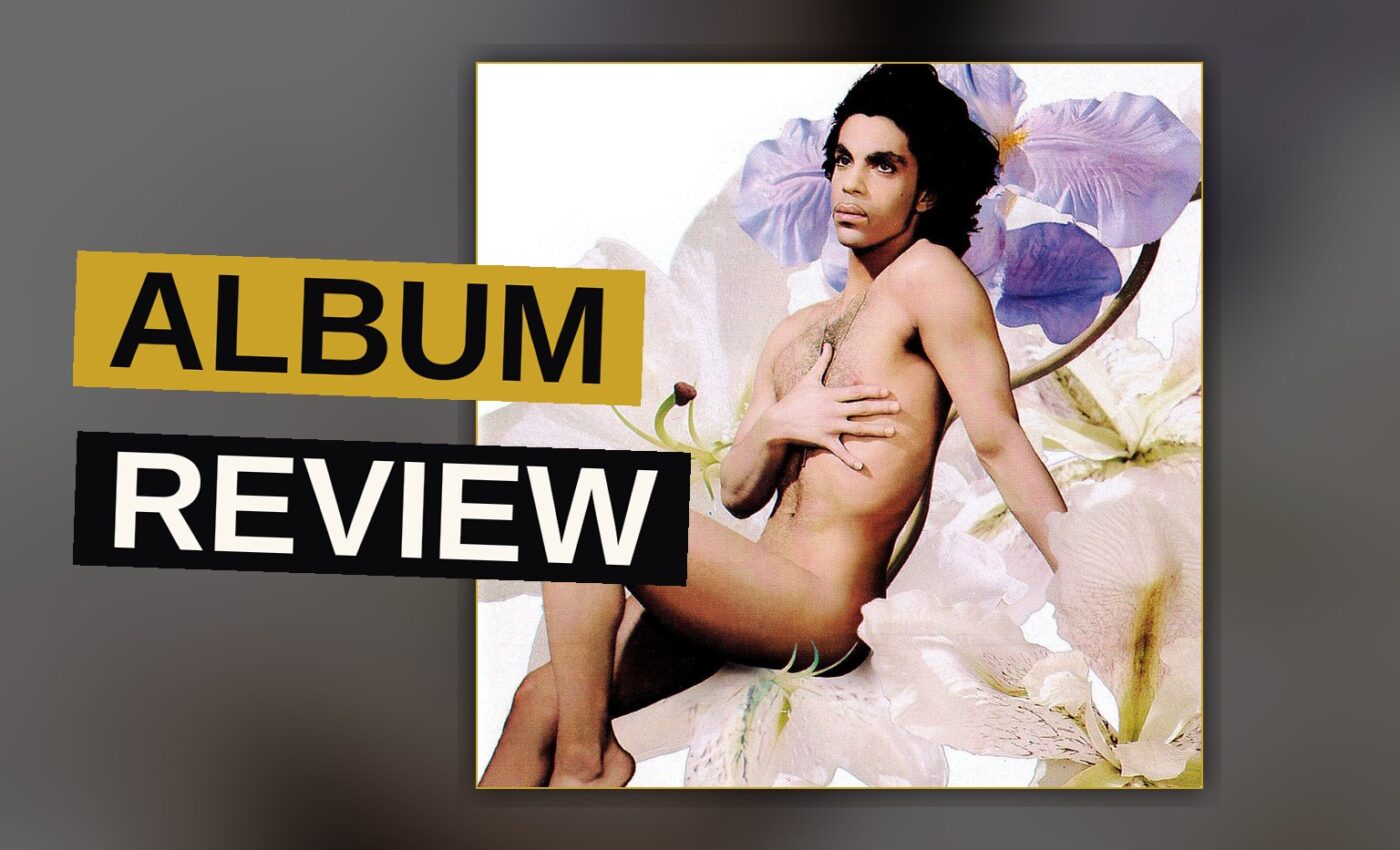
Prince’s 1988 album Lovesexy is a strange, joyful, and defiantly odd record. It arrived at the peak of his imperial phase, right after the blockbuster Sign o’ the Times and the shelved, dark Black Album. Instead of following either, Prince made a bright, spiritual, and sexually charged pop album that runs just 45 minutes across nine tracks. It is not a concept album in the strict sense, but it is a deliberate sequence, a journey from temptation and chaos toward love and positivity. The title is the thesis: love and sex are not separate forces but one united, holy power.
The album was a commercial disappointment by Prince’s standards. Despite being critically acclaimed, Lovesexy became his first album since 1981’s Controversy that didn’t crack the top 10. It was also divisive. Some heard a mess of self-indulgence and murky spirituality. Others, like the writers at Sputnikmusic, heard a fine release that gets far too much grief. “It is absolutely ridiculous how much flack this album really gets,” one review said. “While it is flawed in certain places, it is still a fine release from the Purple Prince.”
The flaws are real. The cover art — Prince naked on a lily, staring into the camera — made retailers and radio uncomfortable. The decision to release the album as a single continuous track on CD in some regions made it hard to skip songs. And the lyrics, which blend gospel, new-age philosophy, and explicit carnality, can be exhausting.
But the music is rarely less than thrilling. As another Sputnikmusic review put it: “This is a fantastic album, musically, so all is forgiven.”
Opening With 👁 No
The album opens with “👁 No,” a five-minute, 47-second burst of funk-gospel that sets the stakes. It is a song about saying no to the devil, no to lies, and no to the easy path. The track is built on a rubbery bassline, handclaps, and a choir that pushes Prince’s voice higher and higher.
It is also, notably, the only song on the record that directly addresses the Black Album drama. Prince sings about a record that was too dark, and the lyrics work as a confession, a rebuke, and a dance track all at once. The title is a pun — “eye no” — and it works both as a declaration of awareness and a physical wink.
Next comes “Alphabet St.,” the closest thing the album has to a hit single. It is a bright, bouncy pop-funk jam that runs five minutes and 38 seconds. The song is a celebration of a street where everything is possible, where the alphabet is a playground and the letters spell out desire.
Prince’s vocal is loose and playful, and the track’s central riff is pure joy. It is also a subtle dig at the music industry, with Prince singing about people who talk about letters while he just wants to dance. It is the most accessible moment on the record, and it earned its place as a single.
“Glam Slam” follows, a five-minute, six-second track that is pure theatrical funk. The title is a phrase Prince coined to describe his own brand of showmanship — a mix of glamour and slam, of style and impact. The song is built on a chugging guitar riff and a martial drumbeat, and the lyrics are a rallying cry for a world where everyone gets a chance to shine.
It is not subtle. It is not meant to be. It is a stadium anthem that never quite found its stadium, but it works as a statement of intent. Prince is not just making music; he is making a world.
Anna Stesia and the Spiritual Turn
The fourth track, “Anna Stesia,” is the album’s heart. At four minutes and 58 seconds, it is a slow-building ballad that starts with a lone piano and Prince’s voice in a near-whisper. The song is a prayer, a confession, and a seduction.
Prince sings about a young woman named Anna Stesia, but the name is a pun that suggests numbness, and the song is about waking up from that state. It builds from quiet introspection to a full gospel climax, with Prince singing about finding God through love. It is the most naked track on the record, both emotionally and spiritually.
It is also the one that divides listeners most. Some find it transcendent. Others find it overwrought. Both are right.
“Dance On” is the fifth track, and it is a sharp turn. At three minutes and 46 seconds, it is the shortest song on the album, a taut, angry funk track about the ills of the world — drugs, violence, greed — and the imperative to keep dancing anyway. The song is a protest that refuses to stop moving.
Prince’s vocal is clipped and urgent, and the track’s horn stabs cut through the mix. It is a reminder that Lovesexy is not all bliss; it is also a record about the world outside the bedroom and the church.
The Title Track’s Thesis
The title track, “Lovesexy,” closes out the first half of the record at five minutes and 51 seconds. It is a slow, sensual groove that defines the album’s central idea. Prince sings about love and sex as a single force, a “lovesexy” that is both physical and divine.
The track is built on a deep bassline and a lazy, hypnotic rhythm. It is the most purely carnal song on the record, but it is also the most explicitly spiritual. The two are not in tension; they are the same thing. This is the thesis statement, and it lands.
“When 2 R in Love” is the seventh track, a three-minute, 58-second ballad that is the quietest moment on the record. It is a slow, synth-heavy duet with Prince’s own layered vocals, and it is about the intimacy of two people fully present with each other. The song is simple, almost fragile. It is a breather after the intensity of “Lovesexy,” and it works as a palate cleanser. It is not a highlight, but it earns its place.
I Wish U Heaven and the Long Close
“I Wish U Heaven” is the eighth track, and at two minutes and 47 seconds it is a burst of pure, uncomplicated joy. The song is a gospel-tinged pop number with a simple message: I wish you heaven, whatever that means to you. It is the most direct and least complicated song on the record, and it is all the better for it.
The chorus is an earworm, and the track’s brevity is a virtue. It is one of the songs critics singled out, and it is easy to hear why. It is a gift.
The album closes with “Positivity,” a seven-minute, 14-second epic that is the longest track on the record. It is a slow-burning funk jam that builds from a single riff into a full-band celebration. The lyrics are a sermon about choosing love over hate, light over dark, positivity over negativity.
Prince repeats the title like a mantra, and the song’s final minutes are a sustained, ecstatic release. It is the perfect closer, a summary of everything the album has been trying to say. It is also, at times, too long. The track could lose two minutes without losing anything essential. But the excess is part of the point. Lovesexy is a record that refuses to be efficient. It wants to overwhelm you.
Defending the Divisive Record
The album’s reputation has improved over time, but it remains a divisive entry in Prince’s catalog. The critics who dismissed it in 1988 heard a star who had lost his edge, a man who had traded sharp social commentary for vague spiritual platitudes. There is some truth to that. Sign o’ the Times was a record about the world. Lovesexy is a record about Prince.
But that inward turn is not a weakness. It is a choice. Prince was not trying to repeat himself. He was trying to make a record that was purely his own, a record that could only exist in the space between his ego and his faith.
The album is also a technical marvel. The production is dense and layered, with Prince playing almost every instrument. The basslines are elastic, the drums are crisp, and the vocals are pushed to the front of the mix like they are the point of the whole exercise. The sequencing is deliberate, with each track flowing into the next.
It is an album that rewards listening from start to finish, which is exactly how Prince wanted it consumed. The single continuous track format on CD was not a gimmick; it was a demand.
The flaws are still there. The lyrics can be preachy, and the spirituality can tip into self-help. “Anna Stesia” and “Positivity” both overstay their welcome by a chorus or two. And the album’s refusal to engage with the outside world can feel like a retreat. But these are the flaws of ambition. Prince was reaching for something bigger than a hit record. He was reaching for a statement.
The Score
Lovesexy is not Prince’s best album. That title still belongs to Purple Rain or Sign o’ the Times. But it is one of his most interesting, a record that rewards patience and repeated listens. It is a fine release from a genius at the height of his powers, even when those powers were pointed inward.
The Sputnikmusic review got it right: “It is absolutely ridiculous how much flack this album really gets.” It is flawed, yes. It is also strong, and it is often misunderstood. The album is a time capsule of a moment when Prince could do anything and chose to do this. It is a record about love, sex, God, and the space where they all meet.
It is not for everyone. It was never meant to be. But for those who meet it on its own terms, it is a joy that has only grown richer with time.
Key Numbers
- Artist: Prince
- Album: Lovesexy
- Release year: 1988
- Total running time: 45 minutes
- Track count: 9
- Longest track: “Positivity” (7:14)
- Shortest track: “I Wish U Heaven” (2:47)
- Commercial note: First Prince album since Controversy (1981) not to crack the top 10
Track Order
- “👁 No” (5:47)
- “Alphabet St.” (5:38)
- “Glam Slam” (5:06)
- “Anna Stesia” (4:58)
- “Dance On” (3:46)
- “Lovesexy” (5:51)
- “When 2 R in Love” (3:58)
- “I Wish U Heaven” (2:47)
- “Positivity” (7:14)
Get the Notebook.
The day's best stories and every fresh verdict, in plain English, in your inbox by seven. One email a day, no more.
- 👁 No5:47
- Alphabet St.5:38
- Glam Slam5:06
- Anna Stesia4:58
- Dance On3:46
- Lovesexy5:51
- When 2 R in Love3:58
- I Wish U Heaven2:47
- Positivity7:14