
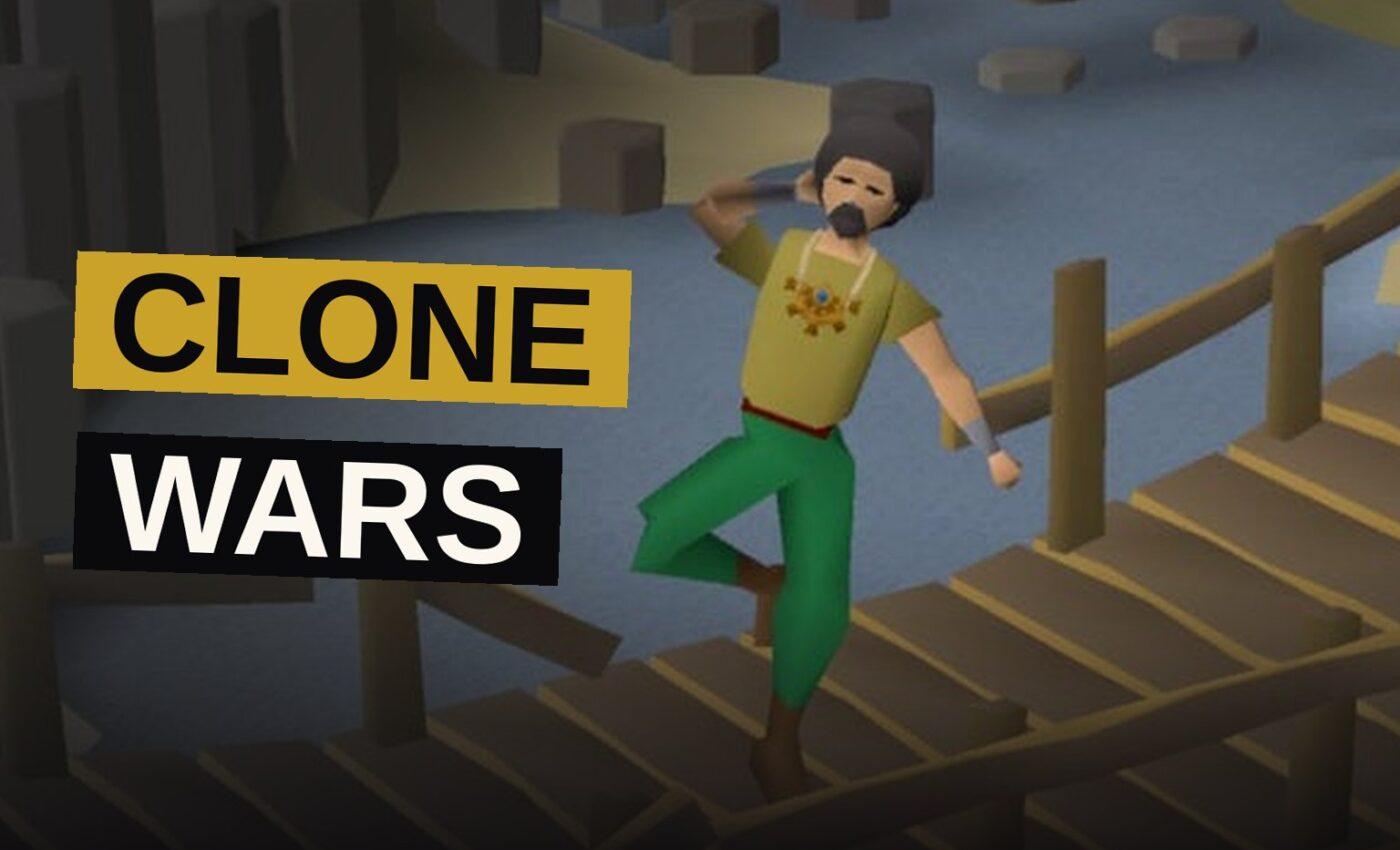
A worker at OpenAI created a web version of Old School RuneScape that uses generative AI, naming it Elderwood. Players came to it, the RuneScape community reacted with anger, and the game was taken down within days following a takedown notice from Jagex.
Rohan Varma, an OpenAI employee, built a playable version of RuneScape using GPT-6 Astra. He posted about it on X, sharing a video made with gen-AI that showed a character spawning outside Lumbridge castle with bread, coins, and basic tools in its inventory. That character fought giant rats, chopped trees, and equipped steel armour. The game looked nearly identical to Old School RuneScape, except for a few small inconsistencies.
The Old School RuneScape community took notice of Varma’s posts quickly, and their reaction was negative.
The Reddit thread that started it
The 2007scape subreddit became a forum for players to air their grievances, and the complaints arrived quickly and without much restraint.
“What in the vibe coded shit is this. They even straight up ripped art assets shameless,” wrote user RangeCreed.
Lekamil was added by “Love the tweet format. AI bros can only speak in numbers and bullet lists (ideally both at once),”.
X user Toppo summarised the situation more briefly: “tl;dr garbage.”
The day after the Reddit post sent player numbers up, Elderwood received an update that added “lots of content moderation”, along with two more regions drawn from RuneScape: Varrock and Falador.
What Elderwood actually was
Varma constructed Elderwood using GPT-6 Astra, which is OpenAI’s most recent model, to create the game. It became a playable, multiplayer browser-based recreation of Old School RuneScape, one that did not require players to download any software to access it. The outcome was a working, albeit rough, version of the original game.
Varma’s uploaded footage began with a character creation screen before a spawn point appeared outside Lumbridge castle. The player battled giant rats, cut down trees for logs, and put on steel armour. Every element of the presentation — the look of the world, the interface, the arrangement of the map — matched the original game almost perfectly. The game also drew on RuneScape’s art assets directly, which is what drew much of the community’s anger.
“Feel the AGI,” Varma wrote in the video’s caption.
What was on display was a bold undertaking: a working, playable knockoff of a cherished game, constructed in mere days using AI tools, put before the public as proof of what GPT-6 Astra was capable of producing.
The farewell message
The site went dark last night, and when it did, a farewell message took its place.
The text began with an opening line: “We received a notice from Jagex asking us to take down the website. Following that notice, we are discontinuing Elderwood’s operation, and the game is no longer available,”.
The game Elderwood started as a browser-based multiplayer adventure modeled on RuneScape. Within a few short days, it expanded into a shared world where players explored, honed their skills, undertook quests, traded, and fought duels together—each step shaped by the players themselves, who arrived to play and offer suggestions.
“Thank you to everyone who joined us. For the levels earned, the laughs in chat, the suggestions, the patience with bugs, and all the little moments in between: you made this a joy to build and a world worth sharing. We’re keeping the high scores available as a record of what you achieved together.”
The message did not land well.
Players respond to the shutdown
Players who follow RuneScape spotted the farewell message and examined it right away. Among those who responded, the one with the highest number of likes was Big_Necessary_5002.
They wrote it down, “Why [are] they acting as if they had some glorious adventure and legacy to leave behind lol,” as a way to make their point clear.
Many players felt the same way about the farewell message. They found it excessively dramatic, almost ridiculous, a grand send-off for a project they believed was nothing more than an AI-generated knockoff that stole assets.
What the clone stood for was the real source of the community’s anger, not the clone itself.
Why the RuneScape community is on edge
For years now, the RuneScape community has had to cope with the drawbacks of generative AI. These tools allow AI agents to run bots within the game, and they risk making an ongoing issue even worse. Developers and players alike have been fighting this problem for years, and the technology appears likely to keep complicating their efforts.
It hurts to see a game you love almost exactly copied and repeated. It hurts even more to watch someone build it in days using an AI model they’re showing off. The community’s reaction followed right along with what anyone could have guessed.
Jagex steps in
Elderwood’s operators received a message from Jagex, the company behind RuneScape, requesting they remove the website. The game was then shut down after that request.
Jagex has not made a public statement about the takedown beyond the notice itself. The company’s action was swift — the game appeared this week and was gone by last night. The notice was enough. Elderwood’s operators discontinued the game immediately.
What remains is the record of what players managed to achieve during the game’s short run, with the high scores still on display for anyone who cares to look.
What this means for AI-built games
Varma constructed an MMO-like game using GPT-6 Astra, and it took days to build. The result works well enough to play. Elderwood shows how rapidly generative AI can produce a playable game — and how fast that game can draw legal attention. The technology behind it is clearly capable of producing something that looks and plays like a real game.
The catch is that it was built by copying an existing game’s assets and design wholesale. That is not a sustainable model for game development. Jagex’s notice came quickly, and the project folded just as fast.
Whether generative AI can create original games without copying existing work remains unresolved. Elderwood does not settle that issue. Instead, it merely demonstrates what occurs when the technology is directed at an existing game and instructed to reproduce it.
The real RuneScape is still there
Jagex has just added two new quests to Old School RuneScape, and both of them sound pretty unusual. In one, you talk to crabs and organise a musical number; in the other, you can adopt stray dogs.
Sometimes you just can’t beat the original.
The Elderwood servers are no more, yet the farewell message remains posted, along with the standing high scores. That episode demonstrated two things: first, how swiftly AI can duplicate a cherished game; second, how swiftly those who cherish that game will resist.
Players came to it, some took offense, and it was closed down. When all was said and done, it proved a short experiment that confirmed what RuneScape players had always believed: the original game deserves protection.
Key facts
- Game: Elderwood, a browser-based clone of Old School RuneScape
- Creator: Rohan Varma, an OpenAI employee
- AI model used: GPT-6 Astra
- Timeline: Appeared this week, shut down last night
- Shutdown cause: Notice from Jagex requesting takedown
- Copied areas: Lumbridge, Varrock, Falador
- Current status: Game offline, high scores still available
Source: eurogamer.net
Get the Notebook.
The day's best stories and every fresh verdict, in plain English, in your inbox by seven. One email a day, no more.