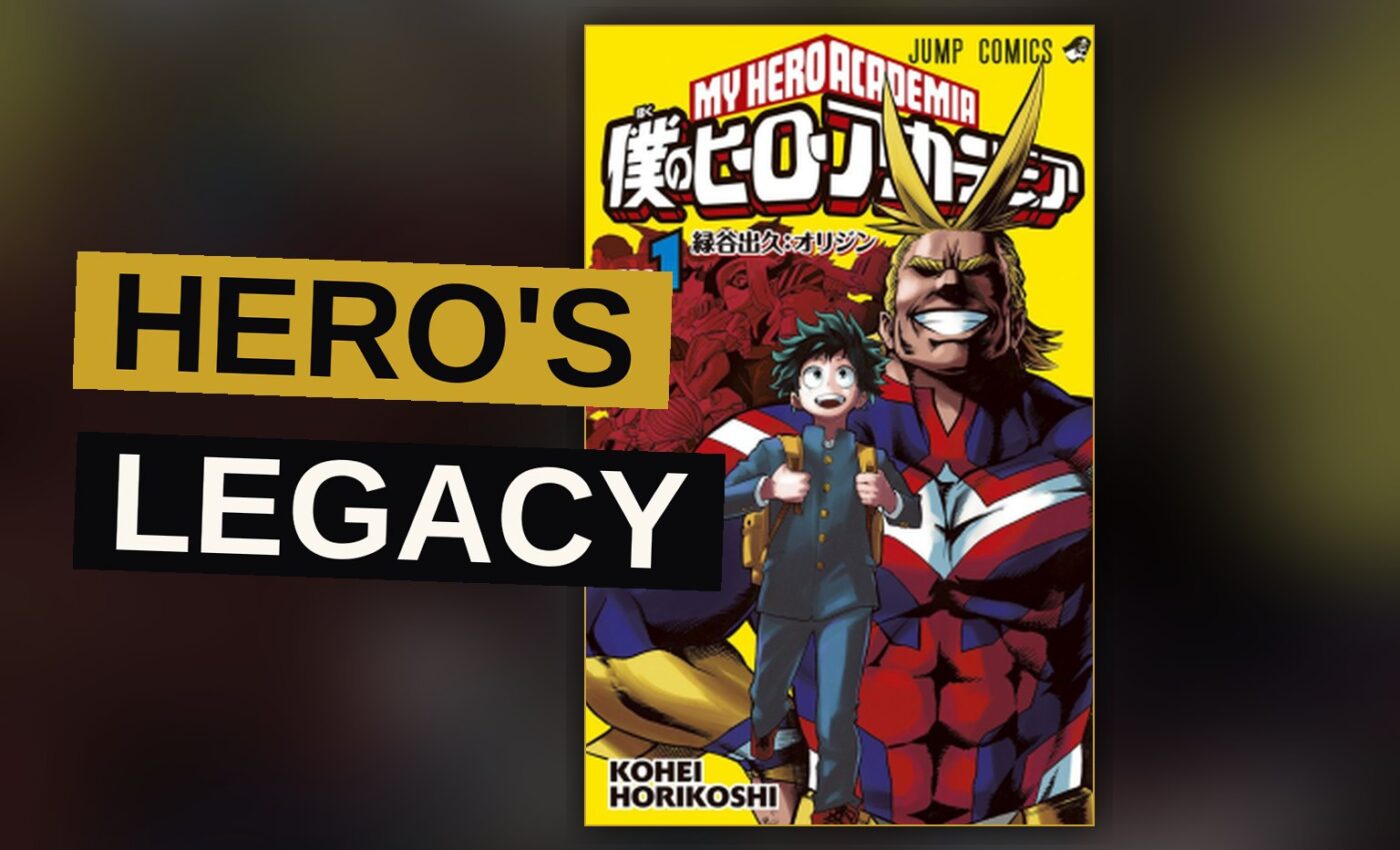
My Hero Academia is a show about being a hero, but it spends almost no time telling you how to do it. Instead, it watches teenagers fight each other in gyms and classrooms while adults argue about what power means. That might sound thin, but the execution carries the weight. The anime follows Izuku Midoriya, a boy born without powers in a world where everyone else has them, who gets handed a legacy quirk from a dying hero. What follows is a season of school life, rivalry, and the slow build of a hero’s actual work.
The series is based on the manga by Kohei Horikoshi, and the adaptation stays faithful to the source material while speeding up some arcs. It’s a shonen anime, aimed at young male audiences, and it plays that role with confidence. The action is bright, the humor is broad, and the stakes keep rising even when the plot slows down. This review covers the first season, which aired in Japan in 2016, and draws on both the anime and the original manga for context.
Trailer, via animelab.
The Protagonist
Izuku Midoriya is the kind of protagonist who gets told he’s weak before he ever does anything. He wants to be a hero, but his body fails him in every physical test. The show opens with a scene of him failing a running test in front of classmates who can fly, breathe fire, and move at superhuman speed. His failure is not just a setup; it’s the whole point of the first arc.
Then he gets All Might’s quirk, One For All. The transfer comes with a price: it will kill him if he uses it too much. That moment changes everything. Midoriya is suddenly capable, but he’s also fragile in a way most heroes aren’t. The series spends the rest of the season exploring what that means for him, his friends, and the people around him.
The supporting cast is large, but the show keeps its focus tight. Katsuki Bakugo is the main rival, a boy who believes he’s the only one worth being a hero. Shoto Todoroki balances the two extremes: he’s a half-blood with a father who hates him, and his internal conflict drives much of the middle part of the season. The dynamic between Midoriya and Bakugo sets the tone for the entire show.
The School Arc
The bulk of the season takes place inside U.A. High School, where students train to become professional heroes. The school is a mix of gym battles, classroom lessons, and field tests. The structure allows the show to explore teamwork, discipline, and the practical skills of being a hero. It’s also where the humor lands hardest, because the characters are teenagers who haven’t fully grown into their abilities.
The school’s quirks system is central to the show’s identity. A quirk is a superpower, and every character has one. Some are simple, like the ability to stretch or turn invisible. Others are complex, like the ability to control ice or manipulate electricity. The show doesn’t explain the rules exhaustively; it lets the quirks emerge naturally through combat and conversation.
The school arc also introduces the villain, Tomura Shigaraki, who becomes the season’s main antagonist. Shigaraki is a member of the League of Villains, a group that opposes the heroes and seeks to remake society. His introduction is slow, but his presence hangs over the final act, giving the season a clear direction even when the pacing dips.
The Action
The action scenes are the reason most viewers tune in. The fights are choreographed with energy, and the animation holds up well against other shonen shows. The show uses close-ups, slow motion, and dramatic camera angles to sell the impact of attacks. The quirks themselves are the star, and the show rarely repeats the same effect twice.
The final exams are the high point of the season. The exams pit the class against each other in a tournament format, and the fights get progressively harder. The climax of the exam arc features a battle between Midoriya and Bakugo that lasts several episodes and tests both characters’ limits. It’s a showcase for the show’s strengths: fast pacing, clear stakes, and emotional beats that land.
The show also includes quieter moments. Izuku’s training with All Might, his mentor, is a recurring thread that explores the cost of power. These scenes are slower and more reflective, but they give depth to the action-heavy episodes.
The Humor
My Hero Academia isn’t subtle about its jokes, and that’s the appeal. The humor is broad, slapstick, and often aimed at the audience’s expectations. Characters make puns, get hit by accidents, and deliver punchlines that undercut the drama. The show knows it’s a cartoon, and it leans into that.
One of the best examples is the “Heroine” arc, where the girls of the class compete in a beauty pageant. The episode is a parody of the genre, complete with silly costumes and absurd challenges. It’s a break from the main plot, but it also serves as a character study, showing how each girl handles pressure and competition.
The humor doesn’t always land. Some gags are too obvious, and the show sometimes relies on sight gags that don’t translate well to subtitles. But the overall tone is consistent, and the show never takes itself too seriously, even when the stakes are high.
The Themes
The show’s themes are simple but effective. The central question is whether being a hero is about power or about doing the right thing. Midoriya’s journey is a response to that question. He starts as a boy who wants recognition, and he ends the season as someone who understands what real heroism means.
The show also touches on family, identity, and the nature of villains. The League of Villains is not a monolithic evil force; its members have their own reasons for joining. The show spends time with these characters, showing their perspectives and making them feel human. That approach makes the final confrontation more affecting than it would be otherwise.
The season also deals with the idea of normalcy. Izuku is the only boy in his class without a quirk, and that difference shapes his life. The show doesn’t condemn the world for being unfair; it simply presents the situation and lets the characters react to it.
The Voice Acting
The Japanese voice cast delivers performances that match the energy of the show. Izuku’s voice actor, Asahi Taira, captures the character’s determination and awkwardness. Bakugo’s voice actor, Daiki Yamashita, brings a sharp, snarling edge to the rival. The supporting actors round out the ensemble, giving each character a distinct voice.
The English dub is also strong, with actors who understand the material and perform it with conviction. The dub keeps the pacing and the jokes intact, though some of the subtler emotional beats lose nuance in translation.
| Aspect | Strength | Weakness |
|---|---|---|
| Story | Clear stakes, strong arcs | Some pacing dips in the middle |
| Animation | Dynamic, expressive | Some filler episodes |
| Characterization | Deep, relatable leads | Supporting cast can blend together |
| Humor | Broad, consistent | Some gags fall flat |
The Final Exam
The season ends with a cliffhanger, which is standard for the franchise. The final episodes set up a larger conflict that the second season resolves. The ending is satisfying in its own right, but it leaves questions unanswered about the larger world.
The last arc brings back Shigaraki, and the battle between Midoriya and the League of Villains sets the stage for the sequel. The season closes on a note of hope, but also of uncertainty. It’s a bold choice for a show that’s still finding its footing, and it pays off by building anticipation for the next chapter.
The Verdict
My Hero Academia is a confident, energetic shonen anime that earns its popularity. It’s not perfect, and it has moments of filler and uneven pacing, but the core is strong enough to carry the season. The character work is deep, the action is exciting, and the themes are handled with care.
The show is a good entry point for newcomers to the genre, and it rewards longtime fans of the manga with faithful adaptations. It’s a show that knows what it wants to be and executes it well.
Get the Notebook.
The day's best stories and every fresh verdict, in plain English, in your inbox by seven. One email a day, no more.