
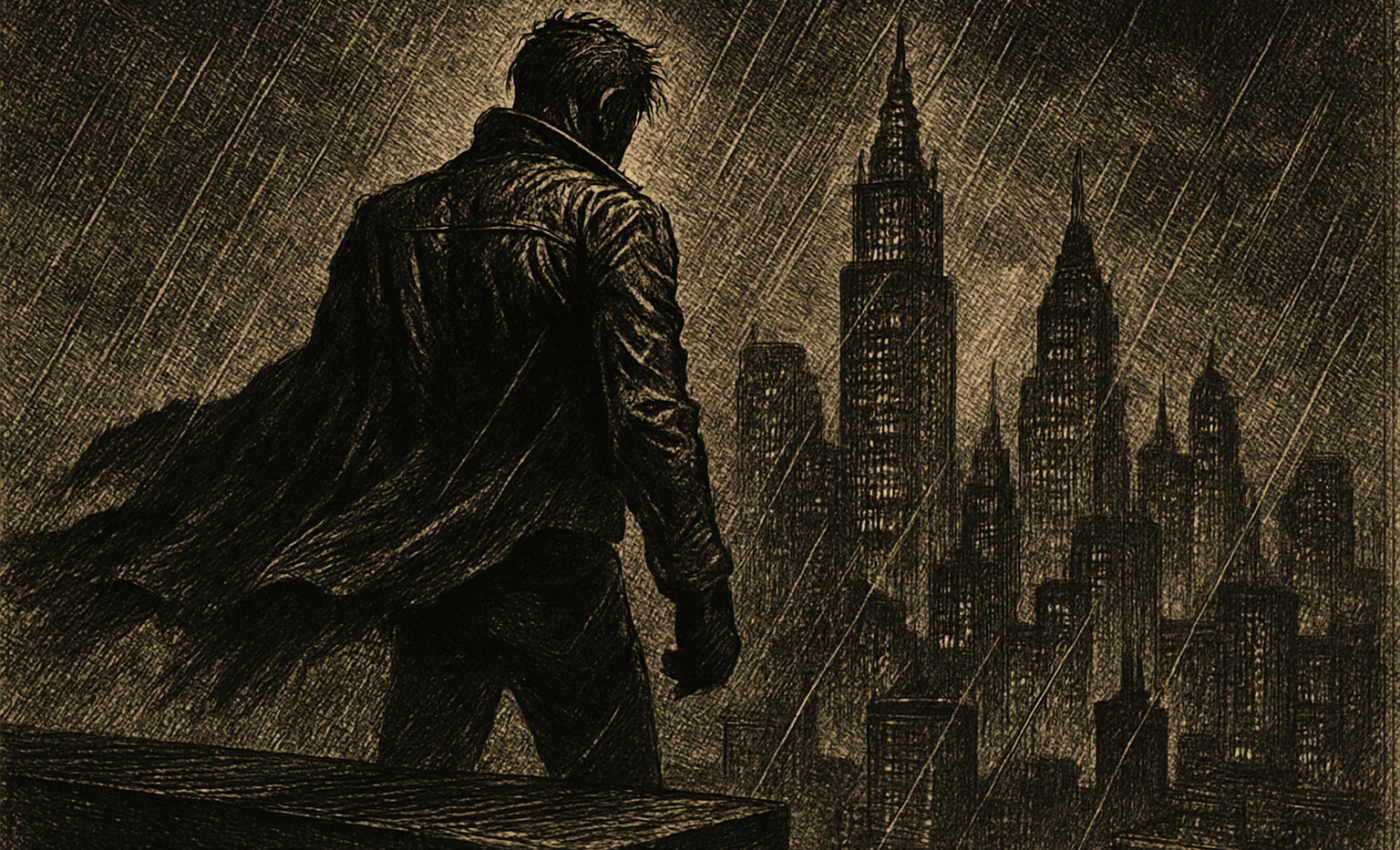
Marvel’s Daredevil ran for three seasons on Netflix, from April 10, 2015 to October 19, 2018. Drew Goddard created it. Thirty-nine episodes. Charlie Cox plays Matt Murdock, a lawyer by day who was blinded as a young boy and uses his heightened senses to fight crime at night in Hell’s Kitchen.
That is the whole pitch, and the show earns it.
Trailer, via Netflix.
Matt Murdock, Karen Page, Foggy Nelson
The core of Marvel’s Daredevil is a law office that cannot hold itself together. Matt, Karen Page and Foggy Nelson start as a small practice and spend three seasons pulling apart and re-forming. Deborah Ann Woll gives Karen a stubborn streak the writing keeps testing. Elden Henson plays Foggy as the friend who sees Matt most clearly and likes him least for it.
The crime drama half is the stronger half. Matt’s senses are a mechanic, not a superpower costume — the show treats his hearing and balance as tools that fail him as often as they save him. The action is close and heavy. The dialogue is plain. It is a crime show that happens to have a man in a mask.
Wilson Fisk is the reason it works. Vincent D’Onofrio plays him as a man who wants to be small and cannot be. The Kingpin of this series is not a mob boss with a temper; he is a person with a plan and a wound, and the show lets both sit in the room.
Wilson Fisk and the Men Around Him
Season three adds two figures worth naming. Jay Ali plays Rahul “Ray” Nadeem, an FBI agent. Wilson Bethel plays Benjamin “Dex” Poindexter. Both arrive late and both change what the show is about — Nadeem as the lawman who keeps choosing, Poindexter as the man who stops.
Lawyer-by-day Matt Murdock uses his heightened senses from being blinded as a young boy to fight crime at night on the streets of Hell’s Kitchen as Daredevil.
That line is the synopsis, and the series spends thirty-nine episodes refusing to let it stay that simple. Fisk is a businessman before he is a villain. Matt is a Catholic before he is a hero. The show knows the difference.
What Holds Up and What Doesn’t
The middle stretch of the run is where Marvel’s Daredevil drags. Courtroom arcs stretch past their weight. Supporting players cycle through without enough to do. The show is a crime drama first and a superhero show second, and when it forgets that, it sags.
Here is how the three seasons rank, by what each one actually delivers:
- Season one — the origin, the cleanest structure, Fisk introduced at full power.
- Season three — Nadeem and Poindexter, and the best version of Matt broken down.
- Season two — the widest swing and the loosest grip.
The show never had the budget of its film cousins and never needed it. Hell’s Kitchen is a few blocks and a few rooms, and the series uses that smallness well. The fights are in hallways and apartments, not on rooftops. The stakes are a neighborhood, not a city.
What matters most is Cox. He plays Matt as a man who is tired and does not say so. The mask is not the point. The confession is.
Marvel’s Daredevil is not the best thing Marvel has made for television, but it is the most serious. It treats a man who can hear a heartbeat through a wall as a person with a job and a conscience, and it lets him lose. The Fisk material is the strongest thread in all thirty-nine episodes, and D’Onofrio is the reason the series has a spine. The pacing problems in the middle seasons are real and they are not small. But the show’s best hours are crime drama with a mask on, and that is a harder trick than it looks.
Get the Notebook.
The day's best stories and every fresh verdict, in plain English, in your inbox by seven. One email a day, no more.