
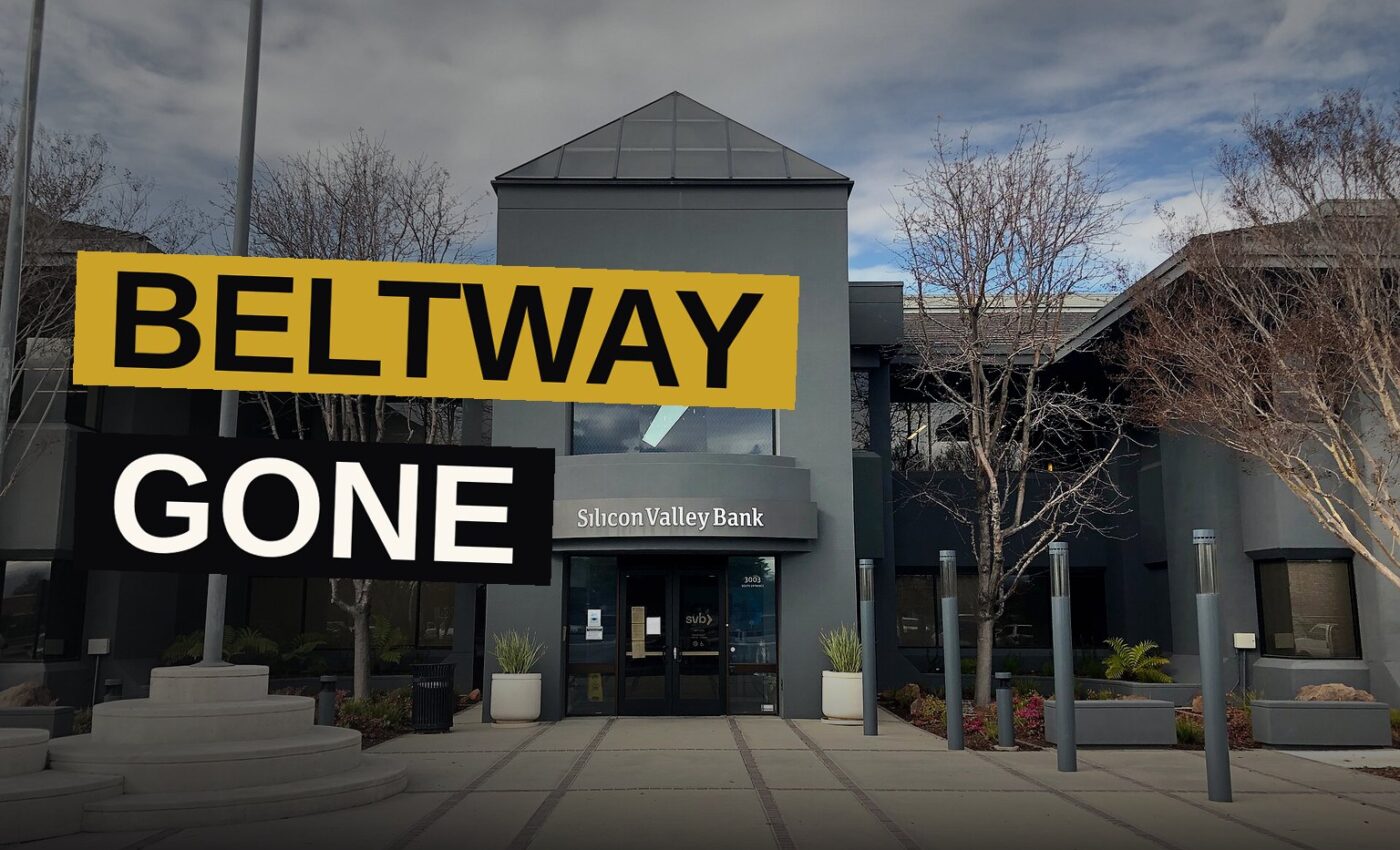
Silicon Valley is becoming the new center of the military-industrial complex, according to a new report from cultural anthropologist Roberto González. The professor at San José State University argues that America’s military-industrial complex has shifted from the Washington D.C. region to California’s tech corridor, with Big Tech firms now taking a growing share of Pentagon spending.
The Defense Department’s shift from traditional arms to AI-powered systems is the subject of González’s report, which bears the title “How Big Tech and Silicon Valley are Transforming the Military-Industrial Complex,”. The report finds that major technology corporations, venture capital investors, and private equity firms all profit from multi-billion dollar government contracts. Meanwhile, smaller defense technology startups that “move fast and break things” receive additional funding as well.
For years now, there has been a growing trend that the report highlights. The Pentagon’s spending on AI and digital systems is bringing in companies that were not its usual suppliers. These are the same firms that lead the consumer technology market.
The Numbers Behind the Shift
The scale of the shift is substantial. Research from the nonprofit Tech Inquiry shows that three of the world’s biggest tech corporations received about $28 billion from the Pentagon between 2018 and 2022. That figure includes Microsoft ($13.5 billion), Amazon ($10.2 billion), and Alphabet, which is Google’s parent company ($4.3 billion).
The amount is substantial, and growing.
Tech Inquiry, a nonprofit research group that follows military spending across the technology sector, found that the five largest contracts awarded to major tech firms during the period from 2019 through 2022 carried total ceiling amounts of at least $53 billion combined.
The flow of venture capital into defense technology has grown steadily. Between 2021 and 2023, VC firms put nearly $100 billion into defense tech startups, a sum that was 40 percent greater than the total for the prior seven years combined.
Why the Pentagon Is Moving Toward Silicon Valley
A wider change in warfare is behind the Defense Department’s turn toward Silicon Valley. Modern fighting now rests more and more on data, automation, and machine learning. The Pentagon wants access to the finest technology around, and that technology now comes from the same companies that build smartphones and cloud services.
The report points out that the structure of these deals obscures the precise volume of funds involved. Because many of the contracts are classified, a large portion of the spending remains unseen by the public. With no clear disclosure, there is little way to determine the total scale of U.S. spending redirected toward Big Tech.
Over his career, González has constructed a body of research that spans decades, and three of his books stand out: “Zapotec Science: Farming and Food in the Northern Sierra of Oaxaca”, published in 2001; “American Counterinsurgency: Human Science and the Human Terrain”, published in 2009; and “War Virtually: The Quest to Automate Conflict, Militarize Data, and Predict the Future”, published in 2022.
The Risks of a Tech-Driven Military
This development carries a warning: it could bring serious consequences. Classified Defense contracts help fuel Silicon Valley startups, big tech, and venture capital, even as the tools these contracts produce risk being ineffective, unreliable, and dangerous.
This paragraph rests heavily on the phrase “on the American taxpayer’s dime”, which is a telling acknowledgment of how the federal government foots the bill for these systems, and how that cost ultimately lands on everyone who pays taxes.
The report raises questions about the quality of these products. Startups that “move fast and break things” may deliver products quickly, but they may not deliver reliable systems.
Who Is Roberto González
González works as a cultural anthropologist who concentrates on how science, technology, and society interact, along with militarization and its effects on culture, processes through which social and cultural control happen, and ethical considerations within the social sciences. His research involves ethnographic studies carried out in both Latin America and the United States.
Since joining the San José State University faculty in 2001, he has taught a wide range of graduate and undergraduate courses for the anthropology department. His publications span academic journals, newspapers, and other periodicals.
His books cover a wide range of topics. “Connected: How a Mexican Village Built Its Own Cell Phone Network” (2020) tells the story of a community that created its own communication infrastructure. “Militarizing Culture: Essays on the Warfare State” (2010) collects essays on the military’s role in shaping society.
The Beltway-to-Silicon Valley Transition
The Pentagon’s budget has long centered on conventional weapons systems, but the Defense Department has steadily moved toward adopting AI-enabled systems. That shift is part of a broader expansion of the military-industrial complex, stretching from the Capital Beltway to Silicon Valley.
The change is not simply a matter of where funding ends up. It concerns who controls the decisions over national security. As technology companies take on greater roles in military planning, their own interests come to define both what gets developed and how well it works.
The Venture Capital Angle
Another piece of the story concerns venture capital’s role in defense tech. The funding poured into defense tech startups from 2021 through 2023, which totals $100 billion, far exceeds what was invested in earlier periods.
The report raises concerns about the quality of those innovations. Startups that “move fast and break things” may deliver products quickly, but they may not deliver reliable systems.
The Transparency Problem
Because many defense contracts are kept secret, it’s difficult to track spending with precision. The report admits that the full extent of U.S. spending directed toward Big Tech remains unclear.
The figures from Tech Inquiry serve as an initial reference, though they represent only estimates. The real totals may prove larger. Because there is no clear disclosure, it becomes difficult for citizens to determine whether public funds are being used prudently.
What Comes Next
An open question lingers over the future of U.S. military spending: whether Silicon Valley will supplant the traditional defense contractors as the primary supplier of military technology.
It bears repeating: the warning about costly, high-tech defense products that fail to work as intended, prove unreliable, and pose danger is a real one. Nobody should settle for such equipment. The American taxpayer has a right to expect more.
The document urges readers to track how funds are being spent. It serves as a warning that the military-industrial complex is shifting form, and those changes carry costs.
Source: costsofwar.watson.brown.edu
Get the Notebook.
The day's best stories and every fresh verdict, in plain English, in your inbox by seven. One email a day, no more.