
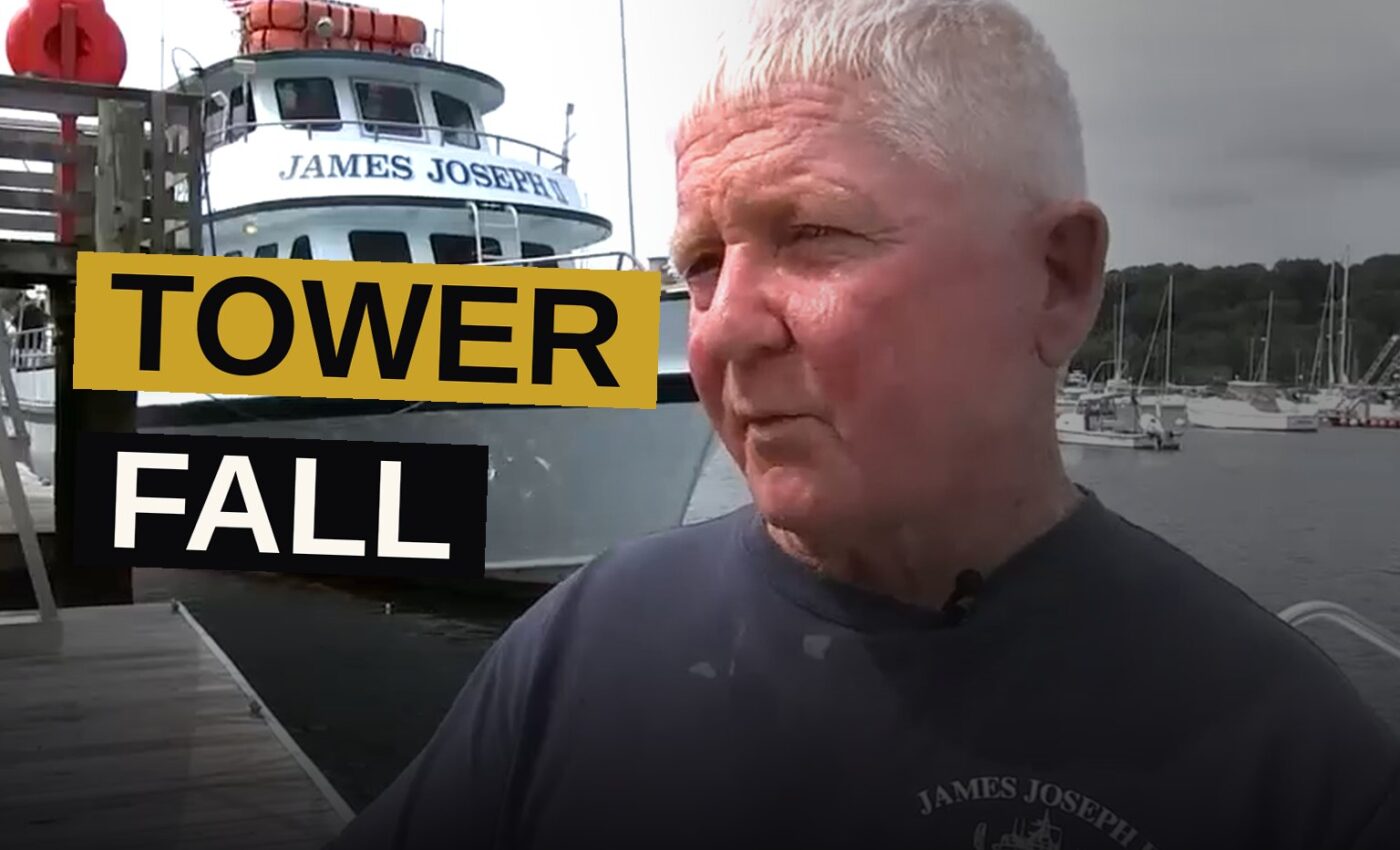
The day Sept. 11, 2001, remains vivid for Captain James Schneider. He was at the helm of the James Joseph II, ferrying anglers offshore, when his brother, an NYPD detective, phoned to say a plane had crashed into the North Tower.
The Call From His Brother
After anchoring in Norwalk, Connecticut, Schneider received a Coast Guard radio call and chose to set a course for Manhattan. Once his passengers were delivered, he gathered a crew of 13, then steered toward New York City. During the passage, he watched the Twin Towers fall.
“We watched both buildings fall. So as each building fell, it became extremely grave,” Schneider said.
The river was filled with toxic smoke, and it cut visibility badly. Pictures snapped from the James Joseph II show how dark things were on the water.
“Goosebumps are going up on my forearms…the smoke was billowing out of it dark and black, like blacker than any smoke I’ve ever seen in my life,” Schneider said.
The Fleet That Answered
Along Manhattan’s waterfront, people desperately searched for a way to escape.
“I’m telling you right now, nobody cared where they were going, they were pushed by that smoke and fire that was driving them down towards the wall,” Schneider said.
A large fleet of police boats, tugboats, ferries, yachts and other vessels came to the rescue during the emergency, and Schneider was among them. Roughly 150 boats descended on Manhattan to help with the evacuations.
“They were piling down into the water, like ants. And so they had to keep them from jumping off the pier. That’s how much panic, you know, was in that area,” Schneider said.
Among those saved was a woman carrying a child for eight months. Decades afterward, she spotted the James Joseph II moored at a marina and sought him out to speak with him.
“It started to hit me and I got a chill. And she said, ‘Well, I worked in the World Trade Center on September 11th and I thought I was going to lose my baby,'” Schneider said.
He made the remark, “To have her and have her beautiful daughter next door, you know, it made my life definitely worth living,”.
Searching for Jake Jacoda
That day, Schneider spent 17 hours at the controls. He was also looking for Jake Jacoda, a man who had worked on ships before and had begun employment at Cantor Fitzgerald inside the World Trade Center just five weeks earlier.
“They never found any part of Jake,” Schneider said.
On Sept. 11, an estimated 300,000 to 500,000 people were evacuated by boat in less than nine hours, which made it the largest sea evacuation in American history.
A Captain Who Refuses to Be Heroic
Schneider does not consider his part in the rescue effort to be anything out of the ordinary, even though he played a significant role in it.
“Well, it’s so difficult me to say anything that I did anything important because it’s our responsibility to help. We’re not going to turn our backs on anybody on the water,” Schneider said.
KEY FACTS
– 300,000 to 500,000 people evacuated by boat
– Evacuation took fewer than nine hours
– Largest sea evacuation in American history
– About 150 boats descended on Manhattan
– 17 hours at the helm for Schneider
The story told by Schneider is particular, personal and deeply moving. He witnessed the towers fall, he observed the smoke rising, he directed the frightened crowds, and he hunted for a man he could not locate. The evacuation’s sheer size — hundreds of thousands of people carried by boat in under nine hours — defies easy comprehension.
The part that sticks with readers isn’t the evacuation itself but Schneider’s refusal to call it heroic. He said it was a responsibility, not a choice. The evacuation was extraordinary by any measure. Schneider was simply doing his job.
Get the Notebook.
The day's best stories and every fresh verdict, in plain English, in your inbox by seven. One email a day, no more.