
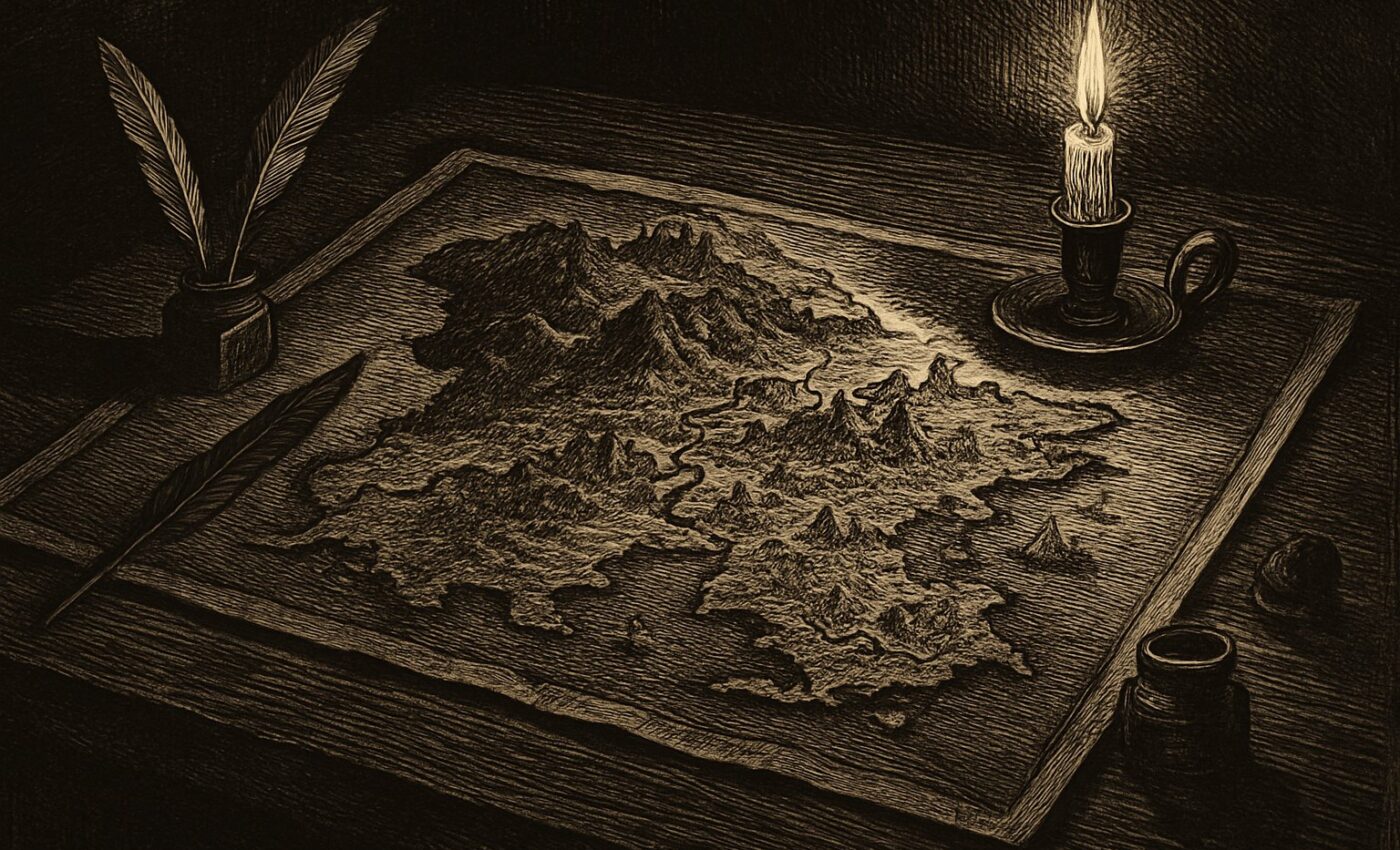
Few figures labor so steadily within the realms of invented worlds as Brandon Sanderson, whose Cosmere grows year upon year, and who yet finds occasion to speak upon the magic of Tolkien between his own extraordinary undertakings. It was in conversation with his fellow chronicler of fantasy, Joe Abercrombie, shared upon YouTube this year, that Sanderson turned his discourse toward a subject much discussed by admirers and doubters in equal measure: the melancholy failing of Game of Thrones.
The Peril of the Epic Form
Sanderson confessed an enduring affection for the great epics of his youth, calling this the most natural shape fantasy can take. “I grew up reading the big epics. I think it’s the most natural form for fantasy in some ways. It gives you a lot of time to enter into that world and lose yourself in it and look upon another place,” said he, adding, “I think that’s why Game of Thrones did well.”
Yet no undertaking so grand comes without its melancholy cost.
Sanderson spoke with the candor of one who has suffered the affliction himself, admitting to an exhaustion so profound that upon roughly the tenth pass of a draft he must lay down his pen altogether. “Epic fantasy has this danger. It starts very personal, and then it can drift away from being personal about the characters if you are not careful. Authors tend to get more excited about side characters later on. We see this happening a good deal in Game of Thrones and in A Wheel of Time. How can you make sure something that big remains new and personal and exciting? That’s a real challenge with the genre.”
A Question of Charts
This was not the first occasion upon which the two writers had turned their conversation toward Martin’s creation. In 2025, discussing the publication of Abercrombie’s The Devils, which appeared the previous year, the pair fell into a dispute most curious — concerning charts of imagined lands.
“Don’t you dislike charts? Isn’t that something I once heard, that you don’t like charts?” Sanderson had asked.
“I mean, I love charts,” Abercrombie replied. “But I think they need to be exercised in the right way. I suppose what I don’t like is a kind of idle application of charts.” He recalled that in composing The First Law he had sought something intimate, told in tight closeup upon his characters, and that opening with the widest possible view of an entire invented world seemed to him precisely the wrong tone with which to commence.
Where a Chart Fails the Teller
A chart of a world, Sanderson observed, is no mere flourish upon the page. It creates in the reader’s mind an appearance of truth, a promise of order, that the author must afterward honor or else suffer for the neglect.
“And once you put the chart in, you run into some problems. Maybe like some later Game of Thrones seasons, we are like, ‘Well, how did they get from here to here?'” Sanderson said. He continued: “And when you are trying to be very true to life when presenting some of that stuff, it can get you into trouble.” Yet he was quick to temper his criticism with affection, adding simply, “I still love them.”
It is a singular circumstance that the very device meant to fix a vast realm in truthfulness — the careful chart, the labeled kingdoms, the winding rivers set down in ink — should become the instrument of its own ruin when armies and riders must cross distances the chart itself renders impossible. The reader who once wondered at scale becomes the reader who counts the leagues with a suspicious eye.
George Martin himself, it seems, is not unacquainted with this very difficulty, and has been known to agree with Sanderson’s diagnosis of the trouble.
What comes forth from this exchange between two men so devoted to the labor of imagined worlds is not harsh judgment but a kind of tender sorrow — the understanding that the epic form, for all its glories, carries within it the seeds of its own ruin. Ambition summons scale; scale summons wandering attention; wandering attention, left unguarded through ten drafts or ten seasons, summons the gradual forgetting of what made the tale personal in the first place. Sanderson’s verdict is neither cruel nor triumphant, only honest: even the grandest chart of invented worlds must answer, eventually, for how its people get from here to here.
Get the Notebook.
The day's best stories and every fresh verdict, in plain English, in your inbox by seven. One email a day, no more.