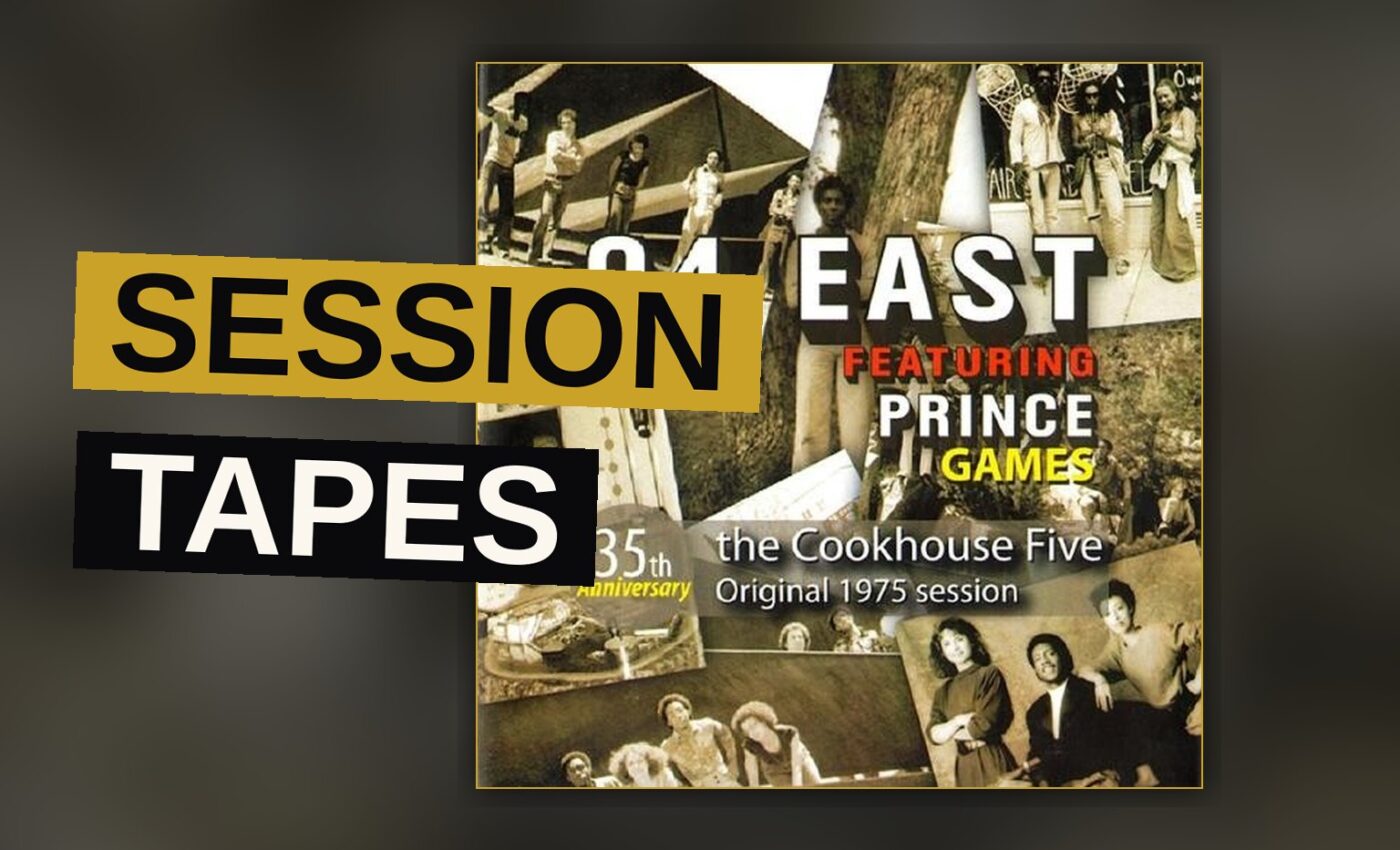
The Cookhouse Five is a 21-minute, five-track album credited to 94 East & Prince. It is a loose session that feels less like a finished statement and more like a document of musicians working in a room together. The record’s aim is modest: it wants to lock a groove, keep it warm, and let the playing carry the moment. It does not try to be a grand statement, and that restraint is both its charm and its limit.
Opening With “If We Don’t”
“If We Don’t” (4:07) sets the tone with a patient, mid-tempo pulse. The bassline does the heavy lifting, and the vocal sits back in the mix, almost conversational. It is not a hook-driven opener; it is a mood-setter, and it works because it does not rush. The track earns its length by letting the groove settle before it moves anywhere.
Moving Through “If You See Me”
“If You See Me” (5:40) is the longest cut here and the most revealing. It stretches out with a slow burn, and the guitar work carries a quiet tension. This is the track where the band sounds most locked in, and Prince’s vocal phrasing feels more deliberate, more present. It is the record’s centerpiece, the one moment where the loose format snaps into focus.
“I’ll Always Love You” and “Games”
“I’ll Always Love You” (3:50) is the shortest track and the most conventional. It leans on a straightforward ballad structure, and while it is pleasant, it does not dig as deep as the surrounding material. The sentiment is clear, but the arrangement stays close to the surface.
“Games” (3:37) picks the tempo back up with a sharper, more rhythmic edge. The drums are more pronounced here, and the track has a playful, almost teasing quality in the vocal delivery. It is the most immediate cut on the album, the one with the most direct appeal.
Closing With “Better Than You Think”
“Better Than You Think” (4:16) closes the record on a reflective note. It is slower again, with a spacious arrangement that lets the instruments ring out. The title is a quiet thesis for the whole project: this is music that does not announce itself loudly but asks for a patient ear.
Where the Record Drags
The album’s lesser moments are “I’ll Always Love You” and “Better Than You Think.” Neither is bad, but both stay in a comfortable lane. The ballad lacks the emotional weight that would make it stick, and the closer, while pleasant, drifts more than it lands. They are not misfires; they are just filler between the stronger grooves. If the album were a four-track run, dropping “I’ll Always Love You” would tighten the whole thing considerably.
The strength of the record is its atmosphere. The production is dry and close, with no gloss or polish. You can hear the space in the room, the slight bleed between instruments, the sense that this was captured live rather than pieced together in a studio. That rawness suits the material. The rhythm section is the real star here, holding everything down with a steady, unhurried hand.
Prince’s presence is felt more in the guitar and vocal phrasing than in any showmanship. He is not trying to dominate. Instead, he lets the band breathe, and the result is a record that feels like a private listen rather than a public performance. That is a rare quality, and it gives the album a distinct character.
The running time helps. At 21 minutes, the record never overstays its welcome. It is short enough to be a single sitting, long enough to establish a mood. There is no filler in the sense of wasted space; even the lesser tracks are competently played and mixed. The issue is not execution but ambition. The record is comfortable being small, and that comfort keeps it from reaching higher.
The Final Score
The Cookhouse Five is a minor but likable entry in the wider catalog. It does not demand attention, and it will not convert anyone who is not already curious about the 94 East connection. But for listeners who want to hear Prince in a looser, more collaborative setting, it delivers. The best tracks — “If You See Me” and “Games” — show what this lineup could do when the material tightened up. The rest is pleasant atmosphere that does not quite rise to the same level.
It is a record for completionists and for fans of early funk textures. It is not a lost classic, and it does not pretend to be. What it offers is an honest, unhurried session from musicians who knew each other well. That is worth something, even if it is not worth everything.
- Strongest tracks: “If You See Me,” “Games”
- Less essential tracks: “I’ll Always Love You,” “Better Than You Think”
- Best for: completionists, fans of stripped-down funk
| Track | Length |
|---|---|
| If We Don’t | 4:07 |
| If You See Me | 5:40 |
| I’ll Always Love You | 3:50 |
| Games | 3:37 |
| Better Than You Think | 4:16 |
The record earns its place as a footnote, not a headline. It is a warm, unambitious listen that rewards patience but never demands it. For what it is, it succeeds. For what it could have been, it falls short. That balance lands it at a modest score.
Get the Notebook.
The day's best stories and every fresh verdict, in plain English, in your inbox by seven. One email a day, no more.
- If We Don’t4:07
- If You See Me5:40
- I’ll Always Love You3:50
- Games3:37
- Better Than You Think4:16