
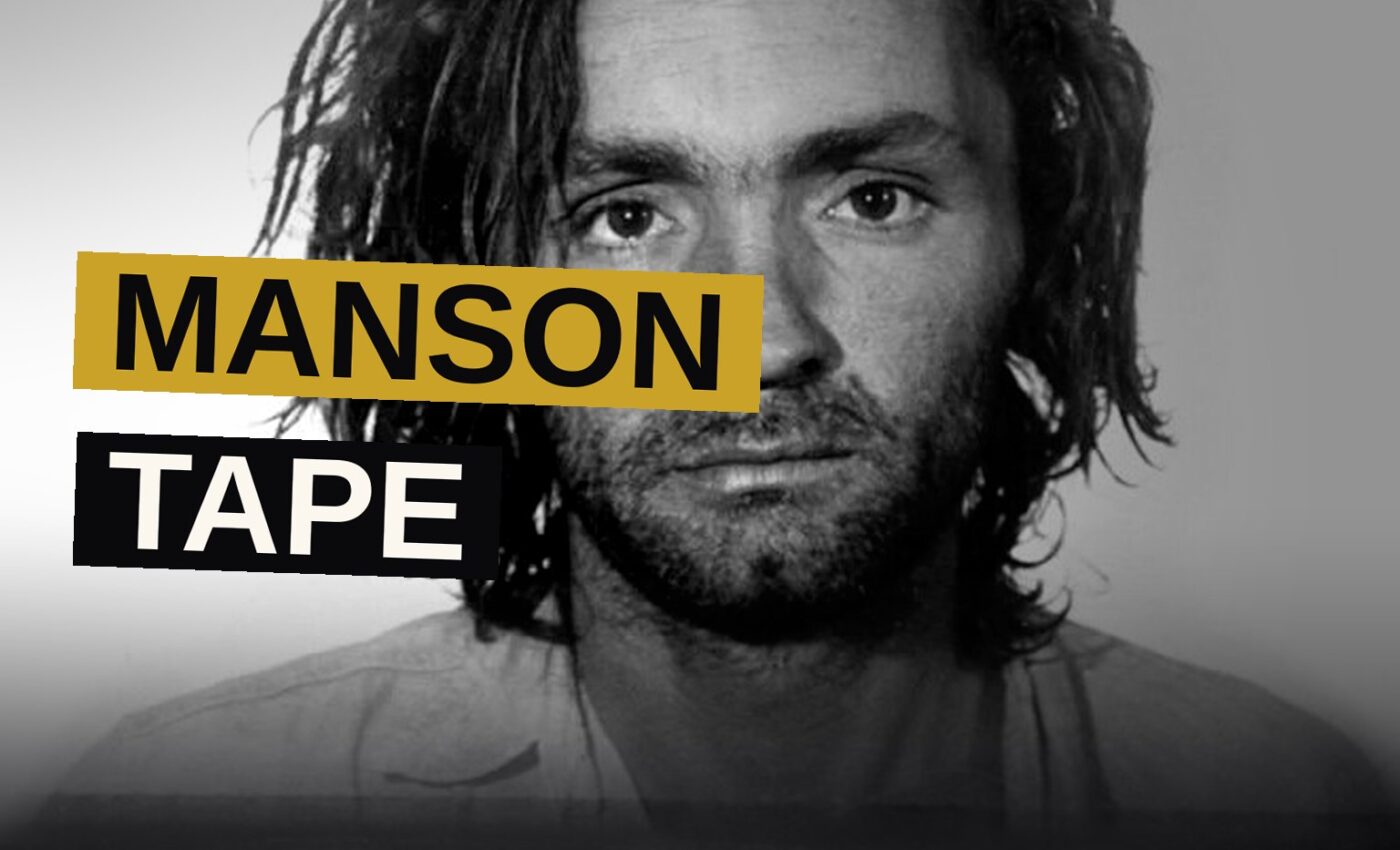
Netflix has a true-crime problem, and Joe Berlinger has been its most reliable supplier. Now he turns to Charles Manson with Conversations with a Killer: The Charles Manson Tapes, a three-episode documentary series that premiered on Netflix on August 12, 2026. All three episodes dropped the same day.
The title promises recordings nobody has heard. The series is built, per Netflix, on unreleased prison recordings, interviews and archival footage. It traces Manson’s rise as a cult leader, the 1969 murders, and the trial that followed. Manson appears in the cast only as archive footage, credited as Self — Killer / Cult Leader. He is a voice and a face on old tape, not a participant.
That is the whole of it. Three episodes. One season. A genre the platform has refined to an assembly line.
Trailer, via Netflix.
What the Prison Recordings Add
Here is where the series earns its place. The unreleased prison recordings are the reason to watch, and they do something a confession tape cannot. A confession is a performance for an audience the killer can see. Prison recordings are different. The camera is gone or forgotten. What remains is a man with time on his hands and a story he still wants to tell.
Berlinger’s method is to let the archive carry the argument. He does not need a narrator to explain Manson. He has Manson.
The 1969 Murders and the Trial
The series moves through the 1969 murders and into the trial. Courtroom footage of Manson is not rare, but the prison audio is the part that has not been heard before, and it sits against that public record.
That contrast is the series’ real subject, whether Berlinger says so or not. Manson in court was a spectacle he built on purpose. Manson in prison, talking into a recorder, is a man still building it, with no one left to watch.
The trial also gives the series its clearest throughline: how a cult leader becomes a celebrity, and how the machinery of coverage helps him do it. That idea lands harder in 2026 than it did when the murders were still news.
Ranking the Three Episodes
The source does not say what each episode covers, so any ranking by content would be invented. What can be ranked is what the series is made of, by how much of it is new:
- The unreleased prison recordings — the only material here no one has heard.
- The archival footage — familiar, but it is the spine of the story.
- The interviews — context, and context is not the draw.
That ordering is about the material, not the cut. The series has a subject everyone knows and a tape almost nobody has, and the tape is the reason it exists.
A Cult Leader Who Never Stops Performing
The most useful thing the prison recordings show is that Manson never dropped the act. Not in the cell, not into the microphone. The charisma that built the family was not a mask he put on for followers. It was the whole of him, running with no audience.
That is a more disturbing idea than any of the murders reenacted. It is also the idea the series is built to deliver, and the reason the tapes were worth waiting for.
The Archive Is the Argument
Berlinger is a skilled assembler, and the series trusts its material. A recording of Manson talking is not automatically revealing. Some of it is a man filling time.
The interviews are the weaker half of the mix. Talking heads explaining Manson are not new information. They are context, and context is what the archive was supposed to replace.
What Three Episodes Cannot Hold
The scope is the problem. Manson’s story runs from the 1960s through his death in prison, and three episodes cannot carry that without skipping. The series has to choose what to leave out.
The result is a series that works as an introduction and frustrates as a study. If you know nothing, it will hold you. If you know the story, you will spend the back half waiting for the tapes to say something the rest of the series has not already said.
Where the Series Falls Short
Conversations with a Killer: The Charles Manson Tapes is the best-archived entry in Berlinger’s franchise and the worst-shaped one. The unreleased prison recordings are real and they matter, and the decision to let Manson’s own voice carry the argument is the right one. But three episodes is not enough room for a subject this large.
What it gets right is the contrast at its center: the courtroom showman and the prison talker, the same man in both rooms. What it gets wrong is the assumption that more tape equals more truth. It does not. It equals more Manson, which is its own kind of trap, and the series walks into it.
Worth watching for the prison audio. The series never quite decides whether it is a portrait or a summary, and that indecision is what keeps it from being the definitive one.
6 of 10.
Get the Notebook.
The day's best stories and every fresh verdict, in plain English, in your inbox by seven. One email a day, no more.