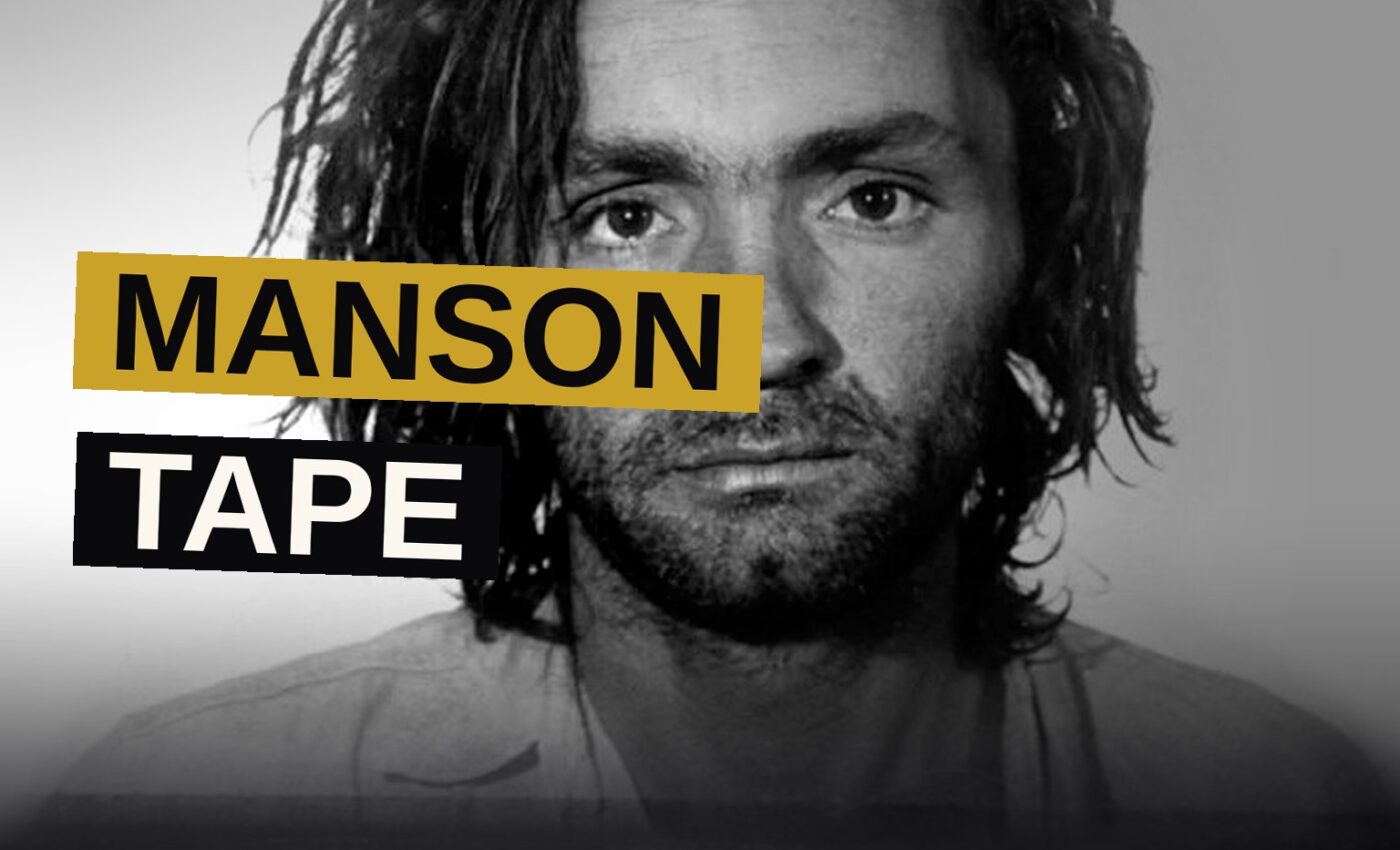
Conversations with a Killer: The Charles Manson Tapes is a six-part docuseries from Netflix that takes a new approach to the infamous cult leader. Instead of rehashing old footage, it leans on audio recordings made by Manson himself — tapes he made over decades — to build a portrait of the man behind the murders. The series premiered in 2026, and it has drawn attention for its access to those rare recordings. It’s a show built around the idea that the most revealing thing about Manson may be his own voice.
Trailer, via Netflix.
The Manson Tapes at the Center
The core material comes from tapes Manson recorded over years. These aren’t interviews with him, but monologues, confessions, and rambling thoughts captured by the man himself. That distinction changes the dynamic. Rather than repeating what others said about Manson, the series lets him speak in his own voice, often in fragments and repetitions.
The producers frame the tapes as a way to understand the mind of a killer. They argue that listening to Manson talk about his beliefs, his fears, and his plans offers a more intimate look at the man than any photograph or news report could provide. The tapes are the key to understanding the man, and the show repeatedly returns to this central claim.
Six Episodes, Six Angles
Each episode of the series focuses on a different aspect of Manson’s life. The episodes move through his early days as a musician, his rise to fame, his descent into violence, and the aftermath of the killings. The series is structured as a slow burn, with each episode building on the last.
“The tapes are the key to understanding the man.”
That line captures the show’s thesis. It isn’t interested in recreating the crime scenes. It wants to know why Manson thought the way he did. And the tapes are the evidence the series offers for that inquiry.
What Works and What Falls Short
The strongest episodes are the ones that lean hardest on the audio. When the series plays a clip of Manson talking about his childhood, his religious ideas, or his plans for the future, the tension is real. Those moments feel urgent because they come from the man himself.
The weaker episodes rely more on narration and stock footage. Without the tapes driving the scene, the show loses some of its edge. Some viewers have noted that the pacing slows in the middle of the series, particularly during stretches where the tapes don’t offer fresh material.
The series also faces the challenge of separating Manson’s self-presentation from reality. He recorded these tapes to shape his own image, and the show leaves viewers to judge how much of what Manson says is confession and how much is performance. That gap between the tapes and the truth is one of the show’s central questions.
Critical Reception and the Streaming Numbers
Critics have weighed in on the show since its release. Reviews tend to focus on the quality of the audio material and the production’s handling of it. The reception has been mixed, with praise for the tapes themselves and criticism of the episodes that drift away from them.
No exact viewership figures were provided for the series.
Verdict on Manson’s Own Words
Conversations with a Killer: The Charles Manson Tapes succeeds when it stays close to the tapes. The audio recordings are the engine of the show, and the episodes that use them best deliver the kind of intimacy the title promises. Where it stumbles is in the stretches between those clips, where the series leans on narration to fill gaps the tapes can’t cover.
The show is a worthwhile addition to the true-crime genre, but it’s not essential viewing for everyone. For fans of Manson lore or anyone curious about the inner workings of a cult leader, the tapes themselves are the draw. The show is at its best when it’s doing exactly what it promises — letting Manson’s own words do the work.
The final score reflects that balance: a strong premise, uneven execution, and a payoff that depends entirely on the quality of the primary source material.
Get the Notebook.
The day's best stories and every fresh verdict, in plain English, in your inbox by seven. One email a day, no more.