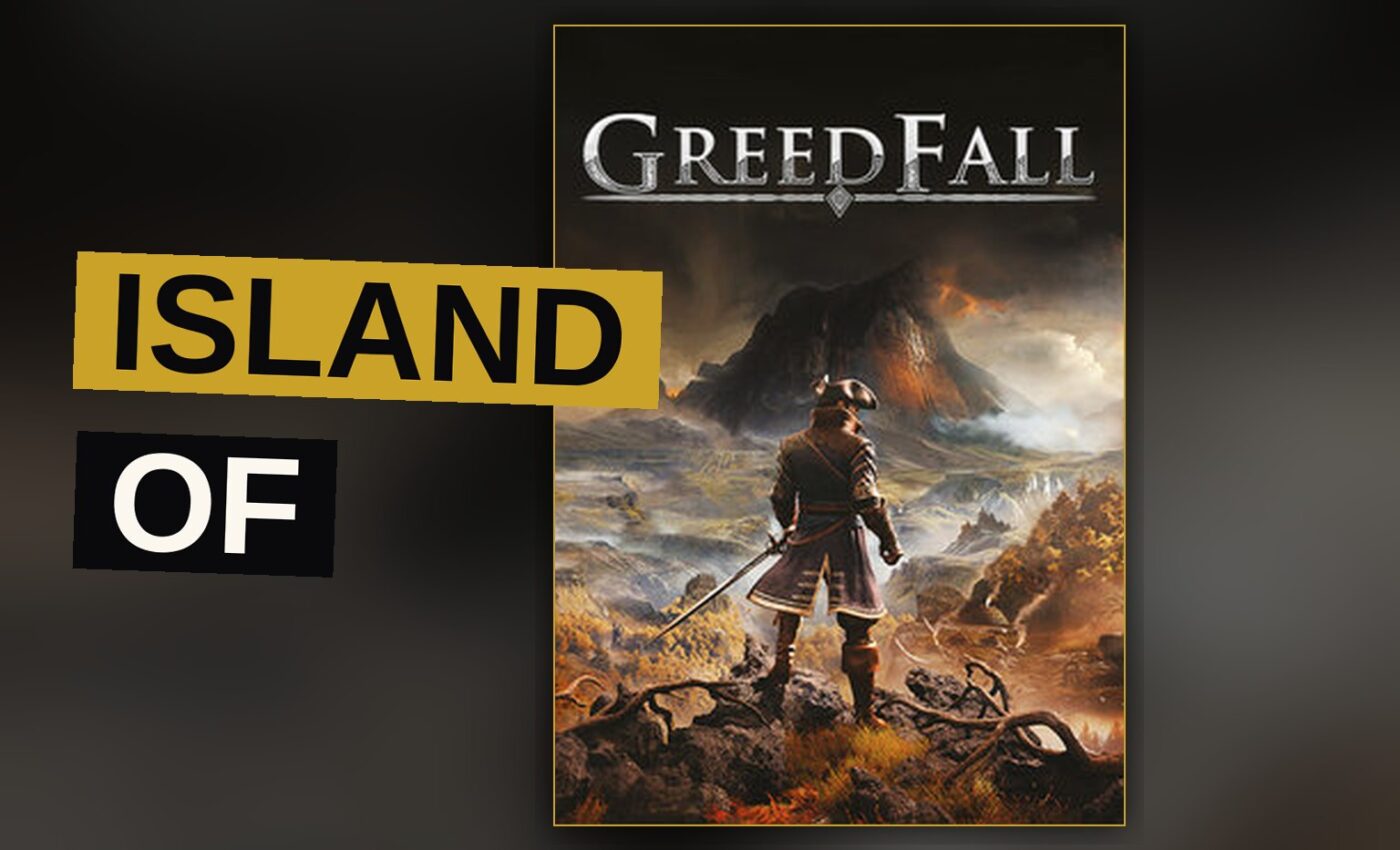
GreedFall is a game about colonial ambition, and it knows exactly what it wants to say about it. Set on a fictional island during the Age of Exploration, the RPG follows a young explorer who arrives on the archipelago of Teer-Fane to investigate a mysterious plague that threatens to tear the colony apart. The game is built around exploration, diplomacy, and moral ambiguity, and it mostly delivers on those promises. It is not a perfect game, but it is a thoughtful one, and its strengths are worth noting even as its flaws hold it back from greatness.
The setting is the game’s strongest asset. Teer-Fane is a patchwork of competing factions, each with its own history, religion, and agenda. The colonists, led by the ruthless Governor Mendoza, clash with the native inhabitants, the Serebrans, who worship a god of metal and live in elaborate cities of iron and glass. There are also the pirate lords of the southern islands, the cultists of the Temple of Despair, and the mysterious Drakorians, who have their own hidden agenda. The map is dense with side quests, hidden locations, and optional encounters, and the game encourages you to explore it thoroughly.
Trailer, via PlayStation.
The Colonial Conundrum
The core of GreedFall is a moral dilemma about colonialism. You play as the son or daughter of a diplomat, sent to the island to report on the situation. As you progress, you learn that the plague is not a natural disaster but a weapon, used by one faction to weaken its rivals. The game forces you to choose sides, and your decisions ripple through the narrative. You can ally with the colonists, fight alongside the natives, or try to broker a peace between the two. Each path has consequences, and the game tracks your reputation with each faction, rewarding you with new allies, new abilities, and new information.
The dialogue system is robust. You can persuade, intimidate, or deceive your way through conversations, and the game remembers your choices. Characters react to you based on your history, and some quests are locked behind certain reputations. This is a game that rewards patience and replayability, though it is possible to miss out on content if you make the wrong call early on. The writing is often sharp, with memorable lines and well-developed characters, especially the antagonists. Governor Mendoza is a particularly compelling villain, ruthless in his pursuit of power.
The problem is that the game’s message sometimes overshadows its mechanics. GreedFall is clearly making a statement about colonialism, and it is a statement that is easy to agree with. The colonists are greedy, the natives are oppressed, and the conflict is inevitable. This is a fair reading of history, but it is not always fun to play through. The game’s pacing suffers when the plot is weighed down by heavy-handed lectures about exploitation. Some missions feel like morality lessons rather than adventures, and the tension between the two is a constant tension throughout the experience.
Combat and the Iron Sword
Combat in GreedFall is functional but not flashy. You wield a sword, a gun, or a magic staff, and you can switch between them in the middle of a fight. The swordplay is decent, with a satisfying parry-and-counter system that rewards timing. The guns are less precise, and the magic is hit-or-miss. The enemy AI is competent but predictable, and the game is at its best when you are sneaking around, setting traps, and outmaneuvering foes. The stealth mechanics are solid, and the game encourages you to approach combat from multiple angles.
The skill tree is extensive, and you can specialize in melee, ranged, or arcane abilities. You also gain access to companions, who can fight alongside you and offer unique dialogue options. The companions are a highlight of the game. They have distinct personalities, and they react to your actions in meaningful ways. One companion might be loyal to the colonists, while another despises them. Their relationships evolve over time, and they can become valuable allies or bitter enemies depending on how you treat them.
The world is full of secrets, and the game rewards curiosity. Hidden caches, side quests, and lore-filled objects are scattered across the islands, and the game’s wiki is a treasure trove of information. The problem is that the main questline is linear, and the side content is often repetitive. Some areas feel like filler, and the game drags in the middle, when you are running from point to point to complete objectives that feel similar. The game is at its best when it is letting you explore freely, but it struggles to sustain that freedom for long stretches.
The Plague and Its Aftermath
The plague is the engine of GreedFall’s plot, and it drives the narrative forward. You learn that the disease is spreading because of political machinations, and you are tasked with uncovering the truth that the plague is a weapon. The game builds to a climax where you uncover the truth about the disease. This is a strong narrative device, and it gives the game a sense of urgency. However, the resolution is somewhat anticlimactic, and the ending feels rushed. The game’s final hours are spent tying up loose ends rather than delivering a satisfying conclusion.
The game’s difficulty curve is uneven. Early on, the enemies are weak, and the game is easy. Later, the difficulty spikes, and you are forced to adapt. The game is not unfair, but it is unforgiving. Some bosses require you to learn their patterns, and the game does not always explain those patterns clearly. The game is also buggy, with occasional glitches and loading times that can break immersion. These issues are not fatal, but they are annoying.
The Setting and Its Companions
The setting is the game’s strongest asset. Teer-Fane is a patchwork of competing factions, each with its own history, religion, and agenda. The colonists, led by the ruthless Governor Mendoza, clash with the native inhabitants, the Serebrans, who worship a god of metal and live in elaborate cities of iron and glass. There are also the pirate lords of the southern islands, the cultists of the Temple of Despair, and the mysterious Drakorians, who have their own hidden agenda. The map is dense with side quests, hidden locations, and optional encounters, and the game encourages you to explore it thoroughly.
The companions are a highlight of the game. They have distinct personalities, and they react to your actions in meaningful ways. One companion might be loyal to the colonists, while another despises them. Their relationships evolve over time, and they can become valuable allies or bitter enemies depending on how you treat them. The skill tree is extensive, and you can specialize in melee, ranged, or arcane abilities.
The Final Word
GreedFall is a game that tries to do a lot, and it succeeds in parts while failing in others. The game’s strengths are its setting, its companions, and its moral ambiguity. The game’s weaknesses are its pacing, its combat, and its repetitiveness. It is a game that rewards thinking, but it is also a game that can be frustrating. It is a game that is worth playing, but it is not a game that is perfect.
The game is available on PS4, PC, and Xbox Series X|S, and it runs well on all three platforms. The load times are acceptable, and the graphics are serviceable. The game is not a technical marvel, but it is playable. It is a game that is best enjoyed at a moderate pace, taking time to explore the islands and get to know the characters.
The game is a reflection of the world, and it is a game that is worth considering for that reason.
What Works and What Doesn’t
Here is a quick breakdown of the game’s pros and cons:
- Strong setting with a rich, layered world
- Companion system that adds depth to the narrative
- Moral ambiguity and meaningful choices
- Solid stealth and exploration mechanics
- Uneven pacing and repetitive side content
- Linear main questline that can feel slow
- Unforgiving difficulty spikes and occasional bugs
GreedFall is a game that is worth playing, but it is not a game that is perfect. It is a game that asks difficult questions and offers no easy answers. It is a game that is at its best when it is exploring, and it is a game that is at its worst when it is lecturing. It is a game that is flawed, but it is a game that is worthwhile. It is a game that is a reflection of the world. It is a game that is worth considering for that reason.
The game’s score is 7.1 out of 10.
Get the Notebook.
The day's best stories and every fresh verdict, in plain English, in your inbox by seven. One email a day, no more.