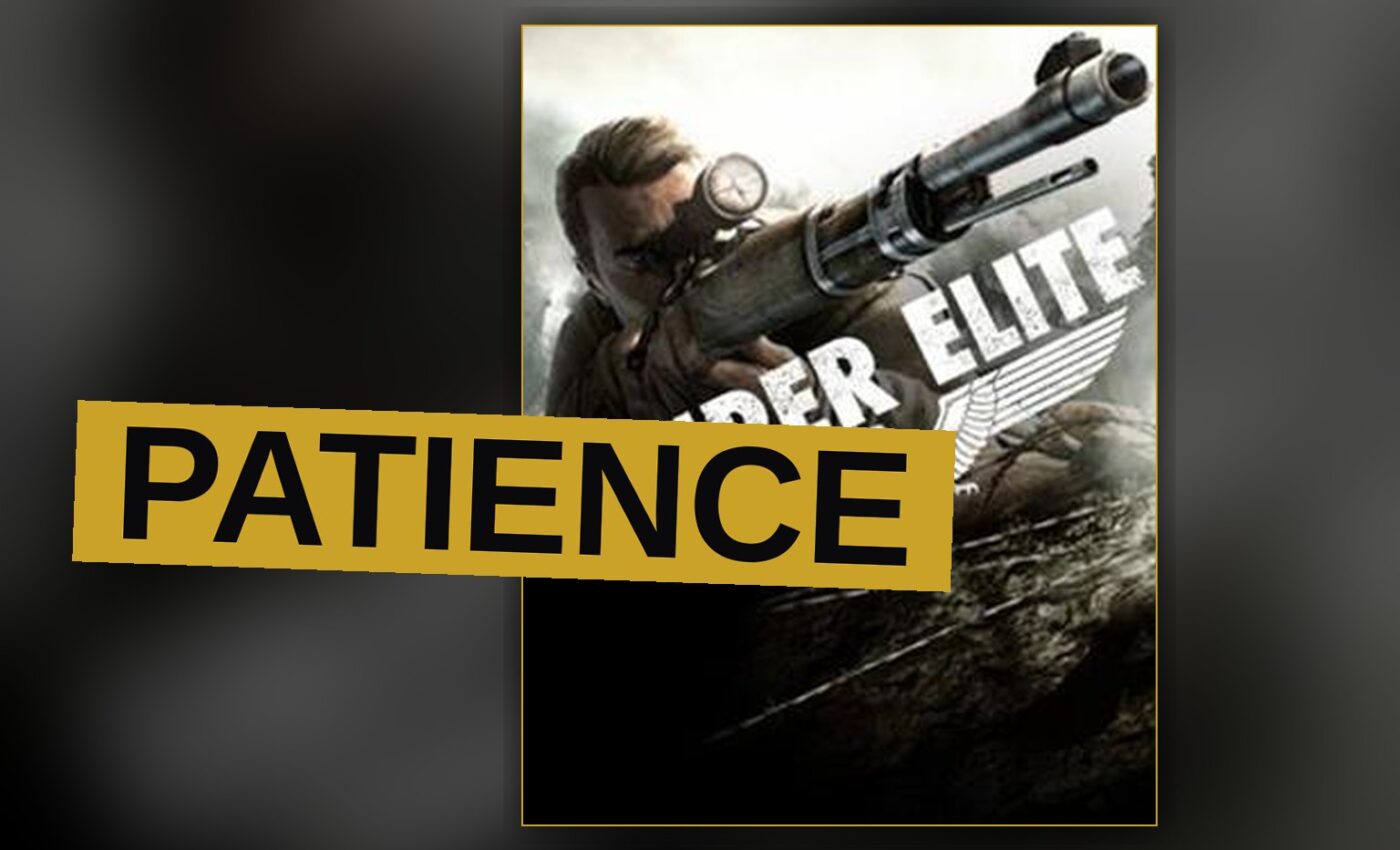
Sniper Elite V2 drops you into Berlin in April 1945, hands you a sniper rifle, and asks you to decide which scientist gets to live. Rebellion Developments developed the 2012 sequel, with 505 Games also credited as publisher: you are Karl Fairburne, an American OSS officer, and you are racing the Red Army to the men who built the V-2. The game came out for PlayStation 3, PC, Wii U and Xbox 360. It earned a 6.7 out of 10 across 11 outlets, and that number holds up. The bullet cam is why you remember it. The rest is thinner than the premise deserves.
Trailer, via Rebellion.
Karl Fairburne and Operation Paperclip
The setup is the best thing here. Fairburne narrates the opening by way of Operation Paperclip and its predecessor, Operation Overcast — the American plan to hire Nazi scientists rather than hang them. He is not sent to stop the rocket program. He is sent to shop it.
The campaign moves through a clean chain of targets. Fairburne assassinates Major-General Hans von Eisenberg as he meets with a Soviet agent to defect to Russia, then ambushes a convoy to eliminate Dr. Gunther Kreidl, a rocket engine expert. Kreidl’s documents point to the main V-2 production facility, where three colleagues are hiding. Fairburne blows the plant with C-3 and finds the scientists already gone.
Then the game does something interesting. Dr. Efram Schwaiger is caught trying to defect to the Americans and is held at a camp on the Opernplatz. Fairburne’s orders change from kill to secure. He destroys a bridge to distract the Germans, provoking the Soviets into attacking a German garrison, and the campaign keeps trading one army against the other.
That structure is the argument. Every mission puts Fairburne between two forces that both want the same men for different reasons.
The Shot Itself
V2 is a third-person tactical shooter that punishes the direct approach. Most campaign missions offer multiple routes — multi-story buildings, side streets — so you can climb, hide and pick a vantage point instead of walking into fire.
The rifle is the primary weapon, with submachine guns and pistols as sidearms. You also carry hand grenades, tripwire booby traps, anti-infantry land mines and dynamite. Binoculars tag enemies in view, tracking their position and movement.
The ballistics are the real work. Wind direction and strength and bullet drop can move a shot off target through the scope. Bullets ricochet off surfaces and can strike someone you never aimed at. Crouching or lying prone steadies the rifle, and Fairburne can take a deep breath that slows the world from his perspective.
X-Ray Kill Cam
The kill cam returns from Sniper Elite (2005), and it is the reason people still talk about this game. A skilled shot triggers a slow-motion flight from the muzzle to the target, then an anatomically rendered X-ray of the impact. Organs shred. Bones splinter. Teeth shatter.
It is grisly, it is the marketing, and it works. Rebellion knew exactly which organ to put on the box.
There is a quieter mechanic that matters more. When Fairburne is spotted, his last movements and position appear to the enemy as a white-outlined figure. Soldiers fire at where you were. That single idea does more for stealth tension than the kill cam does for spectacle, and it gets a fraction of the attention.
What Holds Up, What Doesn’t
Here is the honest accounting. The premise is sharper than most World War II shooters, because it refuses to pretend the Americans are only liberators. Fairburne is running a recruitment drive with a rifle, and the game knows it.
The stealth is patient and the ballistics reward care. Where V2 sags is everywhere the shooting stops. The narrative is a list of targets and a bridge. Fairburne’s handler gives orders; nobody in the cast gets a scene that makes the Paperclip material land as tragedy rather than trivia. The gap between the idea and the writing is the whole story of this game.
The kill cam is also a ceiling. It is the most memorable thing in V2 and it is pure spectacle — a reward for the shot, not a comment on it. The white-outline mechanic is the better invention and the less famous one.
How It Sits in the Series
A sequel, Sniper Elite III, arrived in 2014. A remastered version for Microsoft Windows, Nintendo Switch, PlayStation 4 and Xbox One followed on May 14, 2019.
- Sniper Elite (2005) — the original, same timeframe and location, different narrative.
- Sniper Elite V2 (2012) — the game under review.
- Sniper Elite III (2014) — the follow-up.
- Sniper Elite V2 Remastered (2019) — Windows, Switch, PS4, Xbox One.
| Release | Platform | Year |
|---|---|---|
| Sniper Elite | — | 2005 |
| Sniper Elite V2 | PS3, PC, Wii U, Xbox 360 | 2012 |
| Sniper Elite III | — | 2014 |
| Sniper Elite V2 Remastered | Windows, Switch, PS4, Xbox One | May 14, 2019 |
V2 is the hinge of the series. It set the tone — the kill cam, the ballistics, the moral grime — that later entries inherited and refined.
Play it for the shot. Stay for the outline. The premise about Paperclip is the most ambitious thing Rebellion has attempted, and the campaign never quite carries it. A 6.7 out of 10 is fair: a strong mechanic, a strong setup, and a script that treats both as set dressing.
Get the Notebook.
The day's best stories and every fresh verdict, in plain English, in your inbox by seven. One email a day, no more.