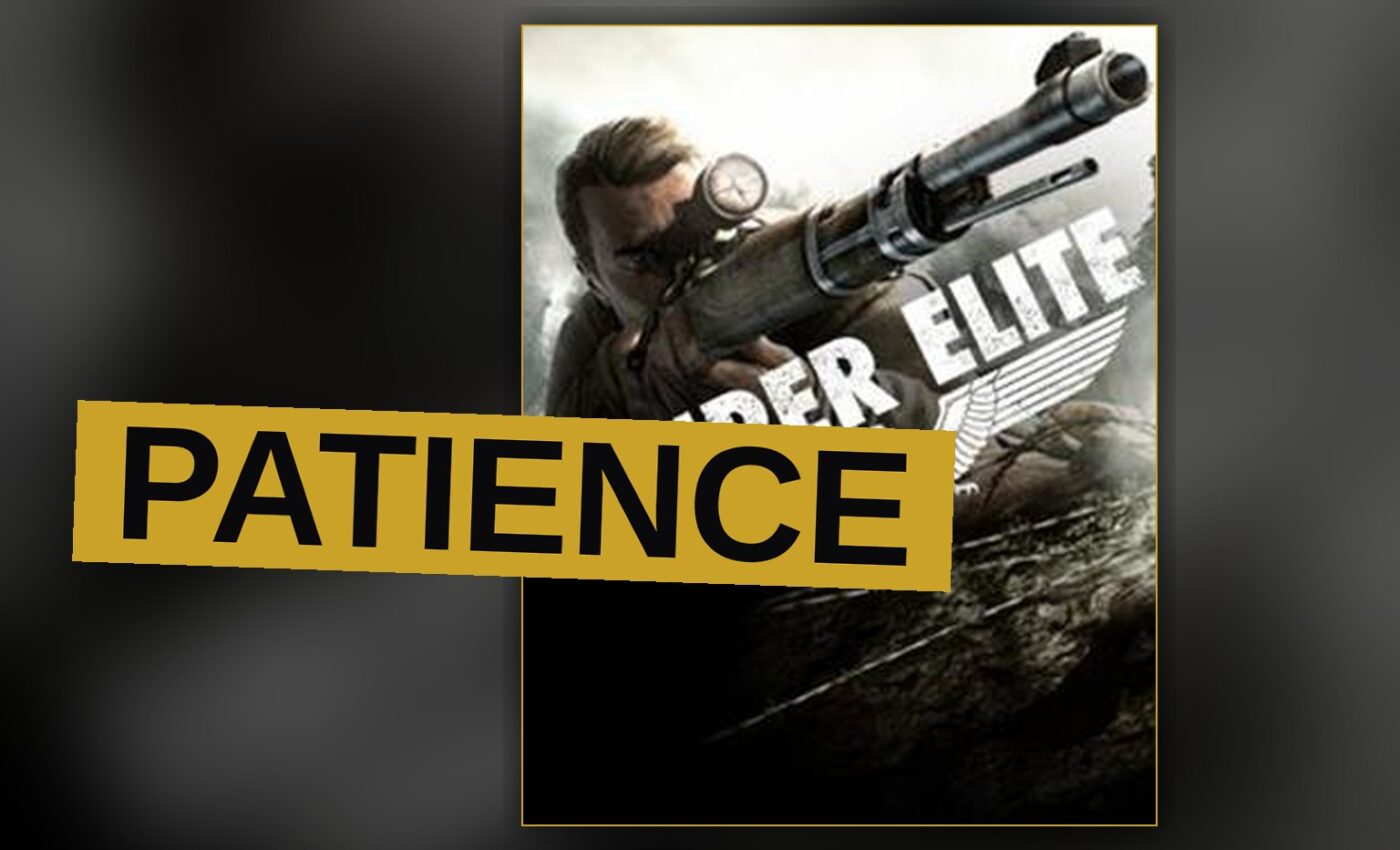
Sniper Elite V2 asks players to move through occupied France and Nazi-occupied Europe as Karl Fairburne, a sniper working behind enemy lines during World War II. The game rewards patience over pace, asking players to observe, plan and execute each shot with care rather than rush forward.
Trailer, via Rebellion.
The Core Loop
The shooting is where Sniper Elite V2 earns its keep. Players can aim down sights, adjust elevation for distance, and watch the bullet arc across the screen. The game tracks the path of every round, showing the spread of damage as it passes through flesh and bone. It is a striking visual trick, and it gives sniping a sense of weight and cost that few other games manage.
That loop works best in short bursts. Missions that force players to hold position for long periods start to feel less like careful planning and more like waiting for the next alarm to trigger.
Stealth and Its Limits
Fairburne moves silently through the world, crouching, crawling and moving between cover points to avoid detection. The game punishes careless movement, and players who rush through crowds risk drawing attention from patrols. But the stealth systems are limited. Enemies have a narrow field of vision, and once spotted, they rarely call reinforcements or search effectively.
That weakness shows up in missions built around quiet entry. Players may find themselves stuck in a room with a guard who refuses to look in the right direction, forcing them to resort to gunfire that breaks the whole mission.
Mission Design
Missions vary in quality. Some levels, especially those set in open fields or ruins, reward the careful approach the game is built around. Others, particularly urban missions packed with enemies, feel rushed and unforgiving. The pacing shifts without warning, and some stages ask for patience while others punish hesitation.
The game also includes a multiplayer mode, though it draws far less attention than the single-player campaign.
Technical Woes
On the PC and PS3, Sniper Elite V2 suffers from frame-rate drops during heavy combat. On Wii U, the game runs at a lower resolution and loses clarity in distant areas. None of these issues break the experience, but they do undercut the precision the game otherwise prides itself on.
Load times are long on console versions, which can frustrate players between missions.
A Look Back
| Platform | Release Year | Key Feature |
|---|---|---|
| PC | 2012 | High-resolution visuals |
| PS3 | 2012 | Full campaign |
| Wii U | 2012 | Lower resolution |
| X360 | 2012 | Full campaign |
The table above covers the four main platforms the game appeared on. Each version shares the same core content, though the presentation differs in ways that matter to players who care about image quality.
What Stays With You
Sniper Elite V2 remains strongest in its quieter moments. The game’s best levels are those that let players breathe, setting up shots against a distant target while the patrol below carries on unaware. The sound design helps here too, with footsteps and radio chatter giving players a steady stream of information to act on.
None of this changes the game’s central problem: its systems are not deep enough to sustain a full campaign. The shooting is excellent, but the stealth and mission design cannot carry the weight placed on them.
Sniper Elite V2 is a game defined by its highs and lows. The shooting stands out as some of the best in its genre, but the rest of the package struggles to match it. Players looking for a rewarding, slow-burning shooter will find plenty to enjoy. Those hoping for a more complete experience will come away disappointed.