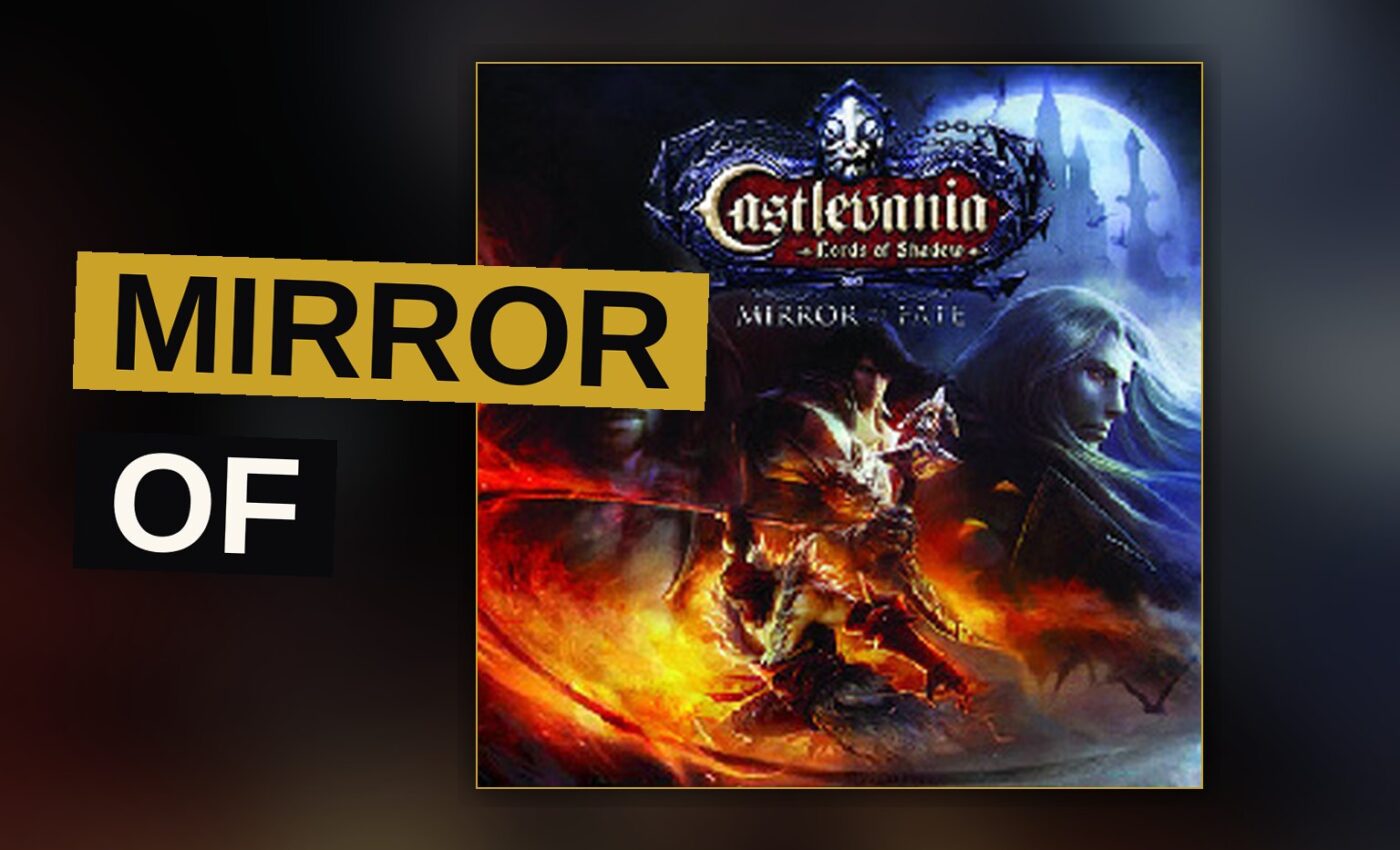
Mirror of Fate is a strange beast. It is a Castlevania game built around two separate stories, told back-to-back, each following a different member of the Belmont clan across generations. It runs on the 3DS, and it asks players to switch between Simon Belmont and Trevor Belmont mid-way through. That split is the core of Mirror of Fate, and it shapes everything about the game, from how it plays to how it tells its story.
Trailer, via Castlevania: Lords of Shadow.
The Belmont Split
Simon starts first. He is older, tired, and he fights with a whip and a sword. Trevor follows, younger, faster, and armed with a whip and a gun. The game alternates between the two, letting players move back and forth between the timelines as the story demands. It is a clever way to handle a family history, and it gives Mirror of Fate a structure that most action games avoid.
The problem is that the two halves do not feel the same. Simon’s chapters are slower, more deliberate, and built around puzzles and exploration. Trevor’s chapters are faster, more violent, and built around combat and movement. Switching between them breaks the flow. Players who settle into Trevor’s pace will find Simon’s levels awkward, and vice versa. The split works on paper, but it shows strain in practice.
Combat and Movement
Mirror of Fate is a beat-’em-up at heart. Enemies swarm, the camera spins, and the player moves forward through waves of monsters. The whip is the main weapon, and it returns to the hand after every strike, a throwback to classic Castlevania design. It is satisfying when it works, but the game leans heavily on scripted encounters, and many boss fights feel like set pieces rather than tests of skill.
Trevor adds a gun to the mix, which changes the rhythm. His chapters feel more like a shooter than a platformer, and that shift is welcome for a while. But the game does not fully commit to either mode. It keeps the whip and the gun in the same frame, and the result is a hybrid that never quite settles into one identity.
The movement system is where Mirror of Fate shines brightest. Simon can double-jump and dash, and Trevor can wall-run and climb. Both characters share a grappling hook that lets them swing between ledges and break enemy shields. These tools make the levels feel open, even when the path forward is obvious. The game rewards curiosity, and players who explore off the beaten path often find secret rooms and extra items.
Story, Look, and Sound
The plot is the weakest part of Mirror of Fate. It tries to tie the Belmont family to the larger Castlevania universe, but the connections are thin and the dialogue is stiff. Characters speak in exposition-heavy lines that explain the world rather than reveal it. The game also borrows from earlier Castlevania titles without fully explaining the links, leaving some references lost on newcomers.
The story is told through brief cinematic sequences between levels, and these sequences are well-animated but poorly paced. They stop the action cold and force players to sit through long stretches of talking heads. The narrative momentum stalls, and the game loses its sense of urgency.
Visually, Mirror of Fate is a mixed bag. The 3D environments are detailed and atmospheric, with crumbling castles, dark forests, and eerie villages. The lighting is moody, and the game uses the 3DS hardware to create depth and shadow. However, the character models are dated, and the animation is stiff, especially during combat. Bosses are large and imposing, but their movements are repetitive, and the camera struggles to keep up during busy fights.
The game also suffers from a few technical issues. Frame rate dips occur during large battles, and the game occasionally freezes or crashes. These problems are minor but noticeable, and they pull players out of the experience.
The soundtrack is a highlight. Mirror of Fate uses a mix of orchestral and electronic tracks that fit the gothic horror tone. The music swells during boss fights and hums during exploration, providing a consistent audio layer that the visuals sometimes lack. The sound effects are sharp, and the whip crack is particularly satisfying.
The game also includes a multiplayer mode, though it is limited. Players can compete in arena-style matches, but the mode feels tacked-on and unfinished. It is a nice addition for those who want more, but it does not justify the purchase on its own.
What Works Well
Mirror of Fate succeeds when it commits to its best ideas. The movement system, the boss designs, and the world-building are all strong elements. The game also includes a New Game Plus mode that increases difficulty and rewards completionists. These features give the game replay value beyond a single playthrough.
The pacing is the biggest issue. Mirror of Fate is a short game, and it could have used more variety in its middle stretch. The back half drags, and the final boss fight feels rushed. The game ends abruptly, without a proper conclusion, which leaves players feeling unsatisfied.
A Final Word
Mirror of Fate is a competent Castlevania game that falls short of greatness. Its split narrative is ambitious, its movement is fun, and its music is excellent. But the uneven pacing, weak story, and technical issues hold it back. It is a game worth playing for fans of the series, but it is not a must-have for everyone.
The game is available on the 3DS, and it is a solid entry in the library. It is not the best Castlevania game ever made, but it is a decent one.
Schedule Table
| Chapter | Character | Focus |
|---|---|---|
| 1 | Simon Belmont | Whip, sword, puzzles |
| 2 | Trevor Belmont | Whip, gun, movement |
| 3 | Simon Belmont | Whip, sword, exploration |
| 4 | Trevor Belmont | Whip, gun, combat |
| 5 | Simon Belmont | Whip, sword, boss fights |
| 6 | Trevor Belmont | Whip, gun, arena matches |
| 7 | Simon Belmont | Whip, sword, finale |
| 8 | Trevor Belmont | Whip, gun, credits |
Key Features
- Split narrative between Simon and Trevor Belmont
- Whip and gun combat
- Grappling hook movement
- Multiplayer arena mode
- New Game Plus mode
- Cinematic story sequences
Technical Notes
- Frame rate dips during large battles
- Occasional freezes and crashes
- Dated character models
- Stiff boss animations
- Poorly paced cinematic sequences
Replay Value
- New Game Plus mode increases difficulty
- Secret rooms and extra items hidden throughout
- Arena multiplayer for competitive play
Mirror of Fate is a Castlevania game with ambition and flaws. It is worth playing for its best moments, but it is not a game that stays with you long after the credits roll.
Get the Notebook.
The day's best stories and every fresh verdict, in plain English, in your inbox by seven. One email a day, no more.