
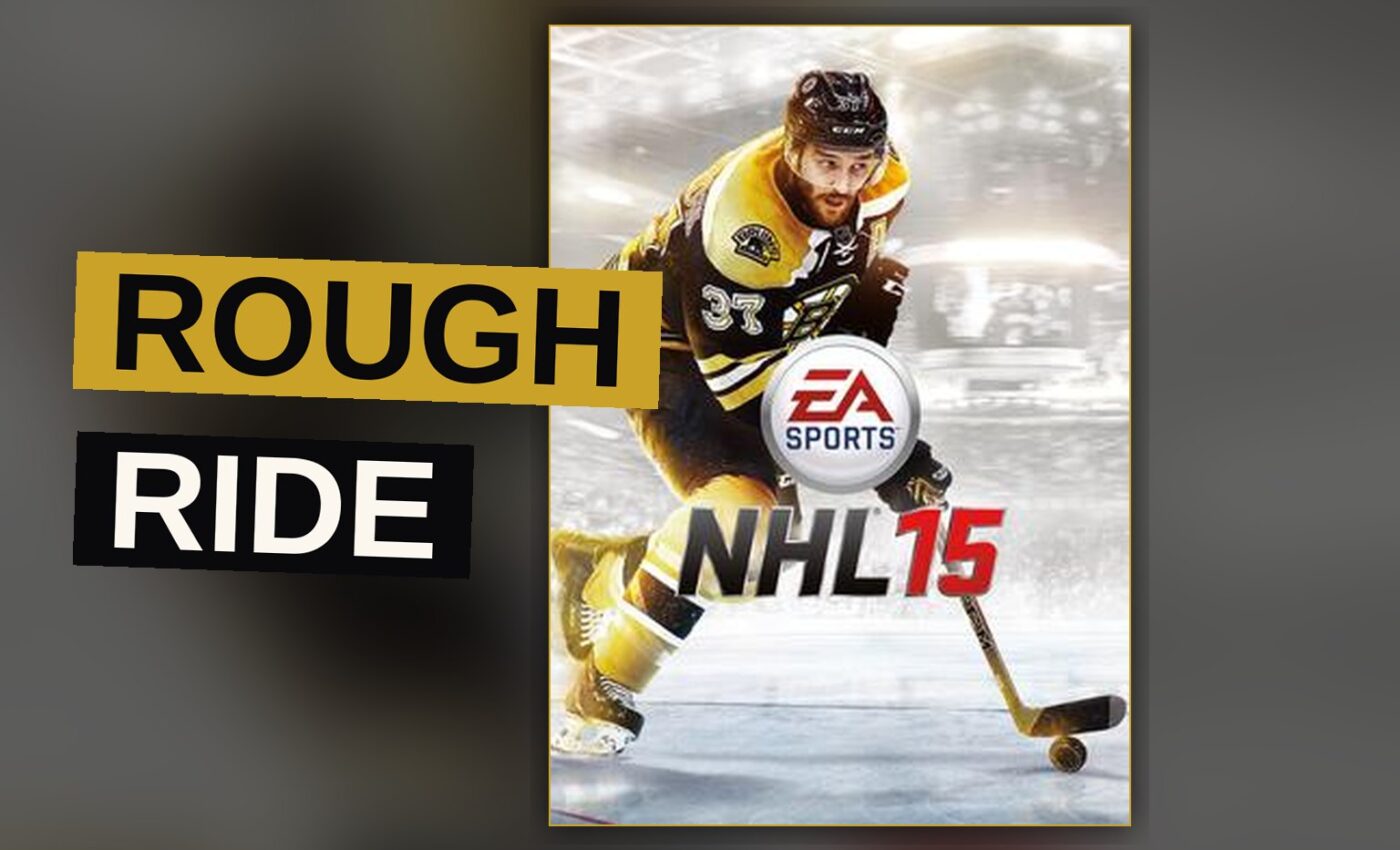
NHL 15 landed on September 9, 2014, and it arrived carrying the heaviest burden a sports game can carry: the move to new hardware. EA Canada built the game for the PlayStation 4 and Xbox One while still shipping it to the PlayStation 3 and Xbox 360, and that split shows everywhere. The headline feature was 12 Player NHL Collision Physics, which put every skater on the ice under real-world physics at all times. It is a real step, and it is not enough to cover what the game left behind.
Trailer, via IGDBcom.
12 Player NHL Collision Physics
The collision system is the best thing here. Every player on the ice is governed by physics at all times, and the result is secondary collisions, net scrambles and player pileups that capture the desperation of a shift. The puck got the same treatment. EA Canada rebuilt puck physics from scratch, and the ice surface itself is live, which produces the unpredictable spins, rolls and bounces you see in a real NHL game.
Player models were rebuilt too, in three layers — body, equipment, jersey — each interacting independently. Dynamic Cloth technology reacts to movement as a player explodes up the ice. These are the changes that hold up.
The puck is one of the most complex items in the game to authentically replicate and it finally gets its due in NHL 15.
Doc Emrick and the NBC Booth
The presentation is where NHL 15 makes its strongest case. A new partnership with NBC Sports brings the NHL on NBC graphics and branding, and the broadcast booth gets Mike “Doc” Emrick and Eddie Olczyk, with TSN analyst Ray Ferraro working the ice level. Real Life Broadcast Integration puts pre-game video commentary from Emrick and Olczyk against in-game visuals. It is the most realistic broadcast package in a video game to that date, and it is the part of NHL 15 that still feels like a genuine advance rather than a bullet point.
The crowds got the same attention. Over 9,000 individual crowd models carry four times the animations of the previous generation. Fans hold signs with your name on them. Costume-wearing superfans show up. Rival sections root against you, and their behavior shifts after a fight, a big hit or a clutch goal.
Vision AI and the Skill Stick
On the ice, Vision AI improves how players read and react to developing plays, with scoring area recognition, pass anticipation and better team breakouts. The Skill Stick returns with more control: protect the puck, take passes without breaking stride, and work an arsenal of dekes on the right stick.
Arena detail is captured down to lighting and player entrance tunnels, with capacities of 19,000-plus seats. It is the kind of detail that was not possible on the previous generation.
What the New Hardware Cost
Here is the problem. NHL 15 is a game that spent its budget on the ice and the booth, and the mode list tells the story: single player, multiplayer, co-operative. That is the whole shape of it. The features above are real and they are well built. But a hockey game is judged on what you do across a season, not on one shift, and the next-gen rebuild swallowed the rest.
The online servers were shut down on June 6, 2022, so the multiplayer side of this game is gone. What remains is the offline package and the broadcast presentation, and those are the two things NHL 15 did best.
EA Canada proved it could render a hockey game at a level the previous generation could not touch. The collision physics, the live puck, the Emrick and Olczyk booth — those are the reasons to remember this entry. The reason it lands at 6.2 is that a rebuild year is still a year you have to ship a complete game, and NHL 15 shipped half of one.
It is a foundation, not a finished house. Worth playing for the physics and the broadcast package. Worth remembering for what it promised next.
Get the Notebook.
The day's best stories and every fresh verdict, in plain English, in your inbox by seven. One email a day, no more.


