
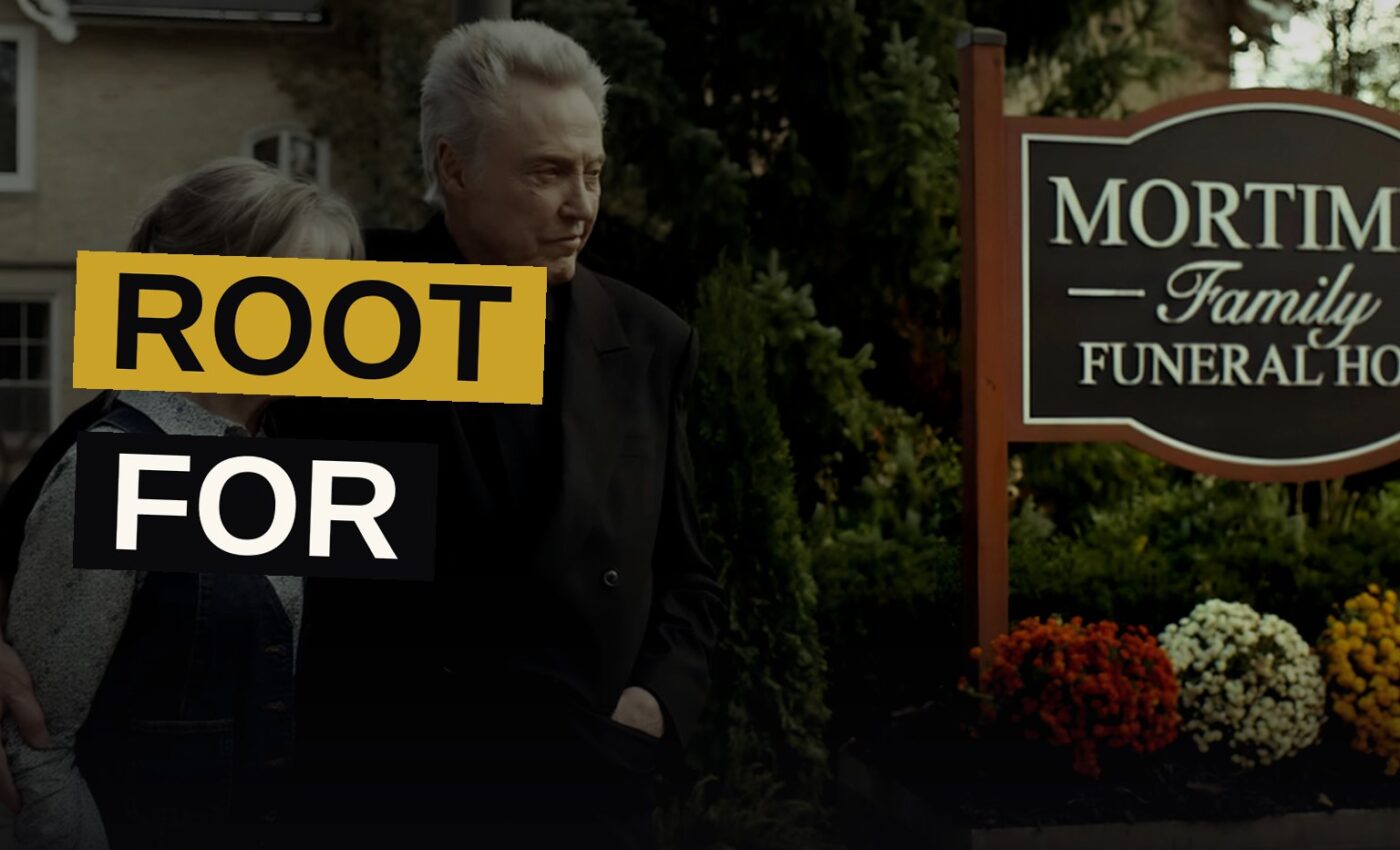
Christopher Walken plays a funeral-home patriarch who is suddenly prosperous again — because his granddaughter is murdering the town. Ron Murphy’s Back in Black is a dark comedy about a failing funeral business that finds new life when Sam, played by Ella Ballentine, starts killing locals. The film premieres at TIFF, and the director is betting Toronto audiences will root for a killer.
“It’s a bit of a trick, isn’t it? Most people in test screenings that we’ve done are rooting for (Sam),” Murphy tells The Hollywood Reporter. “And meanwhile, what she’s doing is morally reprehensible.”
Sam’s Dark Work
Sam is an embalmer by day and a cold-blooded killer by night. She targets local townsfolk because she wants to keep her grandfather, Clyde Mortimer, and his wife, played by Jane Curtin, from fighting over money. She fears they will be denied a dignified retirement. Murphy frames the film as a morality-bending drama, with Fargo meets Six Feet Under vibes.
“I’m asking the audience, how far would you be willing to go for someone you love,” Murphy says.
Clyde Mortimer is not a bad man, according to Murphy. He serves people he loves during hard times. But the director insists that audiences should consider how, in a world filled with injustice and inequity, serial killers can help as well as harm. Even if that means Mortimer cashes in on bereaved relatives by upselling them on pricey caskets.
Murphy argues that audiences bend their morality when a bad person acts for good reasons. “It’s important that a bad person gets their comeuppance,” he says. “But if they’re doing bad things for the right reasons, then an audience’s morality bends, as we’ve seen in the screenings. That’s very upside down, because innocent people are being harmed.”
Walken’s Phone Call
Murphy got on the phone with Walken soon after reading his Back in Black script. The Hollywood legend has a prolific film resume and won an Oscar for 1978’s The Deer Hunter. Walken tested Murphy with a question about dark characters.
“I think he was testing me because he said, ‘Ron, I’ve played these dark characters for 50 years, these morally questionable characters,'” Murphy recalls. Walken suggested that, at his age, actors just want to play normal people.
Murphy responded with an Avis, Try Harder sales pitch. “By the way, I didn’t write this for you. Nick (Torokvei) and I wrote it for Jack Lemmon. And he’s not available. You’re our second choice.”
Walken took the role.
The Silent Language
Ballentine, a child actor graduating to adult roles, has no lines as she and her grandfather quietly share a language of love and loyalty. Murphy says he has always wanted to make a silent film.
“In film school, I was obsessed with Buster Keaton, and I’ve always wanted to make a silent film. I just think there’s an elegance to telling a story with no words,” he says.
The director is making his first feature long after leaving film school. He is eager to connect with a theatrical audience after years on TV sets and in edit rooms where viewers are well out of sight.
TIFF Without Expectations
Murphy has no idea how Toronto audiences will greet Back in Black. He says he has learned during his television career to abandon his attachment to outcomes.
“I’ve learned during my television career to be very Buddhist about the material and to abandon your attachment to outcomes. If you think it’s going to be funny and they don’t laugh, your heart is broken. Or you’re surprised they laugh at something else you didn’t think was funny,” he says.
He is looking to TIFF for fresh eyes on a movie his team has spent a long time working on. “As soon as it screens at TIFF, it belongs to the audience, and they can do with it whatever they want, respond to it however they want, and I’m really good at just letting go,” he adds.
A Director’s Roots
Murphy has deep roots in the TV business. He began as an assistant to the late John Candy and directed episodic comedies starring Steve Carell, Leslie Neilson, Tim Conway, Snoop Dogg, Michael Cera and Drake in early small screen roles.
His Canadian TV directing credits include Trailer Park Boys, Heartland, Lost Girl and Wynonna Earp. With his first feature, he has looked to offer, via satire, his own take on the wider economy and politics.
“There’s definitely a sort of darkness in the culture that we all feel, certainly since the pandemic. And it’s disorienting, and I feel I want to reflect that darkness in a comic way,” he explains.
| Role | Performer |
|---|---|
| Clyde Mortimer | Christopher Walken |
| Sam | Ella Ballentine |
| Mortimer’s wife | Jane Curtin |
Murphy’s gamble is that audiences will cheer a killer who acts from love, even as her victims pile up. He has no control over how that lands in Toronto. He has let go.
The film’s world premiere at TIFF is the moment of truth.
Get the Notebook.
The day's best stories and every fresh verdict, in plain English, in your inbox by seven. One email a day, no more.