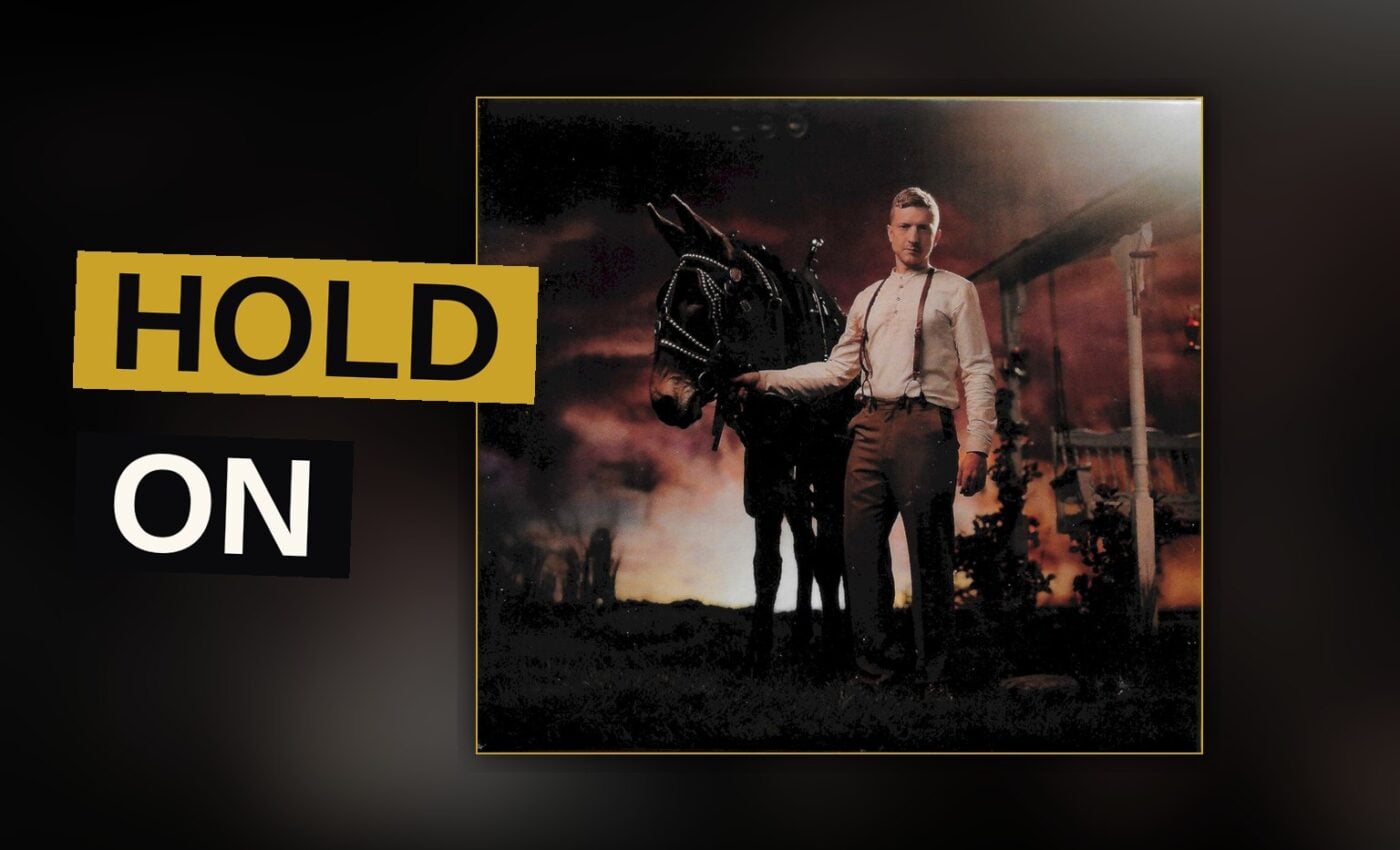
Tyler Childers has spent his career building country music out of coal mining towns and mountain roads, and Rustin’ in the Rain is the sound of him settling into that territory. The album runs seven tracks and 28 minutes, a tight record that trades polish for intimacy. It is not a statement of ambition so much as a statement of what he knows best, and that restraint is the record’s greatest strength.
Childers wrote these songs with his wife, and the partnership shows in the writing. These are songs about marriage, faith, and the hard work of staying together when the world outside tries to pull you apart. There is no grandstanding here. He is not trying to win over new listeners with big hooks or glossy production. He is trying to hold the attention of the people who already know his voice.
Rustin’ in the Rain Opens With a Warning
The title track sets the tone immediately. “Rustin’ in the Rain” is a weathered warning about the cost of staying put, about letting time pass you by while the world moves on around you. It is the strongest song on the record, a melody that burrows in fast and stays there. Childers sings about rust and rain with a weary resignation that feels earned, not staged.
“Phone Calls and Emails” follows, and it is the album’s quiet center. This is a song about communication failure, about the distance that builds between two people even when they are talking every day. The lyrics are specific — phone calls, emails, the small gestures that fall short — but the feeling behind them is universal. It is a breakup song that never raises its voice, and it is better for it.
Luke 2:8–10 and the Gospel Turn
“Luke 2:8–10” is a gospel meditation, and it is the record’s most explicitly spiritual moment. The song takes its title from the Bible verse that describes the angel appearing to the shepherds, and Childers uses it as a way into a conversation about faith and doubt. It is not preachy. It is honest, and it lands.
“Help Me Make It Through the Night” is a cover, and it is the most conventional track here. The song was originally recorded by Sam Cooke, and Childers does not reinvent it. He simply delivers it with his own worn-in voice, and the result is warm and unassuming. It works because the song itself is strong, and Childers knows when to let it breathe.
Percheron Mules and the Mountain Image
“Percheron Mules” is where the album gets its most specific sense of place. The title refers to the breed of draft animal, and the song uses them as a metaphor for slow, steady work. It is a love song disguised as a tribute to labor, and it is one of the record’s most effective images. Childers sings about the mules and the people who ride them with equal care, and the comparison holds.
“In Your Love” is the shortest track on the record, and it is also one of the most direct. The song is a simple declaration of devotion, and it does not need much more than that. It is a welcome breather after the heavier material that surrounds it.
Space and Time Closes the Record
“Space and Time” ends the album, and it does so with a quiet dignity. The song reflects on the passage of years, on how quickly life moves and how little we control. It is a fitting closer for a record about endurance, and it leaves the listener with a sense of resolution rather than exhaustion.
The Order of the Tracks
The album’s sequencing is deliberate, and it pays off. The record opens with its hardest-hitting song and eases into its quieter middle, then closes with a meditation on time that ties everything together.
- “Rustin’ in the Rain” — the best song on the record, and a clear standout.
- “Phone Calls and Emails” — the album’s emotional core, delivered with restraint.
- “Percheron Mules” — a strong image-driven song that grounds the record in place.
- “In Your Love” — a brief, direct love song that provides a needed breather.
- “Help Me Make It Through the Night” — a solid cover that fits the album’s mood.
- “Luke 2:8–10” — a thoughtful meditation that adds depth without overstaying its welcome.
- “Space and Time” — a fitting closer that ties the themes together.
The Verdict
Rustin’ in the Rain is a focused record from an artist who knows exactly what he wants to say. It is not a sprawling statement of intent, and it does not need to be. What it offers is a set of songs about love, faith, and the hard work of holding on, delivered with a voice that has earned the right to speak on these subjects.
This is Tyler Childers at his most assured, and it is one of the best records he has made. The weaker tracks — the covers, the shorter songs — do not drag the record down. They simply sit alongside the stronger ones, part of a complete picture rather than a distraction from it.
- Rustin’ in the Rain3:36
- Phone Calls and Emails4:16
- Luke 2:8–103:03
- Help Me Make It Through the Night4:08
- Percheron Mules4:30
- In Your Love3:46
- Space and Time4:42