Rogue Legacy asks one question every few minutes, and it never stops being a good one: which of these strange children do you want to die with?
Cellar Door Games released the platformer in 2013. You get one hero at a time. When that hero falls, three randomly generated heirs appear, and you pick one. Each carries a trait that changes how the game plays. Color-blindness strips the screen to black and white. ADHD makes the player move faster. Dwarfism shrinks you enough to fit through small gaps. Some heirs are mages, some warriors, some assassins. Some are just a miner who wants gold.
The castle is randomly generated, and it holds four bosses across four environments, plus a final one after that. Your sword jumps and slashes, and it extends platforms. Magic burns mana. Gold comes from smashed furniture, opened chests and dead enemies, and it buys permanent upgrades at the manor that pass to every heir after you.
Trailer, via CellarDoorGames.
A Bloodline Measured in Corpses
Death is the mechanic, not the punishment. Every corpse adds to the family line. Gold spent on the manor raises health and mana and unlocks new classes, and those gains stay with the family no matter how badly the next run goes. Fairy chests sit in special rooms and usually demand something of you first — take no damage in the room, for instance — before they open.
The traits do the heavy lifting. Thirty-five of them exist, randomized on each death, so no two heirs play alike. A barbarian son with OCD. A daughter who became a ninja despite poor eyesight. The game hands you these people and asks you to spend them.
That is the joke and the design at once. Rogue Legacy is a game about inheritance where the inheritance is mostly inconvenience.
Why the Loop Holds
Roguelikes usually sell you a fresh start. Rogue Legacy sells you a debt. The manor only appears after you pick a new heir, which means the reward for dying well is the chance to spend what the dead earned. You are not resetting. You are compounding.
The randomized castle keeps the map from becoming muscle memory, and the traits keep the character from becoming one. A run with a color-blind heir is a different game than a run with a fast one, and the game never warns you which you will need.
It is not a clean system. Trait randomness cuts both ways, and some heirs are simply worse than the ones you buried. But that is the point the game is making about families, and it makes it without a single line of dialogue.
What the Four Bosses Buy You
The four bosses and the final one give the loop a spine. Without a definite end, the manor upgrades would be busywork. With it, every gold coin has a direction.
The classes hold up too. Mages get deeper spells, warriors hit harder, assassins get stealth tools and a better shot at critical hits. Picking an heir is picking a plan, and the plan can fall apart in the first room.
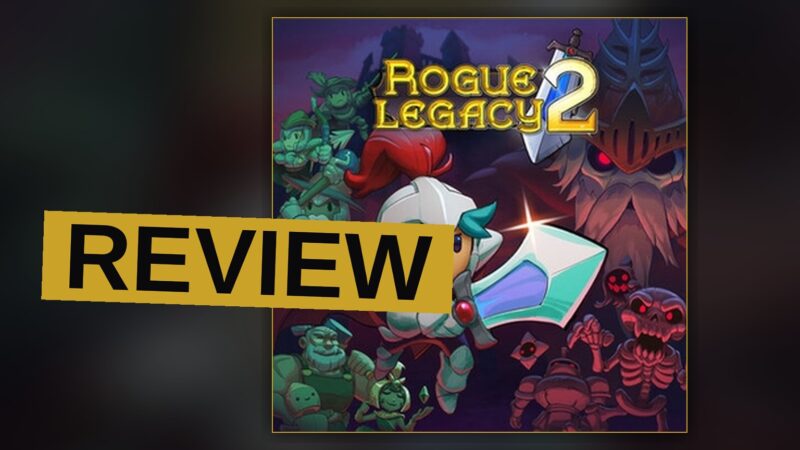
Rogue Legacy 2 followed on April 28, 2022, for Microsoft Windows, Xbox Series X/S and Xbox One. The original still stands on its own terms. It arrived on PlayStation 3, PlayStation 4, PlayStation Vita, Linux, OS X, Microsoft Windows, Xbox One, Nintendo Switch and iOS, which is a long list for a game this small.
The Heirs Are the Point
Here is what matters. Rogue Legacy turned the roguelike’s reset into a family tree, and it did it before the genre got crowded with imitators. The castle is the least interesting part. The heirs are the reason to keep going, and the manor is the reason the going means something.
The trait system is the piece worth watching. It is the difference between a game you replay and a game that changes while you replay it. Thirty-five traits is not a gimmick list. It is a commitment to the idea that the next character should feel like a stranger you have to learn.
The flaws are real. Random heirs can hand you a bad draw at a bad moment, and the game offers no mercy for it. That is a cost the design accepts on purpose.
Rogue Legacy earns its reputation. It is precise, strange, and built around a single clever idea executed without apology. The published critical aggregate sits at 8.6 out of 10 across 11 outlets, and that number holds up.
Get the Notebook.
The day's best stories and every fresh verdict, in plain English, in your inbox by seven. One email a day, no more.