
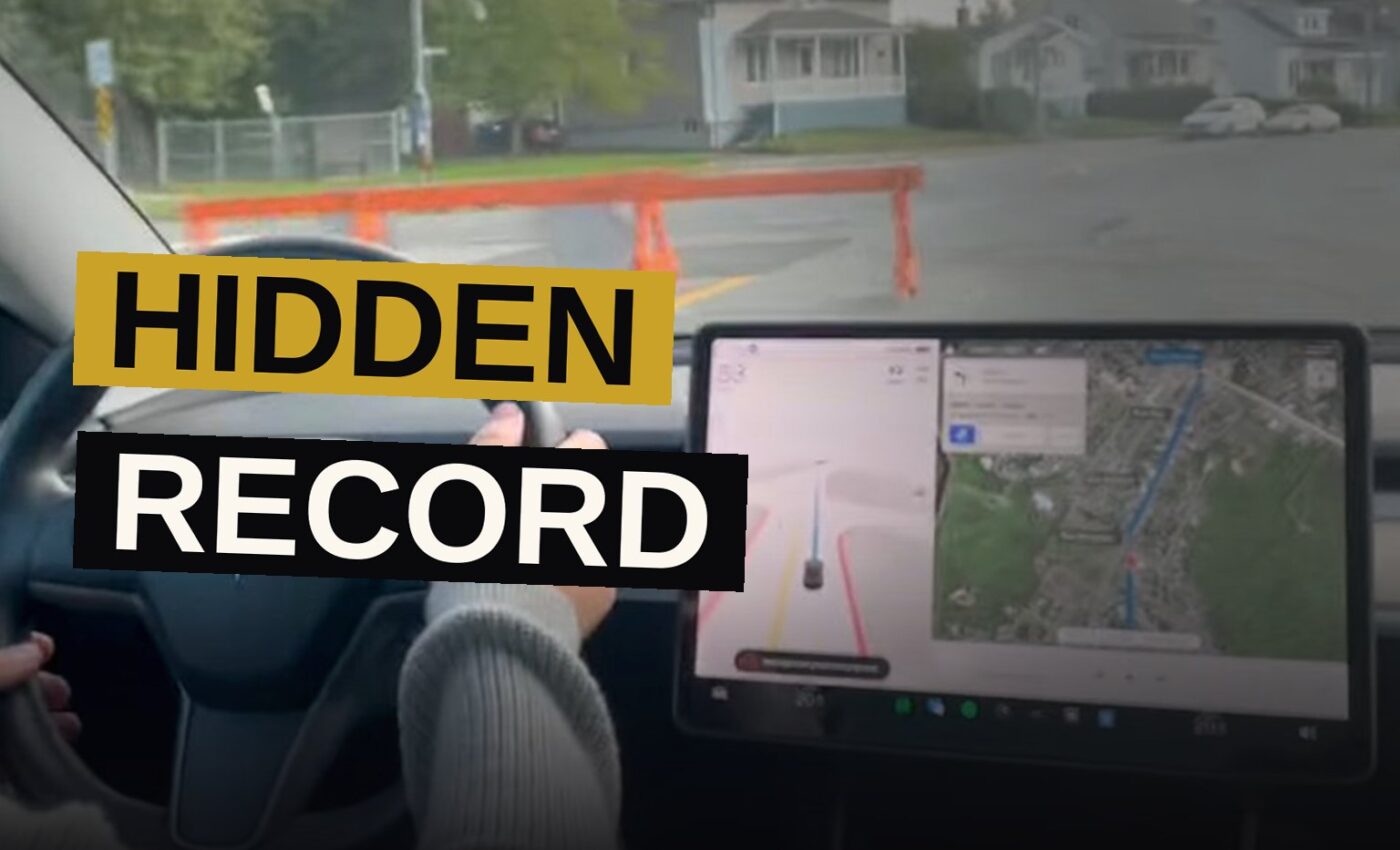
A Tesla Model 3 ran a stop sign in Buena Vista Township, New Jersey, and killed a man. Tesla’s own data says a driver-assist system was active at the time. Electrek’s investigation matched this crash to Tesla’s NHTSA filings.
The Crash at Route 671
Around 6:57 p.m. on Sunday, July 6, 2025, New Jersey State Police responded to the intersection of County Route 671 and Chestnut Avenue. A Tesla Model 3 failed to stop at a stop sign and struck a Honda Civic making a left turn, NJSP spokesman Jeffrey Lebron said.
The Civic’s driver, 82-year-old Stephen Field, died from his injuries. The Tesla’s driver and three passengers were hurt and taken to a hospital with moderate injuries. Local reports described it as an ordinary human-error crash.
Tesla’s Federal Report
A report from Tesla has come under a NHTSA Standing General Order. The rule demands that car companies tell of any crashes where a Level 2 driver-assist system was engaged within 30 seconds of the event.
The report names the vehicle as a 2019 Model 3, and it designates the automation “Engagement Status” as “Verified Engaged,” which confirms through its own data that the system was active at the time. It records a death.
Tesla conceals the details about the crash, including the software version and whether the road was inside the system’s approved area. These items receive “confidential business information,” the same treatment that Tesla gives to 99.9% of its reports.
FSD or Basic Autopilot
The software version was kept secret by Tesla, so there can be no certainty. The evidence points toward FSD, however.
FSD handles tasks like reading a stop sign and deciding whether to stop on city streets, which counts as a City-Streets task. Basic Autopilot, by contrast, is a highway lane-keeping system that does not react to stop signs at all.
Electrek notes it’s not a certainty. They have documented Teslas on Basic Autopilot reaching intersections the system was never meant to handle. Either way, the point cuts against Tesla: one system shouldn’t handle stop signs, and the other is sold as self-driving.
The Low Speed Reading
The pre-crash speed logged by Tesla was just 4 miles per hour, which matches a rolling stop rather than a vehicle speeding through. This is the same kind of behavior that led NHTSA to push Tesla to recall roughly 54,000 cars over 2022.
A 4 miles per hour reading doesn’t fit a fatal crash and deployed air bags. It’s likely a snapshot from before the event rather than the speed at the moment of the crash. The paragraph Tesla sealed holds the answer.
Why the Hidden Record Matters
Tesla sells the software as “Full Self-Driving.” Elon Musk keeps promising driving without supervision is months out. But it is still Level 2.
A person sits behind the wheel and holds the responsibility for what happens, while the equipment on board does something other than what its title suggests. That difference gives rise to a sense of confidence that costs lives.
RegP took issue with Electrek’s reasoning. He contended that the logic implies Autopilot, which does not respond to a stop sign, would be comparable to setting cruise control on a city street.
The confirmed details are limited but significant: Autopilot or “Full Self-Driving” was active when a man died in a crash. What would explain how it happened, Tesla kept hidden.
| System | Stop Sign Reaction | Road Type |
|---|---|---|
| Basic Autopilot | No | Highway |
| FSD | Yes | City-Streets |
Source: electrek.co
Get the Notebook.
The day's best stories and every fresh verdict, in plain English, in your inbox by seven. One email a day, no more.