
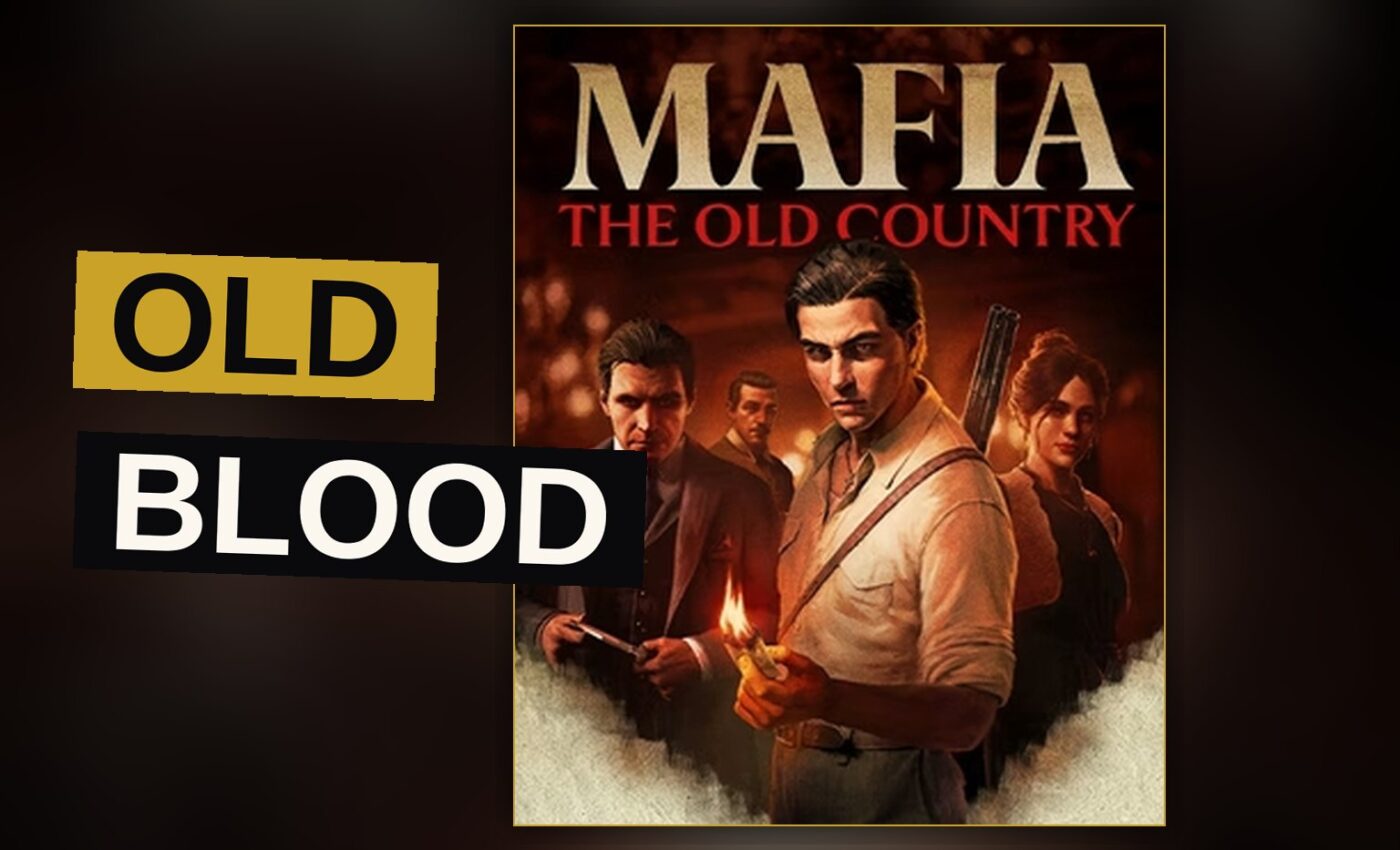
Mafia: The Old Country takes the series back to Sicily, and back to a straight line. Hangar 13’s fourth main entry in the Mafia franchise launched August 8, 2025 for PlayStation 5, Windows and Xbox Series X/S, and it trades the open-world sprawl of Mafia III for the cinematic, narrative-driven build of the first two games.
Trailer, via PlayStation.
Enzo Favara and the Sulfur Mines
The story opens in 1904. Enzo Favara is 17, a carusu working the sulfur mines of Don Ruggero Spadaro alongside his friend Gaetano. Both are indentured, both are overseen by the abusive underboss Damiano “Il Merlo” Bastoni and his brother, caporegime Corrado “L’Ombra” Bastoni. When a gas leak collapses part of the mine and buries Gaetano alive, along with the money the two had saved to leave Sicily, Enzo scars Il Merlo in a knife fight and runs.
A Stable, a Don, and San Celeste
Don Bernardo Torrisi pulls Enzo out of a stable where Spadaro’s men have cornered him. From there Enzo works for the Torrisi family under underboss Luca Trapani, and the cast fills in around him: the Don’s nephew Cesare Massaro, Luca’s wife Valentina, Father Ciccone, and the Don’s daughter Isabella, who takes an interest in him. The setting is the fictional town of San Celeste, first seen in Mafia II, and the game is built around the origins of the Sicilian Mafia.
What Enzo Actually Does
The assignments are period-specific and mostly small:
- Subbing in as a jockey in a prestigious horse race
- Helping Luca and Cesare collect pizzo
- Meeting consigliere Agostino “Tino” Russo, who distrusts him
- Crossing paths with shopkeeper and mechanic Pasquale
- Working alongside Don Niccolò Galante and his grandson Leone
Enzo moves across Sicilian towns and countryside on foot, horseback and in period automobiles. Gunfights, knife combat and stealth carry the action.
Where the Linear Choice Pays Off
The return to a linear structure is the right call. Mafia: The Old Country is at its best when it commits to cinematic environments and lets a chapter build, and the Sicilian setting and visuals give the Torrisi story a weight that Mafia III’s map never earned.
The Static World and the Clichés
The cost is a static open world. Exploration exists, but it is thin — a detour between objectives rather than a place with its own life. Combat grows repetitive, and the storytelling leans hard on mob clichés rather than finding its own angle on them. The dated mechanics are the part that will wear on a second playthrough.
This is a good Mafia game, not a great one. It knows what it is, and that clarity is worth more than the freedom it gave up.
Get the Notebook.
The day's best stories and every fresh verdict, in plain English, in your inbox by seven. One email a day, no more.


