
As the Arctic warms, two separate climate conditions are developing in Siberia, and both are driving methane releases upward. A study appearing in Science on Aug. 6 reports that western Siberia is turning wetter even as eastern Siberia grows drier.
Central Russia is where the Yenisei River, also known as the Yenisey, divides two distinct states of existence. The study authors refer to these states as regimes, a term that describes particular kinds of climates.
From 2010 to 2023, methane output from Siberia grew by 5% yearly. In Western Siberia, small living things working in softening earth cause most of the release. Eastern Siberia sends its methane into the air through the burning of plants.
The Scale of the Rise
Researchers were surprised by how large the increase turned out to be. In an email to Live Science, Paul Palmer, a professor in the School of Geosciences at the University of Edinburgh and study co-author, said the size of the change was notable.
“Given the observed increases in permafrost thaw, wetland activity, and wildfire occurrence, an increase in methane emissions was expected,” Palmer said. “What is surprising is how large and sustained the increase appears to be.”
Methane emissions rose by roughly 13.2 million tons, or 12 million metric tons, during the study period. This growth nearly matches the rate of increase in methane emissions from wetlands on a global scale.
The vast northern region contributes a small share to global methane emissions — just roughly 5% of the total. Still, Palmer pointed out that it is emerging as one of the most rapidly rising natural sources of methane on Earth.
How the Researchers Tracked the Gas
The team led by Palmer used satellite readings together with ground-level measurements to track how methane emissions changed across Siberia. They did not total up individual sources of methane on the ground.
The researchers relied on a methane flux inversion system for their modeling, which allowed them to keep the uncertainty in their estimates within roughly 10%.
The region is enormous, far from most people, and not well watched over with instruments. Many scientists can no longer get there due to the war between Russia and Ukraine, which makes steady tracking of methane difficult by any method other than those that watch from above.
Siberia receives almost no sunlight during its long winter months. However, most methane emissions are believed to peak in spring and summer, when the region gets far more sunlight, according to Palmer.
Why West and East Siberia Part Ways
Two distinct climate patterns influence the two parts of Siberia, and the research demonstrates that Arctic warming drives increased methane emissions through separate pathways in each region.
The climate of Western Siberia is shaped by the Scandinavian pattern of atmospheric circulation, which has its main circulation center over Scandinavia while also featuring weaker opposing centers over Western Europe and eastern Russia.
The North Atlantic is growing warmer and wetter because of global warming, and that warmth and moisture travel across the Scandinavian pattern into western Siberia. When paired with the rising temperatures already occurring in western Siberia, the result is a broad thawing of the region’s frozen ground.
- Softening unlocks carbon that tiny life forms can turn into methane.
- The methane then escapes from soils into the air.
- That release adds to the warming that caused the softening in the first place.
Eastern Siberia follows a different path. It is influenced by a climate pattern known as the Arctic Oscillation, which causes atmospheric air pressure to “seesaw” between the Arctic and the Northern Hemisphere’s middle latitudes.
The Arctic Oscillation is shaped by climate change, which produces persistent high-pressure systems. Palmer said those systems drive heat waves, reduce cloud cover, and help fuel wildfires in eastern Siberia.
The Frozen Carbon Store
In western Siberia, methane comes mainly from ground that has stayed frozen for at least two consecutive years. Siberia holds 46% of the Northern Hemisphere’s frozen ground of this kind.
Palmer explained that the frozen ground holds huge stores of carbon that accumulated over millennia. As temperatures rise, that carbon is released, and microscopic organisms convert it into methane.
Climate models were employed by the researchers to forecast future methane releases from Siberia, and their findings suggest that rising temperatures could release millions of tons of greenhouse gases stored in forests and frozen ground.
The release would push the warming trend forward even faster. The models indicated that methane emissions would increase alongside rising temperatures, and that the rate of increase could grow sharper as the planet grows hotter, thus creating a feedback loop.
Eastern Siberia Drives the Projected Rise
The region driving the expected increase is Eastern Siberia, which Palmer said is warming more quickly than western Siberia and has experienced a pronounced rise in severe wildfires.
“Eastern Siberia appears to be the main driver of the projected increase because it is warming faster than western Siberia and has seen a sharp rise in extreme wildfires,” Palmer said.
“Whether that trend continues will depend on how much vegetation remains available to burn, but there is also evidence that fires may be accelerating permafrost thaw and the release of methane from previously frozen ground.”
Palmer said the increase in methane emissions detailed in the report appears modest compared to what could come later, particularly if wildfires are already causing eastern Siberia’s permafrost to break apart.
A Sleeping Giant
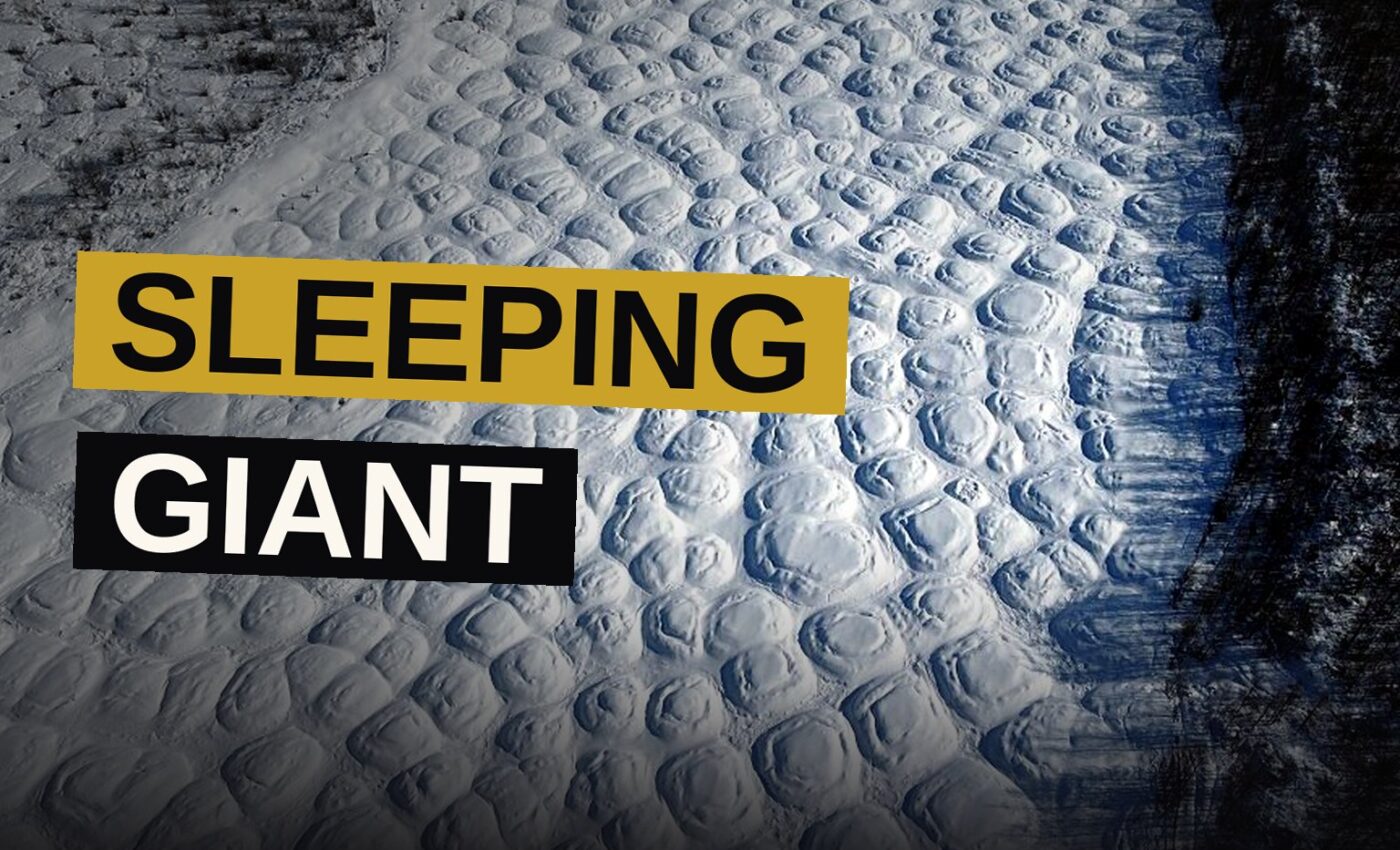
The stakes were stated plainly by Palmer. He referred to Siberia’s immense frozen carbon stockpile as a sleeping giant.
“Siberia’s vast permafrost carbon store is a sleeping giant,” he said. “Continued warming risks waking up a much larger source of greenhouse gases.”
Science published a paper titled “Decadal doubling of Siberian methane emissions due to warming-induced fires and methanogenesis.”, with Zhu, Liu, Palmer, Feng, Yang, Chen, Sasakawa, Parker, Boesch, Cao, Hermansen, and Platt listed as its authors.
The Feedback Loops
Methane escapes when frozen ground melts, and the heat that sets that melting in motion comes from the very gas that the thaw then adds to the atmosphere. The cycle feeds on itself: rising temperatures loosen frozen soil, that loosened soil gives off methane, and the methane adds still more warmth, which loosens still more ground.
Wildfires add a second loop to the climate system. Persistent high-pressure systems intensify heat waves while reducing cloud cover, both of which help fuel fires. These fires then release methane, and they may also accelerate the thawing of frozen ground.
The researchers turned to climate models to forecast the path ahead. Those simulations revealed that methane releases are expected to climb alongside rising temperatures, and that the increase could accelerate as the planet grows warmer.
This means the connection between temperature and methane is not steady. A little extra warming might cause much bigger releases of methane.
The giant beneath Siberia is waking, and Palmer warns against ignoring it. That carbon store took thousands of years to build up, and it is now in danger of being set free.
The study makes no claim about the certainty of release. Instead, it points to conditions that are forming and a direction that is becoming plain.
The research concluded in 2023, and the fate of the eastern pattern depends on how much vegetation is left to burn there.
“What is surprising is how large and sustained the increase appears to be.”
Source: livescience.com
Get the Notebook.
The day's best stories and every fresh verdict, in plain English, in your inbox by seven. One email a day, no more.