
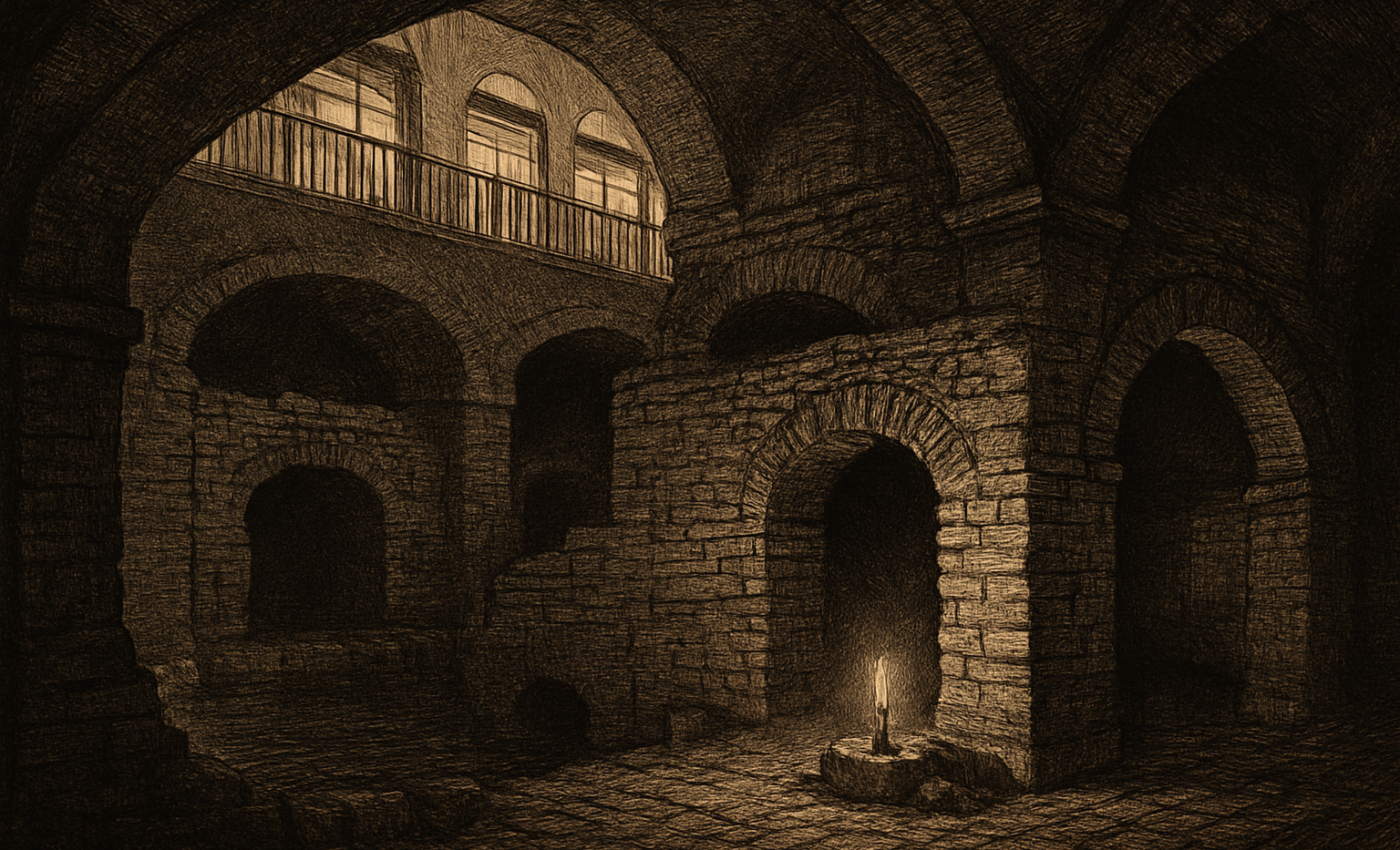
Deep beneath the Liverpool ONE shopping centre lies the remains of a structure that changed the city’s fate. It is the Old Dock, Liverpool’s first enclosed dock. Built in 1715, it turned Liverpool from a struggling port into a global shipping power.
The dock’s brick walls were found during a major redevelopment of the city centre. The find gave modern observers a direct look at the infrastructure that launched Liverpool’s rise. Today, the site sits in a subterranean chamber, preserved under the massive retail complex, and it remains a key piece of the city’s story.
The City That Could Not Keep Up
Liverpool received its charter in 1207, with the clear intention of becoming a port city. It did not work out that way for centuries. The town was overshadowed by nearby Chester. Liverpool also lacked decent infrastructure, so ships could not load or unload cargo efficiently.
The process was painfully slow. Vessels would anchor in the deep water of the estuary, far from the shore. Small boats would then shuttle cargo between the ships and the city. This back-and-forth could take weeks to complete for a single vessel. The port simply could not compete.
A Bold Plan to Dam the River
In 1710, an ambitious plan was unveiled. The idea was to completely dam up the tidal estuary that ran alongside Liverpool. Within that enclosed space, builders would construct a huge new port.
The scale of the project was unusual for the time. The dock was to be lined with brick and would measure approximately 100 by 200 metres. That made it a massive undertaking for early 18th-century engineering.
The work moved fast. By 1715, the new brick-lined dock opened to traffic. The effect was immediate and dramatic.
Ships could now dock directly at the quay. They could unload their cargo and reload within a single day. That was a transformation from the weeks-long process that had defined the port before.
What the Old Dock Changed
The Old Dock did more than speed up shipping. It changed the entire character of the city.
- It allowed Liverpool to handle far more cargo than ever before.
- It gave ships a direct place to tie up and work.
- It replaced the slow shuttle of small boats from anchored vessels.
The success was not accidental. The dock was built to solve a specific problem, and it solved it completely. Liverpool no longer had to rely on small boats ferrying goods from anchored ships. The city had a proper harbour where vessels could come alongside and work quickly.
That single structure helped push Liverpool toward its later status as a global powerhouse of shipping. The city grew rich on the trade that flowed through its docks.
Buried, Bombed, and Found Again
The Old Dock did not stay in service forever. By the mid to late 18th century, larger docks were being built. The original structure was superseded.
In 1825, the dock was filled in and preserved under a grand new customs house. The building covered the old dock entirely, sealing it from view. For a time, the structure was forgotten beneath the city’s expanding waterfront.
Then came the Second World War. German bombing destroyed the customs house during the war. When redevelopment of the area finally began, workers found the walls of the original dock.
The dock now sits in a chamber under the Liverpool ONE shopping centre, where the brick walls remain in place.
A Hidden Piece of History
The Old Dock is not the most famous landmark in Liverpool. It is not a cathedral or a museum. But it is one of the most important pieces of the city’s industrial past.
The chamber under the shopping centre is a quiet space. It holds the remains of the brick walls, the shape of the original basin, and the memory of the ships that once tied up there.
The dock’s story is one of engineering, ambition, and reinvention. It was built to solve a problem, outlived its usefulness, was buried, bombed, and then found again. Each phase of its life reflects a different chapter of Liverpool’s history.
Today, the site is preserved as a piece of the city’s heritage. It stands as proof that even the most ordinary-looking infrastructure can carry a huge story. The Old Dock may be underground, but its influence is still visible across the entire city above.
Source: atlasobscura.com
Get the Notebook.
The day's best stories and every fresh verdict, in plain English, in your inbox by seven. One email a day, no more.